
What is the difference between S460MC Steel for automotive inner panels & Q235B?
Explore the technical differences between S460MC high-strength steel and Q235B carbon steel, focusing on mechanical properties, chemical composition, and automotive applications.
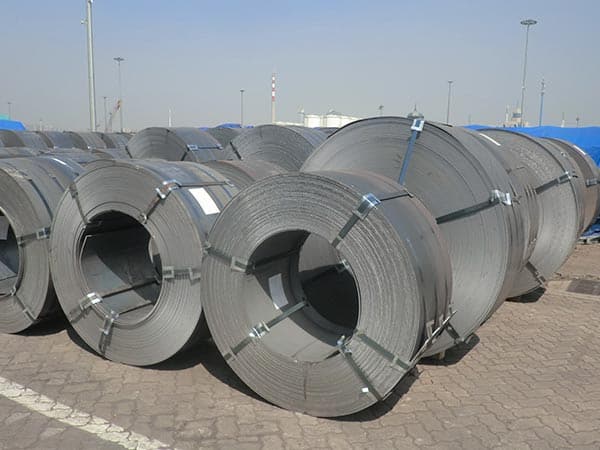
The Fundamental Divergence: HSLA vs. Carbon Structural Steel
When evaluating materials for industrial manufacturing, the choice between S460MC and Q235B represents a decision between high-performance engineering and general-purpose utility. S460MC is a high-strength low-alloy (HSLA) steel specifically designed for cold forming, governed by the EN 10149-2 standard. In contrast, Q235B is a classic carbon structural steel following the GB/T 700 standard. While both find their way into structural applications, their metallurgical DNA dictates vastly different roles in modern engineering, particularly in the demanding automotive sector.
S460MC is produced through a thermomechanically rolled process (TMCP), which refines the grain structure to achieve a superior strength-to-weight ratio. Q235B, however, relies on a simpler hot-rolling process, focusing on versatility and cost-effectiveness rather than extreme mechanical performance. Understanding these differences is vital for engineers aiming to balance structural integrity with weight reduction goals.
Chemical Composition and Metallurgical Grain Refinement
The performance gap begins at the atomic level. S460MC utilizes micro-alloying elements such as Niobium (Nb), Vanadium (V), and Titanium (Ti). These elements facilitate grain refinement and precipitation hardening during the rolling process. This allows the steel to maintain high strength without a significant increase in carbon content, which preserves weldability and ductility.
Q235B maintains a more traditional chemistry, primarily composed of Iron, Carbon, Manganese, Silicon, Sulfur, and Phosphorus. The lack of micro-alloying elements means its strength is derived almost entirely from its carbon and manganese content. Below is a comparative overview of their typical chemical profiles:
| Element (%) | S460MC (EN 10149-2) | Q235B (GB/T 700) |
|---|---|---|
| Carbon (C) | ≤ 0.12 | ≤ 0.20 |
| Manganese (Mn) | ≤ 1.60 | ≤ 1.40 |
| Silicon (Si) | ≤ 0.50 | ≤ 0.35 |
| Phosphorus (P) | ≤ 0.025 | ≤ 0.045 |
| Sulfur (S) | ≤ 0.015 | ≤ 0.045 |
| Micro-alloys (Nb/V/Ti) | Present (Sum ≤ 0.22) | Not Specified |
The lower sulfur and phosphorus levels in S460MC indicate a much cleaner steel with fewer non-metallic inclusions, which directly contributes to its superior fatigue resistance and cold-forming capabilities.
Mechanical Properties: Strength vs. Ductility
The most striking difference lies in the yield strength. S460MC boasts a minimum yield strength of 460 MPa, nearly double that of Q235B’s 235 MPa. This disparity allows designers to use thinner sections of S460MC to carry the same load, a critical factor in the "lightweighting" of automotive components.
- Yield Strength: S460MC (≥460 MPa) vs. Q235B (≥235 MPa).
- Tensile Strength: S460MC (520-670 MPa) vs. Q235B (370-500 MPa).
- Elongation: Q235B typically offers higher elongation (approx. 25-26%), making it extremely forgiving during simple bending, whereas S460MC (approx. 14-17%) requires more precise tooling to manage its higher strength and potential springback.
For automotive inner panels, S460MC provides the necessary stiffness and crashworthiness to protect occupants while keeping the vehicle's mass low. Q235B is often relegated to non-critical structural parts where weight is not a primary concern, such as base plates or simple brackets.
Processing Performance: Cold Forming and Welding
Processing S460MC requires an understanding of its high-strength nature. Due to its refined grain structure, it exhibits excellent cold-forming properties, allowing for complex geometries in automotive stampings. However, the springback effect is more pronounced in S460MC than in Q235B. Tooling must be designed with compensation for this elastic recovery.
Welding performance for both steels is excellent, but for different reasons. Q235B is easily welded using standard methods due to its moderate carbon equivalent. S460MC, despite its high strength, maintains low carbon levels, ensuring that the heat-affected zone (HAZ) does not become excessively brittle. This makes S460MC ideal for automated robotic welding lines used in modern car manufacturing.
Environmental Adaptability and Fatigue Life
In the context of automotive inner panels, environmental adaptability often refers to how the material handles cyclic loading and vibration. S460MC’s fine-grained microstructure provides a significant advantage in fatigue life. It can withstand a higher number of stress cycles before crack initiation compared to Q235B. This is essential for components like chassis cross-members or seat frames that endure constant vibration during vehicle operation.
Regarding corrosion, neither steel is inherently "stainless." However, the uniform surface finish of S460MC, often supplied in a pickled and oiled condition, provides a superior substrate for E-coating and painting, which are standard in the automotive industry to prevent rust.
Application Industry Expansion: Why Automotive Prefers S460MC
The automotive industry has shifted toward S460MC for inner panels and structural reinforcements to meet stringent fuel efficiency and safety standards. By substituting Q235B with S460MC, manufacturers can reduce the thickness of a component from, for example, 4.0mm to 2.5mm without sacrificing structural integrity. This 30-40% weight reduction translates directly to lower CO2 emissions and better vehicle handling.
Beyond automotive, S460MC is gaining traction in the crane and lifting equipment industry, where reducing the deadweight of a boom allows for higher lifting capacities. Q235B remains the king of general construction, used in buildings, bridges, and simple machinery where the cost of material per ton is the most significant factor and weight is secondary.
Technical Comparison Summary
| Feature | S460MC (HSLA) | Q235B (Carbon Steel) |
|---|---|---|
| Primary Advantage | High Strength / Weight Reduction | Cost-Effectiveness / Versatility |
| Forming Ability | Excellent for complex cold forming | Good for general bending/shaping |
| Impact Toughness | High (Specified at low temps) | Moderate (Specified at 20°C) |
| Typical Thickness | 1.5mm - 20mm | 1.2mm - 200mm |
| Market Price | Higher due to alloying/processing | Lower (Commodity pricing) |
Choosing between these two materials requires a thorough analysis of the end-use environment. If the project demands high load-bearing capacity with minimal mass—as seen in modern automotive architecture—S460MC is the technically superior choice. If the project is a static structure where mass is irrelevant and budget is tight, Q235B remains a reliable and proven standard.
Leave a message