
What is the best quality structure steel plate s700m?
A comprehensive guide to S700M structural steel plate, detailing its metallurgical properties, TMCP processing advantages, welding performance, and industrial applications for high-load environments.
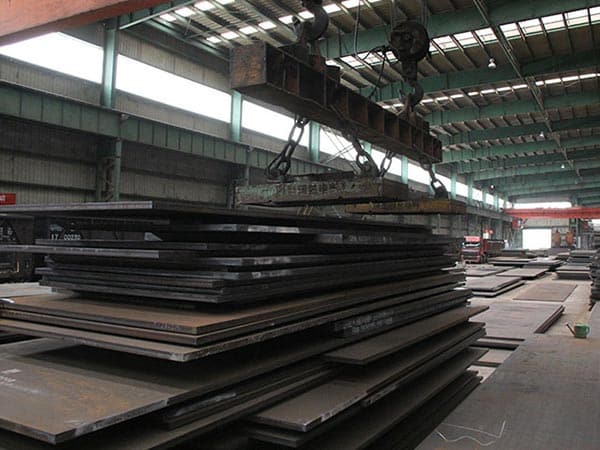
The Essence of S700M: Redefining High-Strength Structural Integrity
When engineering projects demand a balance between extreme load-bearing capacity and weight reduction, S700M structural steel plate emerges as a premier choice. This material is not merely a standard carbon steel; it is a high-strength, low-alloy (HSLA) steel produced through the Thermomechanically Controlled Process (TMCP). The 'S' denotes structural steel, while '700' represents its minimum yield strength of 700 Megapascals. The 'M' suffix is critical, indicating the delivery condition of thermomechanical rolling, which distinguishes it from quenched and tempered steels. This specific manufacturing route allows for a unique microstructure that provides superior weldability and toughness compared to traditional grades.
Metallurgical Superiority through TMCP Technology
The quality of S700M is fundamentally rooted in its grain structure. Unlike conventional rolling, TMCP involves precise temperature control and specific deformation rates during the rolling process. This technique refines the grain size to a microscopic level, often achieving a fine-grained ferrite-bainite structure. Grain refinement is the only strengthening mechanism that simultaneously increases both strength and toughness. By utilizing micro-alloying elements such as Niobium (Nb), Vanadium (V), and Titanium (Ti), manufacturers can lock the grain boundaries, preventing growth during the high-temperature phases of production.
The result is a plate that offers a high yield-to-tensile ratio while maintaining excellent ductility. For engineers, this means the ability to design thinner sections that can withstand the same forces as thicker, heavier conventional plates. The reduction in dead weight directly translates to increased payload for mobile machinery and reduced material costs for large-scale infrastructures.
Chemical Composition and the Weldability Advantage
One of the most significant hurdles with high-strength steels is their tendency to crack during welding. S700M addresses this through a strictly controlled chemical composition. By keeping the Carbon Equivalent (CEV) exceptionally low, the steel minimizes the risk of cold cracking in the heat-affected zone (HAZ). Typical CEV values for S700M are significantly lower than those of quenched and tempered steels of the same strength class.
| Element | Maximum Content (%) | Impact on Performance |
|---|---|---|
| Carbon (C) | 0.12 | Ensures toughness and weldability |
| Manganese (Mn) | 2.10 | Enhances strength and hardenability |
| Silicon (Si) | 0.60 | Provides deoxidation and solid solution strengthening |
| Phosphorus (P) | 0.025 | Kept low to prevent brittleness |
| Sulfur (S) | 0.015 | Minimized to improve lamellar tearing resistance |
The low carbon content ensures that the steel does not require extensive preheating before welding, which is a massive operational advantage in workshop environments. It allows for faster production cycles and reduces the energy consumption associated with thermal treatments.
Mechanical Performance Metrics: Beyond the Yield Point
While the 700 MPa yield strength is the headline figure, the 'best quality' S700M is defined by its performance across a spectrum of mechanical tests. This includes its tensile strength range, which typically falls between 750 and 950 MPa, and its elongation properties, ensuring the material can deform plastically before failure.
- Yield Strength: Minimum 700 MPa, providing the baseline for structural calculations.
- Tensile Strength: 750-950 MPa, offering a safety margin against ultimate rupture.
- Elongation: Minimum 12-14% (depending on thickness), allowing for complex forming.
- Impact Toughness: Often tested at -20°C or -40°C to ensure performance in arctic or high-altitude conditions.
This combination of properties makes S700M resilient against fatigue and sudden impact loads, which are common in dynamic applications like crane booms or heavy-duty trailer chassis.
Cold Forming and Processing Flexibility
A hallmark of high-quality S700M is its cold formability. Despite its high strength, the fine-grained structure allows the plate to be bent to tight radii without cracking. This is essential for manufacturing U-beams, C-channels, and other structural profiles used in the transport industry. The bending radius is typically expressed as a multiple of the plate thickness (t), and S700M often supports radii as low as 2.0t to 3.0t depending on the orientation relative to the rolling direction.
When it comes to cutting, S700M responds exceptionally well to modern laser and plasma cutting technologies. The low alloy content and clean steel-making process (often involving vacuum degassing) ensure that the cut edges are smooth and require minimal post-processing. This precision is vital for automated assembly lines where tight tolerances are mandatory.
Environmental Adaptation and Longevity
S700M is designed to perform in diverse environmental conditions. Its fine-grained structure provides a natural resistance to certain types of atmospheric corrosion compared to coarse-grained steels. However, its primary environmental advantage lies in its contribution to sustainability. By enabling lighter designs, it reduces the carbon footprint of vehicles and machinery throughout their operational lifespan. Less steel used means less energy consumed in production, and less weight means lower fuel consumption for the end-user.
In offshore and marine applications, where S700M is sometimes utilized for topside structures, its resistance to brittle fracture at low temperatures is a critical safety feature. The material maintains its integrity even when subjected to the cyclic loading of waves and wind in cold climates.
Expanding Industry Applications
The versatility of S700M has led to its adoption across multiple high-stakes industries. Its application is no longer limited to niche engineering but has become a standard for performance optimization.
- Mobile Cranes and Lifting Equipment: Used in telescopic booms to achieve greater heights and reach without increasing the base weight of the vehicle.
- Heavy Transport: Essential for the manufacturing of lightweight trailers and semi-trailers that must maximize payload while adhering to strict road weight limits.
- Mining and Earthmoving: Applied in the frames of massive dump trucks and the structural components of excavators where vibration and impact resistance are paramount.
- Agricultural Machinery: Integrated into large-scale sprayers and harvesters to improve fuel efficiency and reduce soil compaction.
Identifying Best-in-Class S700M Quality
To ensure you are utilizing the best quality S700M, it is necessary to look beyond the basic mill certificate. High-quality plates are characterized by exceptional flatness and a superior surface finish. Flatness is crucial for automated welding and precision cutting; any deviation can lead to assembly errors or structural weaknesses. Furthermore, the internal cleanliness of the steel—the absence of non-metallic inclusions—determines the fatigue life of the finished component.
Reputable manufacturers utilize advanced ladle metallurgy and continuous casting techniques to ensure that every plate is homogenous. When sourcing S700M, verifying the ultrasonic testing (UT) standards and the consistency of the mechanical properties across different batches is the definitive way to guarantee that the steel will perform as expected in the most demanding structural environments.
The strategic use of S700M represents a shift toward smarter engineering. By leveraging the metallurgical advancements of TMCP steel, industries can build structures that are stronger, lighter, and more durable, meeting the rigorous demands of modern global infrastructure and machinery design.
Leave a message