
What kind of steel is S420MC steel for car safety parts?
Comprehensive analysis of S420MC steel properties, chemical composition, mechanical performance, and its critical role in automotive safety components and structural engineering.
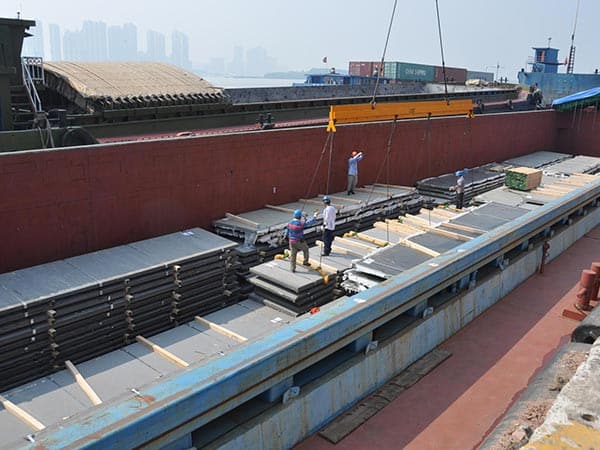
The Essence of S420MC: A High-Strength Powerhouse for Automotive Safety
S420MC steel is a high-yield-strength, hot-rolled steel specifically designed for cold forming. Governed by the European standard EN 10149-2, this material represents a pinnacle of metallurgical engineering where strength meets ductility. The "S" denotes structural steel, "420" refers to the minimum yield strength of 420 MPa, and "MC" indicates that the steel is thermomechanically rolled (M) and suitable for cold forming (C). In the context of modern vehicle manufacturing, where the push for lightweighting and enhanced passenger safety is relentless, S420MC has emerged as a foundational material for critical safety components.
Chemical Composition: The Micro-Alloying Secret
The superior performance of S420MC is not accidental; it is the result of a precise chemical balance. Unlike traditional carbon steels, S420MC utilizes micro-alloying elements such as Niobium (Nb), Vanadium (V), and Titanium (Ti). These elements facilitate grain refinement during the thermomechanical rolling process, which significantly boosts strength without compromising weldability or toughness.
| Element | Maximum Content (%) |
|---|---|
| Carbon (C) | 0.12 |
| Manganese (Mn) | 1.60 |
| Silicon (Si) | 0.50 |
| Phosphorus (P) | 0.025 |
| Sulfur (S) | 0.015 |
| Aluminium (Al) | 0.015 |
| Nb + V + Ti | 0.22 |
The low carbon content is particularly vital. It ensures that the steel remains highly weldable, a non-negotiable requirement for automated automotive assembly lines. The addition of Manganese enhances hardenability and tensile strength, while the controlled levels of Phosphorus and Sulfur minimize impurities that could lead to brittle fractures under high-stress conditions.
Mechanical Properties and Structural Integrity
For car safety parts, the mechanical profile of S420MC provides the necessary energy absorption during impacts. The yield strength ensures that structural parts do not deform under normal loads, while the elongation properties allow the material to absorb energy during a collision, protecting the vehicle's occupants.
| Property | Value (Thickness < 3mm) | Value (Thickness ≥ 3mm) |
|---|---|---|
| Yield Strength (MPa) | Min 420 | Min 420 |
| Tensile Strength (MPa) | 480 - 620 | 480 - 620 |
| Elongation A80mm (%) | Min 16 | - |
| Elongation A5 (%) | - | Min 19 |
These properties make S420MC an ideal candidate for parts that require a high strength-to-weight ratio. By using S420MC, engineers can reduce the thickness of components compared to traditional S235 or S355 grades, leading to a significant reduction in vehicle weight and, consequently, lower CO2 emissions and improved fuel efficiency.
Advanced Processing Performance: Cold Forming and Welding
One of the most significant advantages of S420MC is its cold forming capability. Despite its high strength, it can be bent, flanged, and cold-pressed into complex shapes without cracking. This is achieved through the fine-grained microstructure produced during the thermomechanical rolling process. Manufacturers benefit from reduced tool wear and high consistency in mass production.
- Bending Radius: For a 90-degree bend, the minimum recommended bending radius is typically 0.5 to 1.5 times the material thickness, depending on the orientation (transverse or longitudinal).
- Weldability: S420MC is suitable for all standard welding methods, including MIG/MAG, TIG, and laser welding. Because of its low carbon equivalent (CEV), it does not require preheating in most thickness ranges, streamlining the production workflow.
- Laser Cutting: The clean surface and uniform microstructure of S420MC allow for high-precision laser cutting, which is essential for modern modular chassis designs.
Environmental Adaptability and Durability
Car safety parts are often exposed to harsh environments, including road salt, moisture, and extreme temperature fluctuations. S420MC demonstrates excellent environmental adaptability. While it is not a corrosion-resistant steel like stainless steel, its surface quality (often supplied in pickled and oiled condition) provides a perfect substrate for protective coatings.
Whether it is through hot-dip galvanizing, E-coating (electrophoretic coating), or powder coating, S420MC bonds exceptionally well with surface treatments. This ensures that safety-critical parts like chassis cross-members and bumper brackets maintain their structural integrity over the 15-to-20-year lifespan of a modern vehicle. Furthermore, its performance remains stable across a wide temperature range, ensuring safety in both arctic and tropical climates.
Strategic Applications in the Automotive Industry
The application of S420MC extends far beyond simple brackets. It is a strategic material for the "skeleton" of the vehicle. Its high yield strength is utilized in components that must resist deformation during a rollover or side-impact collision.
- Chassis Systems: Longitudinal and transverse members that form the backbone of the vehicle frame.
- Safety Reinforcements: Bumper beams and door impact bars that protect the passenger cabin.
- Seat Structures: Lightweight seat frames that must remain rigid during sudden deceleration.
- Truck and Trailer Frames: In the heavy-duty sector, S420MC is used for cross-members and suspension components where weight saving is directly linked to payload capacity.
Comparing S420MC with Other High-Strength Grades
When selecting materials, engineers often weigh S420MC against alternatives like S355MC or S500MC. While S355MC is more cost-effective, it lacks the strength required for aggressive lightweighting. Conversely, S500MC offers higher strength but may present challenges in extreme cold-forming scenarios or require more complex welding parameters. S420MC sits at the "sweet spot" of the performance-to-cost curve, offering sufficient strength for most structural safety applications while maintaining the ease of processing associated with lower-grade steels.
Quality Control and Sourcing Standards
For procurement professionals, ensuring the quality of S420MC is paramount. Material certificates (EN 10204 3.1) should always be verified to ensure compliance with the chemical and mechanical limits of EN 10149-2. Factors such as surface finish, thickness tolerance (often according to EN 10051), and flatness play a crucial role in the success of automated stamping and welding processes. Choosing a supplier that understands the nuances of thermomechanical rolling is essential for maintaining batch-to-batch consistency.
The Future of S420MC in Electric Vehicles (EVs)
The transition to electric vehicles has increased the demand for S420MC. EVs are inherently heavier due to battery packs, making weight reduction in the chassis and safety structures even more critical. S420MC provides the necessary strength to support heavy battery frames while keeping the overall vehicle weight within manageable limits. As automotive designs continue to evolve, the versatility and reliability of S420MC ensure it will remain a staple in the material palette of automotive engineers worldwide.
Leave a message