
Why S500MC steel complete specifications is not easy to rust
A comprehensive analysis of S500MC high-strength steel, exploring its chemical composition, thermomechanical rolling process, and why it offers superior resistance to oxidation and wear in industrial applications.
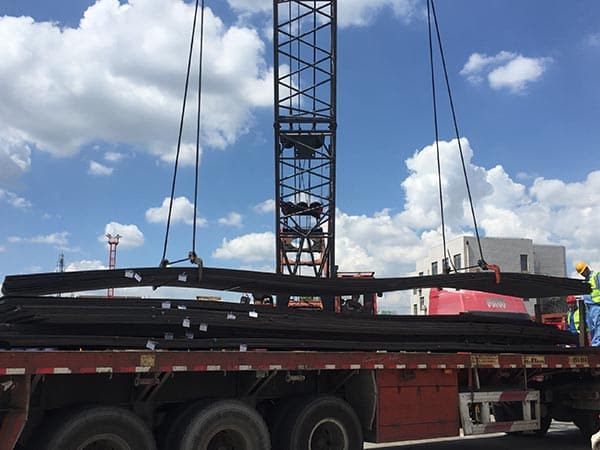
The Metallurgical Foundation of S500MC High-Strength Steel
S500MC is a high-yield strength steel specifically designed for cold forming, governed by the European standard EN 10149-2. The 'S' prefix identifies it as structural steel, while '500' indicates a minimum yield strength of 500 MPa. The 'MC' designation is perhaps the most critical part of its identity, where 'M' stands for thermomechanically rolled and 'C' signifies its suitability for cold forming. Unlike traditional hot-rolled carbon steels, S500MC is engineered through a sophisticated process that balances extreme strength with surprising ductility. This metallurgical balance is the primary reason why S500MC is often characterized as being more resistant to environmental degradation and surface oxidation than standard structural grades like S235 or S355.
The perception that S500MC is 'not easy to rust' stems from its refined microstructure and the precision of its chemical composition. While it is not a stainless steel, its performance in atmospheric conditions is significantly enhanced by the presence of micro-alloying elements and a highly controlled manufacturing process. These factors create a steel that is not only strong but also possesses a surface integrity that resists the rapid onset of deep-seated corrosion. Understanding why this material maintains its structural integrity over time requires a deep dive into its chemical synergy and the physics of its production.
Chemical Composition: The Secret to Surface Stability
The resistance of S500MC to rapid oxidation is largely a result of its low carbon content and the strategic addition of micro-alloying elements such as Niobium (Nb), Vanadium (V), and Titanium (Ti). In standard carbon steels, higher carbon levels can lead to the formation of large iron carbides (cementite), which can act as cathodic sites in a galvanic cell, accelerating the corrosion process. S500MC, however, typically maintains a carbon content below 0.12%, which reduces the number of these initiation sites.
Micro-alloying elements play a dual role: they provide grain refinement and precipitation hardening, but they also contribute to a more stable oxide layer. Niobium, in particular, helps in forming a dense, fine-grained structure that limits the diffusion of oxygen into the substrate. This does not prevent rust entirely, but it ensures that the oxidation that does occur is more uniform and less likely to lead to pitting. Below is a detailed breakdown of the typical chemical requirements for S500MC according to EN 10149-2.
| Element | Maximum Content (%) | Primary Function |
|---|---|---|
| Carbon (C) | 0.12 | Ensures weldability and reduces carbide-induced corrosion. |
| Manganese (Mn) | 1.60 | Increases strength and improves hardenability. |
| Silicon (Si) | 0.50 | Acts as a deoxidizer and strengthens the ferrite. |
| Phosphorus (P) | 0.025 | Kept low to prevent cold shortness and brittleness. |
| Sulphur (S) | 0.015 | Minimizing sulphur reduces inclusion sites for pitting. |
| Aluminium (Al) | 0.015 (min) | Refines grain size and acts as a nitrogen binder. |
| Nb + V + Ti | 0.22 (max) | Micro-alloying for strength and grain boundary stability. |
Thermomechanical Rolling (TMCP) and Microstructural Density
The 'M' in S500MC refers to Thermomechanical Control Process (TMCP) rolling. This is a technique where the final deformation is carried out in a specific temperature range, followed by controlled cooling. This process is vastly different from traditional normalizing or hot rolling. TMCP produces a very fine-grained ferrite-pearlite microstructure. In the world of metallurgy, finer grains mean more grain boundaries, which paradoxically helps in creating a more tortuous path for corrosive agents to penetrate the material.
Furthermore, the TMCP process results in a very clean steel with fewer non-metallic inclusions. Inclusions, such as manganese sulphides, are often the 'weak links' where moisture and oxygen first attack the metal. By significantly reducing the size and frequency of these inclusions, S500MC presents a more homogenous surface to the environment. This homogeneity is why the material often appears to 'age' more slowly than cheaper, less refined alternatives. The density of the grain structure also contributes to the steel's ability to hold protective coatings, such as paint or galvanizing, much more effectively than standard grades.
Atmospheric Corrosion Resistance and Surface Oxide Layers
When S500MC is exposed to the atmosphere, it forms a thin layer of iron oxide. However, because of the fine grain size and the presence of micro-alloys, this oxide layer tends to be more adherent and compact than the loose, flaky scale found on ordinary hot-rolled steel. A compact scale acts as a partial barrier, slowing down the rate at which moisture and oxygen can reach the fresh metal underneath. This is particularly noticeable in industrial environments where the steel might be stored outdoors for short periods before fabrication.
It is important to distinguish between 'rust-proof' and 'corrosion-resistant.' S500MC will eventually rust if left unprotected in harsh environments, but the rate of penetration is slower. This gives manufacturers a larger window for processing and ensures that the structural integrity of the component is not compromised by surface-level oxidation during the early stages of its lifecycle. For applications requiring long-term exposure, the superior surface finish of S500MC provides an ideal substrate for advanced anti-corrosion treatments, ensuring that the final product has a significantly longer service life.
Mechanical Properties and Environmental Stress Resilience
The mechanical performance of S500MC is not just about its 500 MPa yield strength; it is about how it maintains that strength under environmental stress. High-strength steels are sometimes prone to stress corrosion cracking (SCC) if they are too brittle. However, S500MC is designed with high toughness and excellent elongation properties (typically 12% to 14% depending on thickness). This ductility allows the steel to absorb energy and resist the formation of micro-cracks that could otherwise become conduits for corrosive agents.
- Yield Strength: Min 500 MPa, providing the ability to reduce material thickness without sacrificing safety.
- Tensile Strength: 550 to 700 MPa, ensuring a high safety margin under load.
- Elongation: Excellent cold-forming properties allow for tight bending radii without surface tearing.
- Impact Toughness: Maintains performance even at low temperatures, which is critical for mobile machinery.
By utilizing S500MC, engineers can design lighter structures. Thinner sections mean less total surface area exposed to potential corrosion for the same structural capacity, and the reduced weight contributes to the overall efficiency of the final assembly, particularly in the transportation sector.
Processing Advantages: Welding and Cold Forming
One of the standout features of S500MC is its exceptional weldability. Because the strength is derived from the TMCP process and micro-alloying rather than high carbon or high alloy content, the Carbon Equivalent Value (CEV) remains very low. This means the steel can be welded using standard methods (MIG/MAG, TIG, Submerged Arc) without the need for extensive preheating. In terms of corrosion, a good weld is vital; poorly welded joints are often the first place rust starts. The low CEV of S500MC minimizes the risk of hydrogen-induced cracking and ensures that the heat-affected zone (HAZ) retains its mechanical properties and resistance to environmental attack.
Regarding cold forming, S500MC allows for complex shapes to be bent from flat sheets. The surface of S500MC is remarkably resilient during these operations. While lower-grade steels might develop surface 'crazing' or micro-fissures during a tight bend—which then become prime spots for rust—S500MC maintains its surface continuity. This smooth, intact surface is a critical factor in why the steel is perceived as more durable in the long run.
Strategic Applications in Modern Engineering
The unique combination of high strength, low weight, and enhanced surface stability makes S500MC the material of choice for several demanding industries. In the production of commercial vehicle chassis and frames, S500MC allows for a significant reduction in curb weight, which translates to higher payloads and better fuel efficiency. The fact that the frames are less prone to deep-seated rust ensures that these vehicles remain roadworthy for decades, even when exposed to road salts and varying weather conditions.
In the lifting and transport industry, S500MC is used extensively for crane booms and telescopic arms. These components require extreme precision and high strength-to-weight ratios. The material's resistance to atmospheric oxidation is a major benefit here, as these machines often operate in coastal or industrial environments where the air is highly corrosive. Furthermore, the agricultural sector utilizes S500MC for high-stress components in harvesters and plows, where the steel must withstand both mechanical abrasion and the corrosive effects of soil and fertilizers.
Optimizing the Longevity of S500MC Components
To maximize the 'not easy to rust' characteristics of S500MC, proper handling and finishing are recommended. Although the steel has a superior natural resistance compared to mild steel, applying a high-quality powder coating or hot-dip galvanizing will extend its life indefinitely. The fine-grained surface of S500MC provides excellent mechanical interlocking for coatings, resulting in superior adhesion compared to coarser-grained steels. When designing with S500MC, avoiding 'water traps'—areas where moisture can collect—will further enhance the material's natural durability.
The choice of S500MC is an investment in both performance and longevity. By selecting a steel with complete specifications and a verified pedigree, manufacturers ensure that they are working with a material that has been optimized at the atomic level to resist the common pitfalls of structural degradation. Whether it is the low carbon content, the precision of the TMCP rolling, or the addition of Niobium and Titanium, every aspect of S500MC is designed to provide a robust, reliable, and resilient solution for the most challenging engineering tasks.
Leave a message