
What is the S460MC steel for car parts hardness
Discover the hardness and mechanical properties of S460MC steel. This expert guide covers its chemical composition, automotive applications, and why it's essential for lightweight vehicle design.
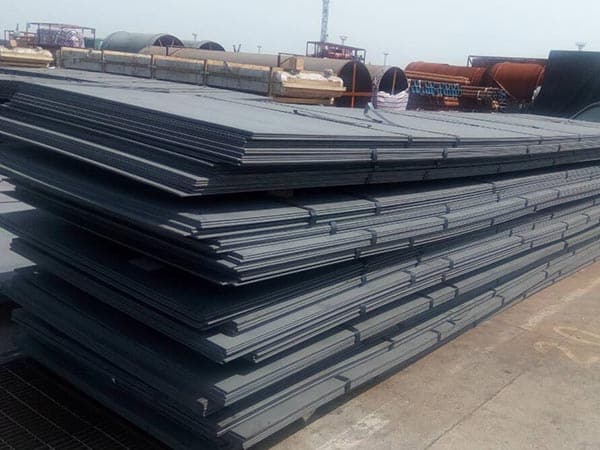
Understanding the Hardness and Nature of S460MC Steel
When discussing S460MC steel in the context of automotive engineering, the question of hardness often arises as a primary concern for manufacturers and designers. S460MC is a high-yield strength, cold-forming steel categorized under the EN 10149-2 standard. Unlike tool steels or quench-and-tempered alloys where hardness is the defining metric, S460MC is engineered for a balance of strength, ductility, and processability. Its hardness is not typically specified as a mandatory requirement in standard certifications, but it remains a critical reference point for wear resistance and machinability.
The typical hardness of S460MC steel ranges between 150 and 185 HBW (Brinell Hardness). This value translates to approximately 80 to 90 HRB on the Rockwell B scale. This specific range is achieved through a thermomechanically rolled (TMCP) process, which refines the grain structure without the need for excessive alloying elements. For car parts, this level of hardness ensures that the material is tough enough to withstand structural loads while remaining soft enough to undergo complex cold-forming operations like deep drawing and tight-radius bending.
Chemical Composition and Its Impact on Material Hardness
The performance of S460MC is a direct result of its sophisticated chemical profile. By utilizing micro-alloying techniques, steelmakers can achieve high strength without the brittleness associated with high carbon content. The low carbon levels are essential for maintaining the steel's "softness" during initial forming stages, while micro-elements provide the necessary reinforcement.
| Element | Maximum Percentage (%) | Role in Material Properties |
|---|---|---|
| Carbon (C) | 0.12 | Ensures weldability and prevents excessive hardening. |
| Manganese (Mn) | 1.60 | Increases strength and hardness through solid solution strengthening. |
| Silicon (Si) | 0.50 | Deoxidizer that improves yield strength. |
| Niobium (Nb) | 0.09 | Grain refinement; critical for high yield strength. |
| Titanium (Ti) | 0.15 | Stabilizes the structure and prevents grain growth. |
The inclusion of Niobium (Nb) and Vanadium (V) is particularly important. These elements form fine precipitates within the steel matrix, which pin grain boundaries during the rolling process. This grain refinement is the primary mechanism that allows S460MC to reach a yield strength of 460 MPa while keeping the hardness within a range that permits high-speed stamping in automotive assembly lines.
Mechanical Properties: The Core of Automotive Structural Integrity
While hardness provides insight into surface resistance, the mechanical properties of S460MC define its structural utility. In the automotive industry, the goal is often "lightweighting"—reducing the mass of the vehicle to improve fuel efficiency and reduce emissions without compromising safety. S460MC excels here by offering a high strength-to-weight ratio.
- Yield Strength (ReH): Minimum 460 MPa. This is the point where the steel begins to deform plastically.
- Tensile Strength (Rm): 520 to 670 MPa. This represents the maximum stress the material can withstand before necking.
- Elongation (A80): Minimum 14% (for thicknesses < 3mm). This ensures the material can stretch during a collision, absorbing energy.
These properties make S460MC vastly superior to traditional S235 or S355 grades. By using S460MC, engineers can use thinner gauges of steel to achieve the same structural stiffness, leading to a significant reduction in the overall weight of the vehicle chassis and frame components.
Cold Forming and Processability Performance
One of the standout features of S460MC is its exceptional cold forming capability. In car part manufacturing, parts are often stamped from hot-rolled coils at room temperature. The material must flow into complex dies without cracking or excessive springback. Because the hardness of S460MC is controlled and the microstructure is homogeneous, it exhibits very predictable behavior during stamping.
The minimum recommended bending radius for S460MC is typically 0.8 to 1.5 times the thickness of the plate, depending on the orientation of the bend relative to the rolling direction. This flexibility is vital for creating complex cross-members, longitudinal beams, and suspension towers. Furthermore, the low carbon equivalent (CEV) of S460MC ensures that it is highly weldable. Whether using MIG, TIG, or spot welding, the heat-affected zone (HAZ) remains stable, preventing the localized hardening or softening that can lead to structural failure under fatigue.
Environmental Adaptability and Fatigue Resistance
Automotive components are subjected to harsh environments, including road salt, moisture, and extreme temperature fluctuations. S460MC, being a thermomechanically rolled steel, possesses a dense and uniform microstructure that provides a baseline level of atmospheric corrosion resistance. However, for long-term durability, these parts are usually coated or galvanized.
Fatigue resistance is another critical attribute. Car chassis parts undergo millions of stress cycles during their lifespan. The fine-grained structure of S460MC inhibits the initiation and propagation of micro-cracks. This makes it an ideal candidate for parts that must endure dynamic loads, such as truck frames and heavy-duty suspension components. The consistency of hardness across the surface and through the thickness of the plate ensures that there are no "weak spots" that could lead to premature fatigue failure.
Expanding the Scope: Beyond Basic Car Parts
The application of S460MC extends far beyond simple brackets. Its unique combination of high yield strength and moderate hardness makes it a staple in several high-performance sectors:
- Commercial Vehicles: Used for side rails and cross-members in truck chassis where weight savings directly translate to increased payload capacity.
- Construction Machinery: Employed in the manufacturing of crane arms and structural supports where high load-bearing capacity is required.
- Agricultural Equipment: Ideal for plow frames and harvester components that require a balance of toughness and formability.
- Safety Components: Integrated into bumper beams and side-impact bars to enhance passenger protection through controlled energy absorption.
Strategic Selection for Manufacturing Efficiency
Choosing S460MC over lower grades involves a strategic calculation of material cost versus processing efficiency. While the per-ton price of S460MC may be higher than S355MC, the ability to use thinner sections reduces the total material volume required. Additionally, the consistent hardness levels reduce tool wear in stamping dies, leading to lower maintenance costs and less downtime in high-volume production environments.
When specifying S460MC, it is crucial to work with suppliers who can provide detailed mill test certificates (MTC). These documents confirm that the yield strength, tensile strength, and elongation meet the EN 10149-2 requirements. While hardness might not be the primary headline on the MTC, understanding its relationship with the microstructure allows engineers to fine-tune their manufacturing processes for maximum output and quality.
The Future of S460MC in the EV Era
As the automotive industry shifts toward Electric Vehicles (EVs), the demand for high-strength steels like S460MC is increasing. EVs carry heavy battery packs, necessitating a stronger yet lighter chassis to maintain range and performance. S460MC provides the structural integrity needed to protect battery enclosures while keeping the vehicle's center of gravity low. The moderate hardness of this steel also aids in the acoustic performance of the vehicle, as the rigid structure helps dampen vibrations and road noise, contributing to a premium driving experience.
In the pursuit of sustainable manufacturing, S460MC also offers high recyclability. At the end of a vehicle's life, these high-strength low-alloy steels can be efficiently recovered and reprocessed into new high-performance alloys, supporting a circular economy in the metallurgical sector.
Leave a message