
What are the precautions for use of din en 10149-2
Explore the essential precautions for DIN EN 10149-2 steels, including S315MC to S700MC. Learn about welding, cold forming, and material processing for high-strength applications.
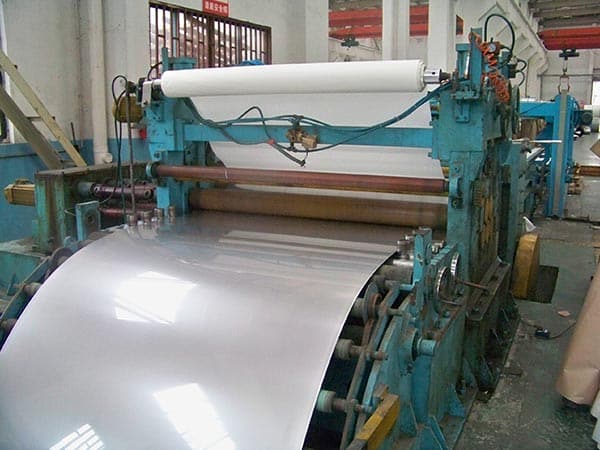
The Technical Essence of DIN EN 10149-2 Standards
DIN EN 10149-2 specifies the technical delivery conditions for flat products made of high yield strength steels for cold forming. These steels are produced using thermomechanical rolling (TMCP), a process that meticulously controls the temperature and deformation during rolling to achieve a fine-grained microstructure. This metallurgical approach allows for high strength without the need for excessive alloying elements, resulting in superior weldability and formability compared to traditional normalized steels. Understanding the nuances of grades like S315MC, S355MC, S420MC, S460MC, S500MC, S550MC, S600MC, and S700MC is vital for engineers aiming to reduce vehicle weight or enhance structural integrity.
Precautions in Cold Forming and Bending Operations
One of the primary advantages of DIN EN 10149-2 steels is their exceptional cold formability. However, as the yield strength increases from S315MC to S700MC, the material's ductility and its reaction to stress change significantly. When performing bending or folding operations, the following precautions must be observed:
- Minimum Bending Radius: Higher strength grades require a larger internal bending radius to prevent cracking at the outer tension zone. For instance, while S315MC can handle tight bends, S700MC necessitates a radius often 1.5 to 2 times the plate thickness depending on the orientation.
- Springback Management: High-yield steels exhibit significant elastic recovery, or springback. Operators must over-bend the material to achieve the desired final angle. The degree of springback is proportional to the yield strength; thus, S700MC will spring back much more than S355MC.
- Edge Quality: The condition of the sheared or punched edge is critical. Micro-cracks or burrs on the edge can act as stress concentrators, leading to premature failure during forming. Grinding or smoothing the edges before bending is highly recommended for grades above S500MC.
- Rolling Direction: These steels possess anisotropic properties. Bending transverse to the rolling direction is generally safer than bending parallel to it. If the design requires longitudinal bends, the bending radius must be increased further.
| Steel Grade | Yield Strength (min MPa) | Tensile Strength (MPa) | Min. Bending Radius (90°, t<3mm) |
|---|---|---|---|
| S315MC | 315 | 390-510 | 0.25t |
| S420MC | 420 | 480-620 | 0.5t |
| S550MC | 550 | 600-760 | 1.0t |
| S700MC | 700 | 750-950 | 1.5t |
Welding Precautions and Thermal Cycle Management
The low carbon equivalent (CEV) of DIN EN 10149-2 steels makes them highly weldable. However, the thermomechanical treatment that gives these steels their strength is sensitive to excessive heat. Heat input control is the most critical factor during welding. If the heat input is too high, the fine-grained structure in the Heat Affected Zone (HAZ) may undergo grain growth, leading to a localized loss of strength and toughness.
When welding S700MC or similar grades, it is essential to use low-hydrogen consumables to prevent cold cracking. Preheating is generally not required for thinner sections due to the low carbon content, but for thicker plates or highly constrained joints, a modest preheat might be necessary to ensure a slow cooling rate. Conversely, the interpass temperature should be kept low (typically below 200°C) to prevent the softening of the HAZ. Using multi-pass welding with smaller bead sizes is often preferable to single-pass welding with high energy input.
Thermal Processing and Heat Treatment Restrictions
A common mistake in handling DIN EN 10149-2 steels is treating them like conventional structural steels regarding post-weld heat treatment (PWHT) or hot forming. Do not normalize or quench and temper these steels. Normalizing these steels will destroy the fine-grained structure achieved through thermomechanical rolling, resulting in a dramatic drop in yield strength—sometimes by more than 30%. If hot forming is absolutely necessary, the temperature must be strictly controlled, but generally, these materials are intended for cold use only. If the material is heated above 580°C for an extended period, the mechanical properties guaranteed by the standard can no longer be ensured.
Machining and Cutting Considerations
Laser, plasma, and waterjet cutting are effective for DIN EN 10149-2 steels. However, thermal cutting processes create a hardened edge and a small HAZ. For components subject to high fatigue loads, this hardened layer should be removed by machining. When drilling or milling high-strength grades like S700MC, tools must be robust and coated (e.g., TiAlN) to handle the increased hardness and work-hardening tendencies. Proper lubrication and cooling are essential to maintain tool life and surface finish.
Environmental Adaptability and Surface Protection
While DIN EN 10149-2 focuses on mechanical properties, the chemical composition—often including micro-alloying elements like Niobium (Nb), Vanadium (V), and Titanium (Ti)—provides a slight improvement in atmospheric corrosion resistance compared to plain carbon steels. However, they are not "weathering steels." For long-term durability in corrosive environments, surface protection is mandatory.
During pickling or galvanizing, care must be taken to avoid hydrogen embrittlement, particularly in the higher strength grades (S600MC and above). If hot-dip galvanizing is used, the silicon and phosphorus content must be checked to ensure they fall within the ranges specified for the Sebisty or Sandelin effects to avoid excessively thick and brittle zinc coatings. The high strength of these steels makes them ideal for weight-sensitive applications such as truck chassis, crane arms, and agricultural equipment, where they can withstand harsh mechanical environments provided they are protected from oxidation.
Material Selection and Engineering Design
Engineers must realize that substituting S235JR with S700MC is not a simple 1:1 replacement. While the S700MC is much stronger, the modulus of elasticity remains the same (approx. 210 GPa). This means that while the part won't permanently deform under higher loads, it will still deflect (bend) the same amount as a lower-strength steel under the same load. Design modifications, such as adding ribs or changing profiles, are often necessary to maintain stiffness while taking advantage of the weight-saving potential of high-yield steels. By reducing the thickness of the material, designers can achieve up to 40% weight reduction in structural components, which is a significant advantage in the transport and lifting industries.
Leave a message