
What is the mechanical properties of en 10149-2 s700mc?
Explore the comprehensive mechanical properties, chemical composition, and industrial applications of EN 10149-2 S700MC high-strength steel. Learn how its thermomechanical processing enhances weldability and formability.
Understanding the Essence of EN 10149-2 S700MC
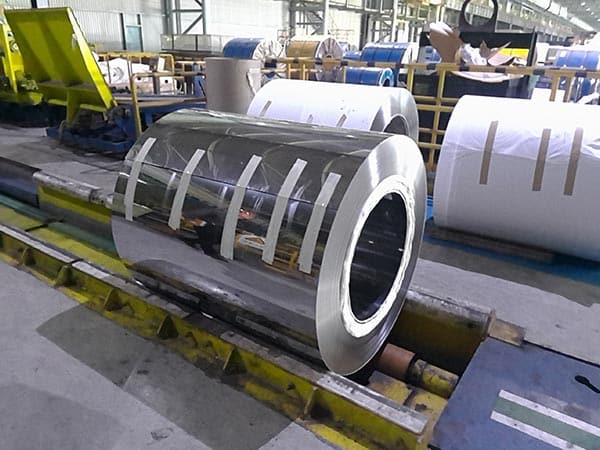
EN 10149-2 S700MC represents the pinnacle of high-strength low-alloy (HSLA) steels produced via thermomechanical rolling. This material is specifically engineered for cold-forming applications where weight reduction and high structural integrity are paramount. The nomenclature itself reveals its core identity: S stands for structural steel, 700 denotes a minimum yield strength of 700 MPa, M indicates its thermomechanical rolling condition, and C highlights its suitability for cold forming. Unlike traditional quenched and tempered steels, S700MC achieves its remarkable strength through a precise combination of chemical micro-alloying and controlled cooling processes during rolling. This methodology results in a fine-grained microstructure that offers a unique balance of extreme strength and excellent ductility.
Chemical Composition and Micro-alloying Strategy
The superior mechanical properties of S700MC are not accidental; they are the result of a meticulously controlled chemical profile. The standard EN 10149-2 dictates strict limits on elements to ensure weldability and formability. The low carbon content is essential for maintaining a low carbon equivalent (CEV), which directly translates to superior welding performance without the need for extensive preheating. Micro-alloying elements such as Niobium (Nb), Vanadium (V), and Titanium (Ti) play a critical role in grain refinement and precipitation hardening. These elements inhibit grain growth during the rolling process, creating a dense, fine-grained structure that resists deformation and fracture.
| Element | Max % Content |
|---|---|
| Carbon (C) | 0.12 |
| Manganese (Mn) | 2.10 |
| Silicon (Si) | 0.60 |
| Phosphorus (P) | 0.025 |
| Sulphur (S) | 0.015 |
| Aluminum (Al) | 0.015 |
| Niobium (Nb) | 0.09 |
| Vanadium (V) | 0.20 |
| Titanium (Ti) | 0.22 |
By keeping the sulfur and phosphorus levels exceptionally low, manufacturers enhance the internal purity of the steel, which is vital for preventing lamellar tearing and improving the steel's impact toughness at low temperatures. The addition of Titanium and Niobium specifically helps in pinning grain boundaries, ensuring that the strength remains consistent throughout the entire plate or coil thickness.
Core Mechanical Properties: Yield and Tensile Strength
The primary reason engineers select S700MC is its impressive strength-to-weight ratio. With a minimum yield strength of 700 MPa, it allows for the design of much thinner sections compared to traditional S355 structural steels, often leading to weight savings of 30% to 40% in mobile equipment and transport vehicles. This weight reduction is critical for increasing payload capacity and reducing fuel consumption in the automotive and logistics sectors.
| Property | Value (Thickness ≤ 16mm) |
|---|---|
| Minimum Yield Strength (ReH MPa) | 700 |
| Tensile Strength (Rm MPa) | 750 - 950 |
| Min. Elongation A5 (%) (Nominal thickness < 3mm) | 10 |
| Min. Elongation A5 (%) (Nominal thickness ≥ 3mm) | 12 |
While the yield strength is fixed at a minimum of 700 MPa, the tensile strength ranges between 750 and 950 MPa. This narrow range ensures predictable behavior during manufacturing processes like bending and stamping. The elongation values, though lower than those of mild steels, are remarkably high for a material of this strength level, allowing for complex cold-forming operations without the risk of cracking.
Exceptional Cold Forming and Bending Characteristics
The "C" in S700MC signifies its specialized capability for cold forming. Despite its high strength, this steel can be bent to tight radii, provided the correct parameters are followed. The fine-grained structure prevents the formation of "orange peel" effects or surface micro-cracks during the bending process. For designers, understanding the minimum bending radius is crucial to avoid material failure during fabrication.
- Bending at 90°: For thicknesses (t) less than or equal to 3mm, the recommended minimum mandrel radius is 1.0t for transverse bending.
- Thicker Sections: For thicknesses between 3mm and 6mm, the radius increases to approximately 1.5t.
- Directional Considerations: Bending transverse to the rolling direction typically allows for tighter radii compared to longitudinal bending, due to the elongated grain structure resulting from the TMCP process.
These forming characteristics make S700MC an ideal candidate for cold-pressed parts, such as longitudinal beams for truck chassis, cross members, and structural brackets. The consistency of the springback effect is also a notable advantage, allowing for high-precision automated manufacturing.
Impact Toughness and Environmental Adaptability
Environmental factors, particularly low temperatures, can significantly affect the ductility of structural steels. EN 10149-2 S700MC is designed to maintain its integrity even in harsh climates. While the standard primarily focuses on strength and formability, many manufacturers offer S700MC with guaranteed impact energy values, often tested at -20°C or -40°C. This ensures that the material does not undergo a brittle transition when exposed to sub-zero operating conditions, which is a vital safety requirement for cranes and lifting equipment operating in northern latitudes.
Welding and Fabrication Excellence
One of the most significant advantages of S700MC over traditional high-strength steels is its excellent weldability. Because the strength is derived from the thermomechanical rolling process rather than high carbon content or complex heat treatments, the carbon equivalent (CEV) remains low. This allows for welding using standard methods such as MAG (Metal Active Gas), MIG (Metal Inert Gas), and Laser Beam Welding. Key welding considerations include:
- Low Heat Input: It is essential to control the heat input during welding to prevent excessive grain growth in the heat-affected zone (HAZ). High heat input can lead to a localized reduction in strength.
- Filler Materials: High-strength filler wires matching the 700 MPa yield strength are readily available and should be used to ensure the weld joint is as strong as the base metal.
- No Preheating: In most cases, S700MC does not require preheating for thicknesses up to 10-12mm, significantly reducing fabrication time and energy costs.
Expanding Applications Across Heavy Industries
The adoption of S700MC has transformed several heavy industries by enabling the creation of lighter, stronger, and more efficient machinery. In the Mobile Crane Industry, the use of S700MC in telescopic booms allows for longer reach and higher lifting capacities without increasing the overall weight of the vehicle. This is critical for meeting road weight regulations while maximizing operational performance.
In the Automotive and Transport Sector, S700MC is the standard choice for truck chassis frames. By replacing S355 with S700MC, manufacturers can reduce the weight of the frame by nearly half, allowing for more cargo to be carried. This not only improves the economic efficiency of the transport fleet but also reduces the carbon footprint per ton-kilometer. Other applications include trailer side guards, bumpers, and structural components for agricultural machinery like harvesters and plows.
The Construction and Mining equipment sector utilizes S700MC for parts subjected to high stress but requiring low weight, such as support structures for conveyors, components of earth-moving machines, and specialized containers. The steel's resistance to fatigue and its ability to withstand vibration make it a durable choice for equipment that undergoes cyclic loading.
Comparing S700MC with Other High-Strength Grades
It is important to distinguish S700MC from other 700 MPa grades like S700QL. While both share a similar yield strength, their production routes and intended uses differ. S700QL is a quenched and tempered steel (under EN 10025-6), typically available in thicker plates and used for heavy structural applications where high toughness at very low temperatures is the priority. S700MC, being a TMCP steel, is primarily available as hot-rolled strip or sheet and is optimized for cold forming and high-volume manufacturing. Choosing between them depends on the thickness required and the complexity of the forming operations involved in the project.
Economic and Sustainable Advantages
The shift toward S700MC is also driven by sustainability goals. High-strength steels contribute to a circular economy by reducing the amount of raw material needed for a given structure. Less steel means less energy consumed during production, less weight to transport, and lower emissions throughout the lifecycle of the product. Furthermore, the high purity and low alloy content of S700MC make it easily recyclable at the end of its service life, fitting perfectly into modern green manufacturing frameworks. Engineers and procurement specialists favor S700MC because it provides a competitive edge through material optimization and enhanced product performance, ensuring that structures are not just stronger, but smarter.
Leave a message