
What is the application scope of en 10149-2 s355mc equivalent
Explore the comprehensive application scope, mechanical properties, and global equivalents of EN 10149-2 S355MC steel. This guide covers its technical advantages in automotive and heavy machinery industries.
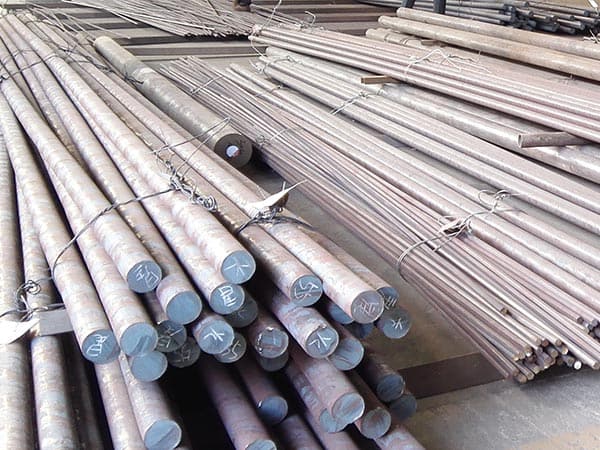
Defining the Technical Essence of EN 10149-2 S355MC
EN 10149-2 S355MC is a high-yield strength steel produced through a sophisticated thermomechanical rolling process (TMCP). The 'S' prefix denotes its structural purpose, '355' indicates a minimum yield strength of 355 MPa, and the 'MC' suffix signifies its suitability for cold forming (C) and its thermomechanically rolled (M) state. Unlike traditional hot-rolled steels, the TMCP process refines the grain structure by controlling the temperature and deformation during the rolling stage. This results in a material that offers an exceptional balance of high strength, superior toughness, and remarkable weldability, even at low temperatures.
Global Equivalents: Bridging International Standards
For global procurement and engineering design, identifying the correct equivalent for S355MC is vital. While different standards have unique testing protocols, several grades offer comparable performance characteristics. ASTM A1011 HSLAS-F Grade 50 is often cited as a North American counterpart, though it is essential to verify specific elongation and impact requirements. In the Chinese market, Q345MC (under GB/T 1591) serves as the direct equivalent, sharing nearly identical chemical and mechanical profiles. The Japanese standard JIS G3134 SPFH540 also aligns closely in terms of yield strength and formability. Engineers must note that while these grades are functionally similar, subtle differences in carbon equivalent values (CEV) can influence welding parameters.
| Standard | Equivalent Grade | Key Comparison Factor |
|---|---|---|
| EN 10149-2 | S355MC | Reference Standard |
| ASTM (USA) | A1011 HSLAS-F Gr 50 | Similar Yield, High Formability |
| GB (China) | Q345MC | Direct Chemical Equivalent |
| JIS (Japan) | SPFH540 | Automotive Structural Focus |
| ISO | 4967 Type 355W | International Alignment |
Mechanical Integrity and Material Properties
The mechanical performance of S355MC is the primary driver for its widespread adoption. Beyond the 355 MPa yield threshold, the material typically exhibits a tensile strength between 430 and 550 MPa. What sets it apart is its ductility; minimum elongation values often exceed 19% to 23% depending on thickness, allowing for complex geometries during cold pressing. The low carbon content (usually below 0.12%) and micro-alloying elements like Niobium (Nb), Vanadium (V), and Titanium (Ti) create a fine-grained ferritic-pearlitic structure. This microstructure provides high resistance to brittle fracture and enhances the fatigue life of components subjected to cyclic loading.
Superior Cold Forming and Processing Capabilities
The 'C' in S355MC stands for cold forming, highlighting the material's ability to undergo severe bending and flanging without cracking. For workshop operations, this translates to a tighter bending radius compared to standard s355jr hot-rolled plates. When bending S355MC, the recommended internal radius is typically 0.5 to 1.5 times the plate thickness, depending on the orientation relative to the rolling direction. This characteristic is indispensable for manufacturing C-channels, U-profiles, and complex brackets where weight reduction and structural rigidity are simultaneous requirements. Furthermore, the clean surface finish resulting from the controlled rolling process reduces tool wear during punching and shearing operations.
Optimized Weldability for Structural Efficiency
Weldability is a critical factor for any structural steel. S355MC excels here due to its extremely low carbon equivalent. It can be welded using all conventional methods, including MIG/MAG, TIG, and submerged arc welding. Because of the TMCP process, the heat-affected zone (HAZ) maintains much of its original toughness, provided that heat input is strictly controlled. Preheating is generally unnecessary for standard thicknesses, which significantly reduces production time and energy costs. However, engineers should avoid high-temperature stress-relieving treatments above 580°C, as excessive heat can reverse the grain refinement achieved during thermomechanical rolling, potentially lowering the yield strength.
Diverse Application Scope Across Heavy Industries
The application scope of S355MC and its equivalents is vast, primarily targeting sectors where weight saving is paramount. Within the automotive and transportation industry, it is the material of choice for truck chassis frames, cross members, and longitudinal beams. By replacing thicker, lower-strength steels with S355MC, manufacturers can reduce vehicle weight, thereby increasing payload capacity and improving fuel efficiency. In the heavy machinery sector, S355MC is used for crane booms, excavator components, and agricultural equipment frames. These parts require high strength to support heavy loads but must remain light enough to facilitate mobility and hydraulic efficiency.
- Cold-Formed Sections: Ideal for manufacturing lightweight purlins, rails, and structural tubes.
- Lifting Equipment: Used in the telescopic sections of mobile cranes where high strength-to-weight ratios are critical.
- Container Manufacturing: Provides the necessary impact resistance and structural integrity for shipping container frames.
- Waste Management Vehicles: Utilized in the construction of compactor bodies and lifting mechanisms.
Environmental Adaptability and Longevity
S355MC demonstrates excellent adaptability to diverse environmental conditions. Its fine-grained structure provides a natural advantage in low-temperature environments, maintaining impact energy absorption even at -20°C or -40°C if specified (as in S355MC-L grades). While it is not a weathering steel like Corten, its uniform surface and tight mill scale provide a consistent base for protective coatings, such as galvanizing or high-performance painting. This ensures that structures built with S355MC can withstand corrosive industrial atmospheres or coastal environments when properly treated. The material's fatigue resistance also makes it suitable for dynamic environments, such as railway rolling stock and vibrating machinery platforms.
Strategic Implementation in Modern Engineering
Adopting S355MC equivalent steels requires a holistic approach to design. Engineers should leverage the high yield strength to down-gauge components, which not only saves material costs but also reduces shipping and handling expenses. When transitioning from traditional S235 or S355JR grades, it is crucial to update tooling and bending parameters to account for the higher springback associated with high-strength steels. By integrating S355MC into the design phase, companies can achieve a more sustainable manufacturing cycle, utilizing less raw material to achieve superior structural performance. This strategic shift is essential for meeting modern standards of efficiency and environmental responsibility in global infrastructure and domestic markets.
Leave a message