
What are the suppliers of S900MC in Austria?
Explore the comprehensive guide to S900MC high-strength steel suppliers in Austria. This article covers technical specifications, mechanical properties, processing techniques, and the primary manufacturers and distributors within the Austrian market.
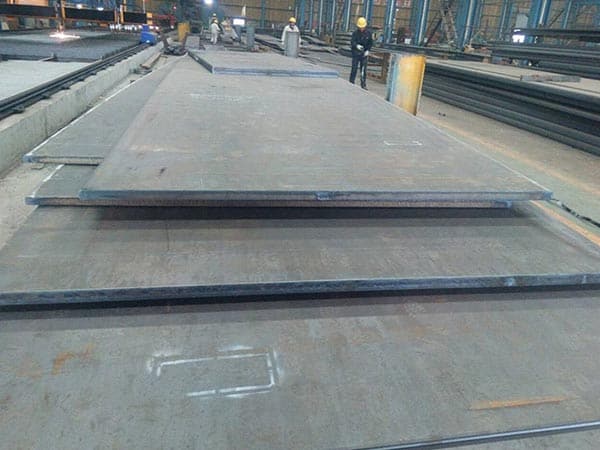
The Landscape of S900MC High-Strength Steel in Austria
Austria stands as a global hub for metallurgical excellence, particularly in the production and distribution of high-strength, low-alloy (HSLA) steels. S900MC, a thermomechanically rolled steel grade governed by the EN 10149-2 standard, represents a pinnacle of engineering materials designed for weight reduction and high load-bearing capacity. For procurement specialists and structural engineers, identifying the right suppliers in Austria involves understanding both the primary production capabilities of domestic giants and the specialized services offered by regional distributors.
The demand for S900MC in Central Europe is driven by the region's robust machinery, crane, and automotive sectors. Unlike standard structural steels, S900MC offers a minimum yield strength of 900 MPa, allowing for significantly thinner wall thicknesses without compromising structural integrity. This transition to high-strength materials is not merely a trend but a technical necessity in modern mobile hydraulics and heavy-duty transportation industries where every kilogram of dead weight saved translates directly into increased payload and fuel efficiency.
Primary Manufacturers: The Role of Voestalpine
When discussing S900MC in Austria, the conversation inevitably centers on Voestalpine. Headquartered in Linz, Voestalpine Steel Division is one of the few mills globally capable of producing ultra-high-strength thermomechanically rolled steels that exceed the baseline requirements of EN 10149-2. Their proprietary brand, alform 900 x-treme, is the industry benchmark for S900MC performance.
Voestalpine’s production process utilizes advanced thermomechanical rolling (TMCP) combined with accelerated cooling. This process refines the grain structure to a degree that is impossible to achieve through traditional heat treatment. The result is a steel that possesses not only extreme strength but also exceptional toughness and weldability. For those seeking the source of S900MC in Austria, Voestalpine serves as the primary manufacturer, supplying both large-scale OEMs and a network of specialized steel service centers.
Specialized Distributors and Steel Service Centers
While the mill produces the master coils and heavy plates, the Austrian market relies heavily on a sophisticated network of distributors who provide value-added services such as laser cutting, precision leveling, and just-in-time logistics. Several key players dominate this space:
- Weyland GmbH: With multiple locations across Austria, Weyland is a major stockholder of high-strength structural steels. They cater to medium-sized enterprises requiring specific dimensions and rapid delivery of S900MC sheets.
- ThyssenKrupp Materials Austria: As a global player with a strong local presence, they offer a vast inventory of HSLA grades, including S900MC, backed by extensive technical consulting and processing capabilities.
- Frankstahl: Known for their digitalized procurement systems, Frankstahl provides a wide range of high-strength plates and sheets to the Austrian construction and mechanical engineering sectors.
- Klöckner & Co (Kloeckner Metals Austria): They specialize in providing processed steel components, utilizing high-precision machinery to deliver S900MC parts ready for assembly.
Technical Specifications and Material Properties
Understanding the technical nuances of S900MC is crucial for successful application. The "S" denotes structural steel, "900" indicates the minimum yield strength in MPa, and "MC" signifies that the material is thermomechanically rolled (M) and possesses high cold-forming capacity (C). The chemical composition is strictly controlled to ensure low carbon equivalents, which is the secret behind its excellent weldability.
| Chemical Element | Maximum Content (%) |
|---|---|
| Carbon (C) | 0.20 |
| Manganese (Mn) | 2.20 | Silicon (Si) | 0.60 |
| Phosphorus (P) | 0.025 |
| Sulfur (S) | 0.010 |
| Aluminium (Al) | 0.015 |
Beyond the basic chemistry, S900MC incorporates micro-alloying elements such as Niobium (Nb), Vanadium (V), and Titanium (Ti). These elements, in combination with the TMCP process, create a fine-grained ferritic-bainitic microstructure. This specific structure allows the steel to maintain high energy absorption (impact strength) even at temperatures as low as -20°C or -40°C, depending on the specific sub-grade (e.g., S900MC vs. S900MC-L).
Mechanical Performance and Engineering Advantages
The primary advantage of S900MC is its strength-to-weight ratio. In crane construction, for instance, replacing S355 with S900MC can reduce the weight of structural components by over 50%. This enables the design of longer crane booms and higher lifting capacities.
| Property | Value |
|---|---|
| Yield Strength (ReH) | min. 900 MPa |
| Tensile Strength (Rm) | 930 - 1200 MPa |
| Elongation (A5) | min. 7% |
| Bending Radius (90°) | min. 3.0 x t (for t < 8mm) |
It is important to note that while the strength is high, the ductility remains sufficient for complex cold-forming operations. Engineers must account for the higher springback associated with 900 MPa materials compared to conventional steels. Precision tooling and experienced operators are essential when working with these grades.
Processing Guidelines: Welding and Cutting
S900MC requires specific attention during fabrication to preserve its thermomechanically enhanced properties. Because the strength is derived from the rolling process rather than high alloy content, the material is sensitive to excessive heat input.
Welding: S900MC exhibits excellent weldability due to its low carbon equivalent (CEV). Conventional methods like MAG (Metal Active Gas) are typically used. However, it is vital to control the cooling time (t8/5) to avoid softening in the Heat Affected Zone (HAZ) or the formation of brittle structures. Preheating is generally not required for thinner sections, which is a significant cost advantage over quenched and tempered (Q&T) steels.
Cutting: Laser and plasma cutting are the preferred methods for S900MC. The high-quality surface finish of Austrian-produced S900MC, such as Voestalpine’s alform, ensures optimal laser absorption and clean cut edges. Waterjet cutting is also an option for applications where the heat-affected zone must be completely eliminated, though it is less common for high-volume structural components.
Environmental Adaptation and Sustainability
In the context of the European Green Deal, the use of S900MC from Austrian suppliers contributes significantly to sustainability goals. The reduction in material usage leads to a lower CO2 footprint during the manufacturing phase. More importantly, the weight reduction in the end-use application—such as a lighter truck trailer—results in lower fuel consumption and reduced emissions throughout the vehicle's entire lifecycle.
Austrian manufacturers like Voestalpine are also pioneers in "green steel" initiatives, working toward hydrogen-based steelmaking. Choosing a local Austrian supplier for S900MC often ensures that the material is produced under some of the world's strictest environmental regulations, with a clear roadmap toward carbon neutrality.
Strategic Application Industries in Central Europe
The concentration of S900MC suppliers in Austria supports several key industrial clusters. The mobile crane industry, with major players located in and around Austria, relies on S900MC for telescopic booms where high stiffness and low weight are critical. Similarly, the agricultural machinery sector uses this grade for chassis and frames that must withstand extreme mechanical stress while remaining light enough to prevent soil compaction.
The transport industry utilizes S900MC for the construction of lightweight trailers and tankers. By using S900MC, manufacturers can increase the payload capacity of a vehicle within the legal gross weight limits, providing a significant competitive edge. The mining and earthmoving sectors also utilize S900MC for wear-resistant parts and structural components that require high fatigue strength under cyclic loading conditions.
Quality Assurance and Certification Standards
When sourcing S900MC in Austria, it is imperative to request 3.1 or 3.2 inspection certificates according to EN 10204. These documents verify the chemical composition and mechanical properties of the specific heat. Given the critical nature of applications involving 900 MPa steel, traceability is paramount.
Austrian suppliers typically adhere to ISO 9001 quality management systems. Furthermore, for applications in the automotive sector, compliance with IATF 16949 is often required. Buyers should also verify that the material meets the specific tolerances for flatness and surface quality defined in EN 10051, as these factors significantly impact the efficiency of automated welding and cutting processes.
Selecting a supplier in Austria for S900MC provides access to world-class metallurgical expertise and a reliable supply chain. Whether sourcing directly from the mill for large-scale production or through a specialized distributor for bespoke projects, the Austrian steel ecosystem offers the technical support and material quality necessary to push the boundaries of modern structural engineering.
Leave a message