
How strong is strenx 700MC steel?
A comprehensive analysis of Strenx 700MC steel strength, mechanical properties, and industrial applications. Discover how this 700 MPa steel optimizes performance.
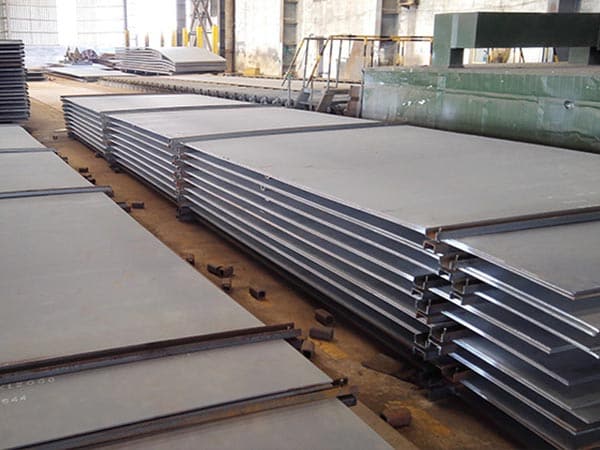
The Definition of High-Performance Strength in Strenx 700MC
Understanding the strength of Strenx 700MC requires looking beyond simple numbers. Developed by SSAB, this thermomechanically rolled structural steel is engineered for applications where weight reduction and high load-bearing capacity are critical. The "700" in its name signifies a minimum yield strength of 700 MPa, but its true value lies in the combination of this strength with exceptional toughness and workshop properties. Unlike traditional carbon steels, Strenx 700MC offers a unique strength-to-weight ratio that allows engineers to design lighter structures without compromising safety or durability.
The strength of Strenx 700MC is a result of a precisely controlled manufacturing process known as thermomechanical rolling. This process refines the grain structure of the steel, creating a fine-grained pearlitic-ferritic or bainitic matrix. This microscopic architecture is what gives the material its ability to withstand extreme stress while remaining ductile enough for complex forming operations.
Mechanical Properties: The Quantitative Strength Profile
To quantify how strong Strenx 700MC really is, we must examine its mechanical specifications. While standard structural steels like S355 offer a yield strength of 355 MPa, Strenx 700MC effectively doubles that capacity. This leap in performance enables a drastic reduction in plate thickness for the same structural load.
| Property | Value (Metric) | Value (Imperial) |
|---|---|---|
| Minimum Yield Strength (ReH) | 700 MPa | 101.5 ksi |
| Tensile Strength (Rm) | 750 - 950 MPa | 108.8 - 137.8 ksi |
| Minimum Elongation (A5) | 12% - 15% (depending on thickness) | 12% - 15% |
| Impact Toughness (Charpy V) | 40 J at -20°C / -40°C | 30 ft-lb at -4°F / -40°F |
The high tensile strength ensures that the material can resist permanent deformation under heavy loads, while the elongation properties indicate that the steel will deform plastically before fracture, providing a vital safety margin in structural engineering. This balance of high yield strength and ductility is what separates premium high-strength steel (HSS) from lower-grade alternatives.
Chemical Composition and Grain Refinement
The strength of Strenx 700MC is not just about heat treatment; it is also about the chemistry. By maintaining a low carbon equivalent (CEV), the steel remains highly weldable despite its high strength. Micro-alloying elements such as Niobium (Nb), Vanadium (V), and Titanium (Ti) are used to achieve grain refinement during the rolling process.
| Element | Max Content (%) |
|---|---|
| Carbon (C) | 0.12 |
| Silicon (Si) | 0.10 - 0.25 |
| Manganese (Mn) | 2.10 |
| Phosphorus (P) | 0.020 |
| Sulfur (S) | 0.010 |
| Aluminum (Al) | 0.015 |
The low levels of impurities like sulfur and phosphorus contribute to the steel's internal cleanliness, which enhances its fatigue resistance and ensures consistent performance across different batches. This chemical precision is vital for automated manufacturing environments where consistency is paramount.
Formability and Workshop Performance
One might assume that such a strong steel would be difficult to shape. However, Strenx 700MC is specifically designed for cold forming. Its tight thickness tolerances and uniform mechanical properties allow for precise bending with minimal springback. This makes it a favorite for manufacturers of complex profiles and boom sections.
- Bending Radius: Strenx 700MC allows for very tight bending radii, often as low as 0.8 to 1.5 times the plate thickness depending on the direction of the bend relative to the rolling direction.
- Edge Quality: The steel’s purity ensures that sheared or laser-cut edges remain stable and free from micro-cracks during the bending process.
- Machining: Despite its hardness, it can be drilled and milled using standard high-speed steel or carbide tools, provided the correct cutting speeds and feeds are maintained.
This ease of processing means that the "strength" of the material does not come at the cost of increased production time. Manufacturers can switch from S355 to Strenx 700MC with relatively minor adjustments to their tooling and procedures.
Welding Characteristics of 700 MPa Steel
Welding is often the weak link in high-strength structures, but Strenx 700MC is engineered to mitigate this. Due to its low carbon equivalent, it can be welded using all conventional methods, including MAG, MMA, TIG, and Laser welding. The heat-affected zone (HAZ) remains remarkably stable, though it is important to control the heat input to avoid softening the material.
Recommended Welding Practices:
- Keep heat input between 0.5 and 1.5 kJ/mm to maintain the strength of the joint.
- Preheating is generally not required for thicknesses under 10mm, which simplifies the assembly process.
- Use matching or slightly under-matched consumables depending on the specific stress requirements of the weld joint.
By maintaining the integrity of the weld, the overall structure retains the high-strength characteristics of the base metal, ensuring that the finished product can handle the dynamic loads it was designed for.
Environmental Adaptability and Fatigue Resistance
Strength is not just about static loads; it is also about how a material performs over time in harsh environments. Strenx 700MC exhibits excellent fatigue resistance, making it suitable for components subjected to cyclic loading, such as crane booms or trailer chassis. The fine-grained structure inhibits the initiation and propagation of cracks.
Furthermore, the ability to use thinner sections of Strenx 700MC leads to a significant reduction in the overall weight of vehicles and machinery. This weight reduction translates directly into lower fuel consumption and higher payload capacity, which are critical factors in reducing the carbon footprint of the transport and construction industries. In an era where environmental regulations are tightening, the strength of Strenx 700MC provides a pathway to more sustainable engineering solutions.
Expanding Applications Across Key Industries
The versatility of Strenx 700MC has led to its adoption across a wide range of demanding sectors. Its strength is utilized to push the boundaries of what machinery can achieve.
Transportation and Logistics: In the trailer industry, every kilogram of weight saved in the chassis is an extra kilogram of payload. Strenx 700MC allows for the construction of ultra-lightweight trailers that are stronger than their heavier predecessors made from conventional steel.
Lifting and Cranes: Mobile cranes require materials that can reach higher and lift more while remaining light enough to travel on public roads. The high yield strength of Strenx 700MC is essential for the telescopic booms and outriggers of modern cranes.
Agriculture: Modern farming equipment, such as large sprayers, spreaders, and tillage tools, benefits from the high strength and impact resistance of 700MC. It ensures that the equipment can handle the rigors of the field while minimizing soil compaction through reduced weight.
Construction and Mining: From dump truck bodies to heavy-duty buckets, the ability of Strenx 700MC to resist deformation under impact makes it a reliable choice for the toughest jobs on earth. It provides the structural backbone for machines that operate in extreme conditions 24/7.
Optimizing Design with Strenx 700MC
To fully leverage the strength of Strenx 700MC, designers must move away from traditional "thick-plate" thinking. By utilizing the 700 MPa yield strength, it is possible to reduce plate thickness by up to 30-40% compared to S355 steel. This requires careful consideration of buckling and stiffness, which are governed by the modulus of elasticity (which remains the same as standard steel) rather than yield strength. Advanced FEA (Finite Element Analysis) is often employed to optimize the geometry of the components, using folds and profiles to provide stiffness while the Strenx steel provides the necessary tensile capacity.
The result of this optimization is a product that is not only stronger but also more cost-effective over its lifecycle. Reduced material usage, lower welding volumes, and decreased transport costs all contribute to a superior bottom line for both the manufacturer and the end-user.
Leave a message