
What is the strenx steel price export to Australia
Explore the comprehensive factors influencing Strenx steel prices for the Australian market, including mechanical properties, processing advantages, and export logistics.
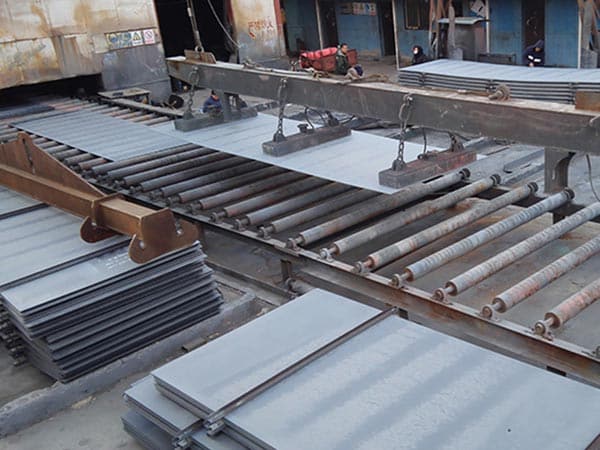
Current Market Dynamics of Strenx Steel in Australia
Understanding the Strenx steel price export to Australia requires a deep dive into more than just a simple per-tonne figure. Strenx, a premium high-strength structural steel brand from SSAB, has become a cornerstone for the Australian transport, mining, and construction sectors. The pricing structure is influenced by global raw material costs, energy surcharges, and the specific logistical challenges of shipping to major Australian ports like Fremantle, Brisbane, and Melbourne. For procurement managers, the value proposition of Strenx lies not in the initial purchase price, but in the massive weight savings and payload increases it facilitates.
Currently, the price for exporting Strenx steel to Australia fluctuates based on the grade—ranging from Strenx 600 to Strenx 1300. Standard grades like Strenx 700MC are more readily available and competitively priced compared to ultra-high-strength variants like Strenx 1100. Buyers must also account for the Australian Dollar (AUD) to US Dollar (USD) exchange rate, as international steel trade is predominantly conducted in USD. Additionally, import duties and the 10% Goods and Services Tax (GST) at the Australian border are critical components of the final landed cost.
Mechanical Superiority and Grade Variations
The core reason Australian industries invest in Strenx steel, despite its premium price point, is its exceptional mechanical properties. Unlike standard structural steels (like AS/NZS 3678-350), Strenx offers a significantly higher yield strength, allowing for thinner plates to be used without compromising structural integrity. This is particularly vital for the Australian road train industry, where reducing the tare weight of a trailer directly translates to higher fuel efficiency and increased revenue per trip.
| Strenx Grade | Yield Strength (MPa) | Tensile Strength (MPa) | Elongation (%) | Typical Applications in Australia |
|---|---|---|---|---|
| Strenx 700MC | 700 min | 750 - 950 | 12 - 13 | Truck chassis, crane booms, tipper bodies |
| Strenx 900 | 900 min | 940 - 1100 | 8 - 10 | Heavy lifting equipment, forestry machinery |
| Strenx 960 | 960 min | 980 - 1250 | 7 - 9 | Mobile cranes, high-load structural parts |
| Strenx 1100 | 1100 min | 1200 - 1500 | 6 - 8 | Specialized lightweight engineering components |
Mechanical toughness is another critical attribute. Australia’s diverse climate, from the scorching heat of the Pilbara to the colder regions of Tasmania, demands steel that can withstand impact at various temperatures. Strenx steel is tested for Charpy V-notch impact toughness, ensuring that even at sub-zero temperatures, the material remains ductile and resistant to brittle fracture. This reliability reduces maintenance costs and extends the lifecycle of heavy machinery operating in harsh environments.
Processing Performance: Weldability and Formability
Fabricators in Sydney and Perth prioritize Strenx because of its predictable processing behavior. When calculating the Strenx steel price export to Australia, one must consider the reduced labor costs during fabrication. High-strength steel often has a reputation for being difficult to work with, but Strenx is engineered with low carbon equivalents (CEV), which significantly enhances its weldability.
- Excellent Bendability: Strenx plates can be cold-formed with tight bending radii. This allows for the creation of complex, streamlined designs in trailer manufacturing, reducing the number of welded joints and improving overall structural aerodynamics.
- Superior Weldability: Due to the clean chemistry and controlled manufacturing process, Strenx can be welded using standard methods like MAG or MMA. The narrow Heat Affected Zone (HAZ) ensures that the high-strength properties are maintained across the joint, provided the correct heat input guidelines are followed.
- Consistent Surface Quality: The steel arrives with a high-quality surface finish, often requiring less pre-treatment before painting or coating, which is a significant advantage for Australian manufacturers aiming for high-end aesthetic finishes on their equipment.
Workshop efficiency is a major driver for the Australian market. By using Strenx, a workshop can reduce the total volume of steel used, which means less welding wire, less gas, and fewer man-hours spent on each project. These operational savings often offset the higher initial material cost compared to mild steel.
Environmental Adaptability and Sustainability
Australia is increasingly focused on "Green Steel" and sustainable procurement. Strenx steel contributes to environmental goals in two primary ways. First, the reduction in material usage (down-gauging) means less energy was consumed in the production and transport of the steel itself. Second, the lightweighting of vehicles leads to a permanent reduction in CO2 emissions throughout the vehicle's operational life. This aligns with the Australian government's tightening regulations on heavy vehicle emissions and fuel efficiency.
Furthermore, Strenx is highly recyclable. At the end of a machine's long service life, the high-quality alloy can be recovered and reprocessed, fitting into a circular economy model. For Australian companies looking to improve their Environmental, Social, and Governance (ESG) ratings, specifying Strenx is a strategic move that goes beyond simple engineering requirements.
Export Logistics and Procurement Strategies for Australia
Navigating the logistics of Strenx steel price export to Australia involves understanding shipping routes and lead times. Most Strenx products are exported from European or Asian distribution hubs. For Australian buyers, choosing between Breakbulk and Containerized shipping is a key decision. Breakbulk is often necessary for large plates (e.g., 12-meter lengths), while containers are more cost-effective for smaller, standard-sized sheets.
Strategic procurement involves monitoring the global steel price indices and locking in contracts when prices are favorable. Many Australian distributors maintain a local stock of common grades like Strenx 700, but for large-scale infrastructure projects or specialized manufacturing runs, direct indent orders from the mill are more economical. It is also essential to ensure that the steel is accompanied by 3.1 or 3.2 material test certificates (MTCs) to comply with Australian Standards (AS) and ensure traceability for safety-critical applications.
Another factor influencing the price is the "My Inner Strenx" program. Members of this program—typically high-quality manufacturers—get access to technical support and marketing benefits. While there is a rigorous certification process, the branding of a trailer or crane with the Strenx logo adds significant resale value in the Australian second-hand market, making the initial investment even more lucrative.
Industry-Specific Applications in the Australian Landscape
The Australian mining sector is perhaps the largest consumer of high-strength steel. Underground mining equipment, where space is at a premium and weight limits are strict, benefits immensely from the strength-to-weight ratio of Strenx 900 and 960. In the agricultural sector, lighter implements mean less soil compaction and lower tractor fuel consumption, which are critical factors for large-scale farming operations in New South Wales and Queensland.
In the urban construction sector, the trend towards taller and more complex structures in cities like Melbourne and Brisbane has increased the demand for Strenx in structural columns and transfer beams. The ability to support massive loads with smaller steel profiles allows architects more creative freedom and increases the usable floor space within a building's footprint.
When evaluating the Strenx steel price export to Australia, it is clear that the material is an investment in performance, safety, and long-term cost reduction. By leveraging its superior mechanical properties and processing ease, Australian industries can continue to innovate and remain competitive on a global stage.
Leave a message