
Top ten alloy steel s700mce manufacturers in Belarus
A comprehensive guide to S700MC high-strength alloy steel manufacturers and suppliers in Belarus, exploring mechanical properties, technical specifications, and industrial applications.
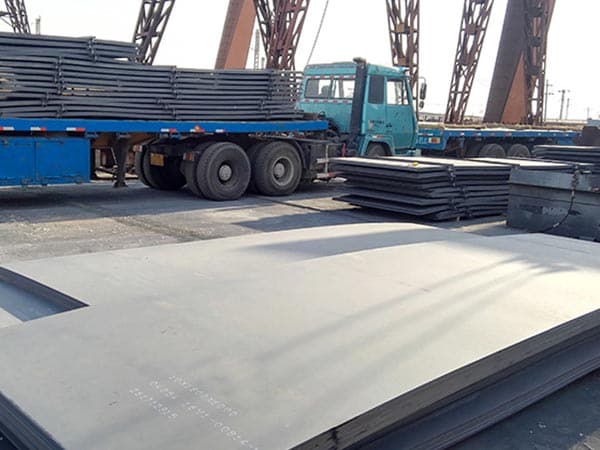
The Strategic Importance of S700MC Steel in the Belarusian Industrial Landscape
Belarus has established itself as a critical hub for heavy machinery and automotive engineering in Eastern Europe. The adoption of S700MC, a high-strength low-alloy (HSLA) steel produced through thermomechanical rolling, has become a cornerstone for manufacturers seeking to optimize structural weight without compromising integrity. This grade, governed by the EN 10149-2 standard, provides a minimum yield strength of 700 MPa, making it an ideal candidate for the demanding environments of mining, agriculture, and heavy-duty logistics. The shift toward S700MC is not merely a trend but a technical necessity for enterprises like MAZ and BELAZ, where reducing the curb weight of vehicles directly translates to higher payloads and improved fuel efficiency.
Metallurgical Excellence and Chemical Composition
The performance of S700MC is rooted in its sophisticated chemical architecture. Unlike traditional quenched and tempered steels, S700MC achieves its strength through thermomechanical controlled processing (TMCP). This involves precise temperature control during the rolling process, which facilitates a fine-grained ferritic-pearlitic microstructure. The addition of micro-alloying elements such as Niobium (Nb), Vanadium (V), and Titanium (Ti) is crucial. These elements form carbonitrides that pin grain boundaries, preventing grain growth and ensuring exceptional toughness even at low temperatures. The low carbon content (typically below 0.12%) ensures that the material remains highly weldable, a feature that is often a bottleneck for other high-strength materials.
| Element | Maximum Content (%) | Function in S700MC |
|---|---|---|
| Carbon (C) | 0.12 | Ensures weldability and prevents brittleness. |
| Manganese (Mn) | 2.10 | Enhances strength and hardenability. |
| Silicon (Si) | 0.60 | Provides deoxidation and solid solution strengthening. |
| Niobium (Nb) | 0.09 | Refines grain size and increases yield strength. |
| Titanium (Ti) | 0.22 | Improves nitrogen binding and grain stability. |
Mechanical Properties and Performance Benchmarks
The primary allure of S700MC for Belarusian engineers lies in its mechanical versatility. While the yield strength is the headline figure, the tensile strength and elongation properties are equally vital for complex fabrication. S700MC typically exhibits a tensile strength between 750 and 950 MPa. Despite this high strength, the material maintains an elongation of at least 12%, allowing for significant cold forming and bending operations. This balance is critical for the production of telescopic crane arms and chassis frames where the steel must withstand dynamic loads and occasional overloads without catastrophic failure.
- Yield Strength: Minimum 700 MPa for thicknesses ≤ 8mm.
- Tensile Strength: 750 to 950 MPa, ensuring high energy absorption.
- Impact Toughness: Often tested at -20°C or -40°C to suit the Belarusian winter climate.
- Cold Forming: Excellent bendability with a minimum radius of 1.5 times the thickness.
Top Entities in the S700MC Supply Chain in Belarus
The manufacturing and distribution of S700MC in Belarus are concentrated among a few key industrial giants and specialized service centers. These entities provide the necessary infrastructure to process, store, and deliver high-strength steel to the nation's manufacturing heartlands.
1. Byelorussian Steel Works (BMZ): Located in Zhlobin, BMZ is the primary producer of high-quality steel products in the country. Their investment in modern rolling mills allows for the production of micro-alloyed grades that meet international HSLA standards. BMZ serves as the backbone of the domestic supply chain.
2. Belarusian Metallurgical Company (Holding): This state-controlled entity manages the export and domestic distribution of S700MC, ensuring that critical industries receive priority access to high-performance materials.
3. Belmet (Minsk): A leading service center that specializes in the precision cutting and slitting of high-strength coils. Their facility is equipped with advanced laser and plasma cutting systems optimized for S700MC.
4. Metallservis-Stolitsa: Known for maintaining extensive inventories of alloy steel plates, they are a primary supplier for small to medium-sized engineering firms across the Gomel and Minsk regions.
5. Steel Alliance: This distributor focuses on high-strength grades, providing technical consultancy to help engineers transition from S355 to S700MC, including advice on welding parameters and weight-saving calculations.
6. Prommetiz: While specializing in metal hardware, they supply the specialized welding consumables and fasteners required for high-strength structural assemblies.
7. Gomel Metallurgical Plant: This facility plays a key role in the secondary processing of alloy steels, providing heat treatment and surface finishing services that enhance the environmental resistance of S700MC components.
8. Mogilev Steel Service: Serving the eastern industrial zone, this supplier provides just-in-time delivery of S700MC sheets for the regional agricultural machinery manufacturers.
9. Brest Metal Center: Strategically located near the border, this center handles both domestic production and high-grade imports, ensuring a steady supply of S700MC for export-oriented manufacturers.
10. Vitebsk Industrial Supplies: A key partner for the northern logistics corridor, providing heavy-duty structural steel for transport infrastructure and vehicle bodies.
Advanced Processing: Welding and Cold Forming
Fabricating with S700MC requires a departure from traditional techniques used for mild steel. The thermomechanical nature of the steel means that excessive heat input during welding can soften the heat-affected zone (HAZ), leading to a localized reduction in strength. Belarusian fabricators utilize Gas Metal Arc Welding (GMAW) with precisely controlled heat inputs. The use of low-hydrogen consumables is mandatory to prevent cold cracking. Furthermore, the high yield strength of the material necessitates robust machinery for cold forming. Bending S700MC requires higher pressure than S355, and springback must be carefully calculated. However, the superior surface quality of S700MC, characterized by a thin, tightly adherent scale, makes it exceptionally well-suited for laser cutting, resulting in clean edges and high dimensional accuracy.
Environmental Adaptability and Longevity
The Belarusian climate, characterized by significant temperature fluctuations and harsh winters, demands materials that can maintain ductility at sub-zero temperatures. S700MC is engineered to resist brittle fracture, a common failure mode in standard structural steels when exposed to extreme cold. The fine-grained structure provides a natural barrier to crack propagation. Additionally, when combined with modern coating technologies such as hot-dip galvanizing or high-performance primers, S700MC structures offer a service life that far exceeds traditional materials, reducing the total cost of ownership for end-users in the construction and transport sectors.
Economic Advantages of High-Strength Steel Integration
Implementing S700MC into industrial designs offers a clear economic trajectory. By utilizing the higher load-bearing capacity, manufacturers can reduce the thickness of structural components by up to 30-40% compared to S355 steel. This reduction in material volume leads to lower raw material costs, reduced welding time, and lower transport costs for the finished product. In the logistics sector, a lighter trailer frame made of S700MC allows for an increased payload, directly enhancing the profitability of transport operations. This efficiency is a primary driver for the continued growth of the S700MC market within the Belarusian industrial ecosystem.
Leave a message