
What are the welding precautions for en 10149-2 equivalent indian standard
A technical guide on welding precautions for EN 10149-2 and its Indian equivalent IS 5986, focusing on heat input, filler selection, and HAZ integrity.
Understanding EN 10149-2 and its Indian Equivalents
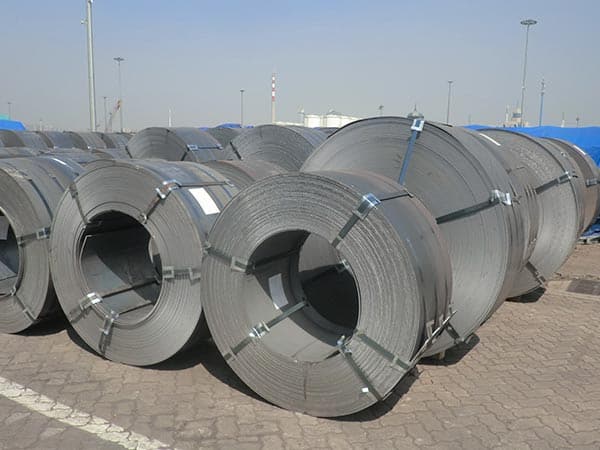
EN 10149-2 specifies hot-rolled flat products made of high yield strength steels for cold forming. These steels are typically produced via thermomechanically controlled processing (TMCP), which allows for a fine-grained microstructure and high strength without excessive alloying. In the Indian context, the closest equivalent standard is IS 5986 (Hot rolled steel flat products for structural surfacing and forming). Specifically, grades like S355MC under EN 10149-2 find their counterparts in IS 5986 Gr 355 or Gr 420, depending on the specific mechanical requirements and application complexity.
Because these steels rely on their specific rolling history and micro-alloying elements (such as Niobium, Vanadium, and Titanium) to achieve their properties, welding them requires a specialized approach compared to standard structural steels like IS 2062. The primary challenge lies in maintaining the strength and toughness of the Heat Affected Zone (HAZ) while avoiding cold cracking or softening.
Critical Welding Precautions for TMCP Steels
When welding EN 10149-2 equivalent Indian standards, the most significant factor is the Heat Input (kJ/mm). Unlike traditional normalized steels, TMCP steels are sensitive to high heat cycles. Excessive heat input leads to grain coarsening in the HAZ, which significantly reduces the yield strength and impact toughness. Conversely, extremely low heat input might increase the risk of hydrogen-induced cracking in the fusion line.
- Heat Input Control: It is recommended to keep the heat input within a range of 0.5 to 1.5 kJ/mm for thinner gauges and up to 2.0 kJ/mm for thicker sections. Monitoring the cooling time (t8/5) is essential to ensure the microstructure remains stable.
- Preheating Requirements: One of the advantages of EN 10149-2 and IS 5986 steels is their low Carbon Equivalent (CEV). In most cases, preheating is not required for thicknesses below 20mm, provided the ambient temperature is above 5°C and the consumables are low-hydrogen. However, if welding in high-humidity environments or on very thick sections, a modest preheat of 50°C to 100°C can help eliminate moisture and slow the cooling rate.
- Interpass Temperature: To prevent the accumulation of heat that could soften the base metal, the interpass temperature should generally be kept below 200°C.
Chemical and Mechanical Synergy
The following table illustrates the typical comparison between EN 10149-2 S355MC and its Indian equivalent IS 5986, highlighting why welding parameters must be strictly controlled.
| Property | EN 10149-2 (S355MC) | IS 5986 (Gr 355) | Impact on Welding |
|---|---|---|---|
| Yield Strength (MPa) | Min 355 | Min 355 | Requires matching filler strength | Carbon Max (%) | 0.12 | 0.20 | Low CEV improves weldability | Manganese Max (%) | 1.50 | 1.50 | Affects hardenability of HAZ | Micro-alloying (Nb, Ti, V) | Present | Optional/Present | Controls grain growth during cooling |
Filler Material Selection and Joint Preparation
Selecting the correct filler metal is vital for ensuring the weld metal matches the performance of the IS 5986 or EN 10149-2 base material. For grades like S355MC or IS 5986 Gr 355, AWS A5.18 ER70S-6 (for GMAW) or AWS A5.1 E7018 (for SMAW) are common choices. For higher grades like S700MC, specialized high-strength low-alloy (HSLA) consumables must be used.
Joint Design: Due to the high yield strength, these steels are often used in thinner sections to reduce weight. This necessitates precise joint preparation. V-groove or X-groove preparations should be clean of scale, rust, and oil. Since these steels are often used in cold-forming applications, ensure that the weld reinforcement is minimal and smoothly transitioned to the base metal to avoid stress concentrations during subsequent bending or forming operations.
Environmental Adaptability and Post-Weld Integrity
EN 10149-2 equivalent steels are frequently utilized in the automotive, heavy machinery, and crane manufacturing industries because of their excellent strength-to-weight ratio. When these components operate in low-temperature environments (e.g., Northern India during winter or high-altitude regions), the low-temperature impact toughness of the weld becomes critical. Always ensure that the filler metal is rated for the required sub-zero impact values (e.g., -20°C or -40°C).
Post-Weld Heat Treatment (PWHT): Generally, PWHT is not recommended for TMCP steels like S355MC or IS 5986. Heating the material to typical stress-relieving temperatures (550°C - 650°C) can cause a drastic drop in yield strength due to the alteration of the thermomechanical grain structure. If stress relief is mandatory due to code requirements, it must be performed with extreme caution and at lower temperatures, or the design must account for the strength reduction.
Avoiding Common Defects
Hydrogen-induced cracking (HIC) is a risk whenever high-strength steel is involved. Even though the CEV is low, the high strength of the base metal creates higher residual stresses. Using low-hydrogen processes (GMAW, FCAW-G, or basic coated electrodes) is non-negotiable. Furthermore, ensure that the gas shielding (typically Argon/CO2 mixtures) is of high purity to prevent porosity and oxidation.
For industrial applications such as truck chassis or telescopic booms, the fatigue life of the weld is paramount. Surface finishing of the weld toe through grinding or Ultrasonic Impact Treatment (UIT) can significantly extend the service life of components made from IS 5986 or EN 10149-2 equivalents by reducing local stress peaks.
Expanding Applications in the Indian Market
The shift towards lighter, more fuel-efficient transport and robust infrastructure in India has increased the demand for IS 5986 steels. By adhering to these welding precautions, manufacturers can successfully replace traditional heavy sections with thinner, high-strength alternatives. This not only reduces material costs but also enhances the payload capacity of commercial vehicles and the efficiency of mobile cranes. Understanding the metallurgical nuances of EN 10149-2 equivalents ensures that the integrity of the final structure matches the sophisticated engineering of the base steel.
Leave a message