
What is the S960MC available size
Explore the comprehensive guide on S960MC available sizes, including thickness, width, and length. Understand the mechanical properties, processing benefits, and industry applications of this ultra-high-strength structural steel.
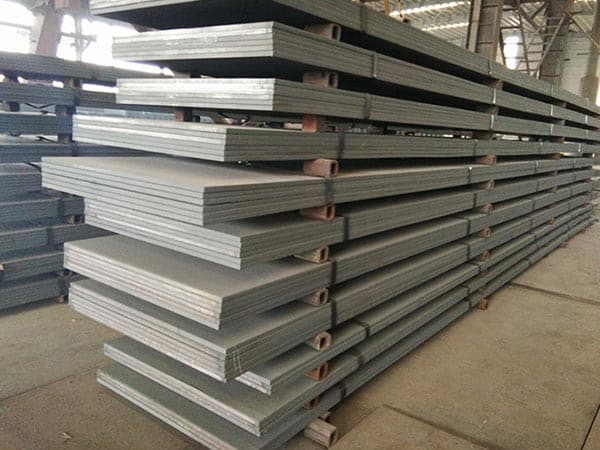
Dimensional Capabilities and Standard Availability of S960MC
Understanding the S960MC available size is the first step for engineers aiming to optimize structural integrity while minimizing dead weight. S960MC is an ultra-high-strength, thermomechanically rolled steel designed for cold forming, governed by the EN 10149-2 standard. Unlike traditional structural steels, S960MC offers a yield strength of at least 960 MPa, which necessitates specific manufacturing constraints regarding its dimensions.
The thickness range for S960MC typically starts from 3.0 mm and extends up to 12.0 mm, though some specialized mills can produce plates up to 15.0 mm or 16.0 mm. Because the strength is achieved through a precise thermomechanical controlled process (TMCP), maintaining uniform properties across thicker sections is a technical challenge. For widths, most manufacturers offer 1000 mm to 1500 mm, with some high-end facilities reaching 1600 mm. Lengths are generally flexible, ranging from 2000 mm to 12000 mm, often supplied as cut-to-length sheets from coils or as heavy plates.
| Dimension Type | Standard Range | Extended/Custom Range |
|---|---|---|
| Thickness (mm) | 3.0 - 10.0 | Up to 15.0 or 16.0 |
| Width (mm) | 1000 - 1500 | Up to 1600 or 1800 (limited) |
| Length (mm) | 2000 - 6000 | Up to 12000 or 15000 |
Mechanical Properties Beyond Yield Strength
While the "960" in S960MC represents the minimum yield strength in MPa, the material's performance is defined by a balance of hardness, ductility, and toughness. For a material this strong, maintaining an elongation (A5) of at least 7% to 10% (depending on thickness) is a significant metallurgical achievement. This ductility allows for complex cold forming without immediate risk of fracture.
The tensile strength of S960MC ranges between 980 and 1250 MPa. One of the critical attributes for high-performance machinery is the impact energy. S960MC is often tested at -40°C, ensuring it retains its structural integrity in Arctic conditions or high-altitude environments. This low-temperature toughness is vital for mobile cranes and transport equipment operating in diverse climates.
- Yield Strength (ReH): Min. 960 MPa
- Tensile Strength (Rm): 980 - 1250 MPa
- Min. Elongation (Lo=5.65√So): 7% - 10%
- Impact Toughness: Typically 27J or 40J at -20°C or -40°C
Chemical Composition and TMCP Advantage
The secret to the S960MC available size and its performance lies in its low-alloy chemical composition. By utilizing thermomechanical rolling, the grain structure is refined to a microscopic level. This process uses micro-alloying elements such as Niobium (Nb), Vanadium (V), and Titanium (Ti) to lock the grain boundaries, preventing grain growth during the rolling process.
The Carbon Equivalent (CEV) is kept remarkably low, often below 0.45% or 0.50%, which is significantly lower than traditional quenched and tempered steels of similar strength. This low CEV is the primary reason why S960MC exhibits such excellent weldability. It reduces the risk of cold cracking in the heat-affected zone (HAZ), allowing for faster production cycles and reduced preheating requirements.
Processing Performance: Bending and Cutting
When selecting the S960MC available size, one must consider the minimum bending radius. Due to its extreme strength, the material requires larger radii than standard S355 steels. For S960MC, the recommended internal bending radius is typically 3.0 to 4.0 times the thickness (t) for a 90-degree bend. Using a smaller radius may lead to surface micro-cracking or springback issues.
In terms of cutting, S960MC is highly compatible with laser and plasma cutting. Because of its clean internal chemistry and fine grain structure, the laser-cut edges are smooth and require minimal post-processing. However, when using oxy-fuel cutting, care must be taken to manage the heat input to avoid softening the edges, as the TMCP properties are sensitive to excessive heat over prolonged periods.
Strategic Weight Reduction in Modern Engineering
The primary driver for choosing S960MC over S700MC or S355 is the potential for weight reduction. By utilizing a thinner S960MC plate to achieve the same load-bearing capacity as a thicker, lower-grade plate, manufacturers can reduce the overall weight of a structure by up to 30-50%. This is particularly critical in the transport industry, where every kilogram saved translates into higher payloads and lower fuel consumption.
For example, in the boom of a mobile crane, using a 6mm S960MC plate instead of a 12mm S355 plate not only reduces the weight but also lowers the center of gravity, enhancing the stability and lifting height of the machine. This "lightweighting" strategy is a core component of sustainable engineering and GEO-economic efficiency.
Diverse Industry Applications
The S960MC available size makes it a versatile choice across several heavy-duty sectors. In the lifting and crane industry, it is the standard for telescopic booms and jib sections. The high strength allows for longer reaches and higher capacities without increasing the vehicle's gross weight.
In heavy transportation, S960MC is used for trailer chassis, side guards, and cross members. The ability of the steel to withstand high fatigue loads while being thin enough to keep the vehicle light is unmatched. Additionally, the mining and forestry sectors utilize S960MC for equipment that must endure extreme stress and abrasive environments, where the high yield strength prevents permanent deformation during heavy impact.
| Industry | Specific Application | Key Benefit |
|---|---|---|
| Lifting | Telescopic Crane Booms | Extended reach, reduced tip weight |
| Logistics | Lightweight Trailer Chassis | Increased payload, fuel efficiency |
| Agriculture | Sprayer Booms & Tillage Tools | Durability in high-vibration zones |
| Construction | Concrete Pump Arms | Stability at extreme heights |
Quality Standards and Surface Finish
When sourcing S960MC, the surface quality is as important as the dimensions. Most S960MC is supplied with a pickled and oiled (P&O) or a finely descaled surface. This ensures that the steel is ready for immediate painting or coating, which is essential for equipment exposed to harsh outdoor environments. The flatness tolerances are typically strictly controlled according to EN 10051, ensuring that the material remains flat during automated laser cutting and robotic welding processes.
Ensuring you have the correct S960MC available size involves verifying the mill test certificates (MTC) to EN 10204 3.1. This documentation confirms that the specific batch meets the chemical and mechanical requirements, providing the necessary traceability for safety-critical components. By integrating S960MC into your design, you are not just choosing a material; you are adopting a high-performance solution that pushes the boundaries of modern structural engineering.
Leave a message