
What does din en 10149-2 stand for?
Explore the technical depth of DIN EN 10149-2. Learn about thermomechanically rolled steels like S700MC, their mechanical properties, welding techniques, and industrial applications.
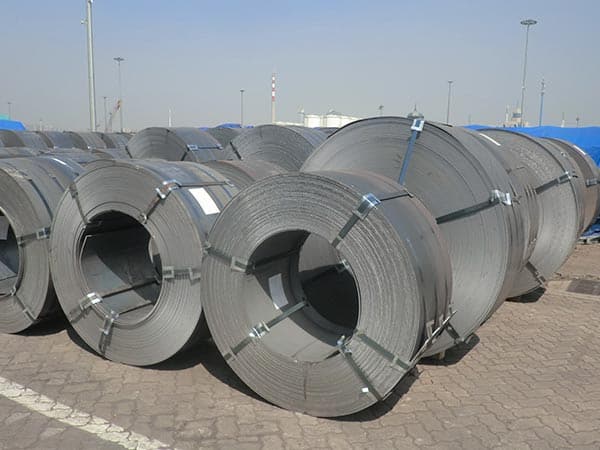
Defining DIN EN 10149-2: The Blueprint for High-Strength Cold-Forming Steels
DIN EN 10149-2 is a critical European standard that specifies the technical delivery conditions for flat products made of high yield strength steels intended for cold forming. Specifically, Part 2 of this standard focuses on steels produced through thermomechanical rolling (TMCP). This manufacturing process is the cornerstone of modern lightweight engineering, allowing for the production of steel plates and strips that possess an extraordinary combination of high strength, excellent toughness, and superior weldability. Unlike traditional normalized steels, the grades under DIN EN 10149-2 achieve their properties through a sophisticated interplay of chemical composition and controlled cooling during the rolling process.
The standard covers a wide range of steel grades, typically identified by their minimum yield strength, ranging from 315 MPa to 700 MPa and beyond. These materials are indispensable for industries where reducing weight without sacrificing structural integrity is paramount. By utilizing these high-strength grades, engineers can design thinner components that carry the same loads as thicker, heavier parts made from conventional structural steels. This shift not only saves material costs but also enhances the fuel efficiency of transport vehicles and reduces the overall carbon footprint of large-scale infrastructure projects.
Decoding the Nomenclature: Understanding S355MC to S700MC
To fully grasp what DIN EN 10149-2 stands for, one must understand the naming convention used for its steel grades. A typical designation like S700MC provides a wealth of information about the material's characteristics. The letter 'S' indicates that it is a structural steel. The number '700' represents the minimum yield strength in Megapascals (MPa) for thicknesses less than or equal to 16 mm. The letter 'M' signifies the delivery condition: thermomechanically rolled. Finally, the letter 'C' denotes that the steel is specifically designed for cold forming applications.
This systematic classification allows procurement specialists and structural engineers to quickly identify the performance limits of the material. For instance, while S355MC is a common entry-level high-strength steel, S700MC represents the high-performance end of the spectrum, offering nearly double the yield strength of standard s355jr structural steel. This hierarchy within the standard ensures that there is a specific grade optimized for every level of stress and forming complexity required in modern manufacturing.
The Metallurgy Behind Thermomechanical Rolling (TMCP)
The secret to the exceptional performance of DIN EN 10149-2 steels lies in the Thermomechanical Control Process (TMCP). Traditional steel strengthening often relies on heavy alloying or heat treatments like quenching and tempering, which can compromise weldability or ductility. In contrast, TMCP involves precise temperature control and deformation during the rolling process. By rolling the steel at specific temperatures where recrystallization is suppressed, the process creates an extremely fine-grained microstructure. This grain refinement is the only strengthening mechanism that simultaneously increases both strength and toughness.
Furthermore, these steels utilize micro-alloying elements such as Niobium (Nb), Vanadium (V), and Titanium (Ti). These elements form fine precipitates that pin grain boundaries, preventing grain growth during the heating cycles of welding or forming. Because the high strength is achieved through microstructure rather than high carbon content, DIN EN 10149-2 steels maintain a very low carbon equivalent (CEV). This low CEV is the primary reason why grades like S700MC exhibit such remarkable weldability compared to other high-strength materials, as it significantly reduces the risk of cold cracking in the heat-affected zone (HAZ).
Comprehensive Mechanical Properties and Performance Data
The mechanical properties of DIN EN 10149-2 steels are strictly regulated to ensure consistency across different manufacturers. The focus is primarily on the yield strength, as this determines the load-bearing capacity of the final component. However, the tensile strength and elongation at fracture are equally important for ensuring that the material can withstand deformation without sudden failure. Below is a detailed look at the mechanical requirements for the most prominent grades within the standard:
| Steel Grade | Min. Yield Strength (MPa) | Tensile Strength (MPa) | Min. Elongation (%) | Bending Radius (180°) |
|---|---|---|---|---|
| S315MC | 315 | 390 - 510 | 20 | 0.25t |
| S355MC | 355 | 430 - 550 | 19 | 0.5t |
| S420MC | 420 | 480 - 620 | 16 | 0.5t |
| S460MC | 460 | 520 - 670 | 14 | 1.0t |
| S500MC | 500 | 550 - 700 | 12 | 1.0t |
| S550MC | 550 | 600 - 760 | 12 | 1.5t |
| S600MC | 600 | 650 - 820 | 11 | 1.5t |
| S700MC | 700 | 750 - 950 | 10 | 2.0t |
It is important to note that the elongation values and bending radii are dependent on the thickness of the material. As the strength increases, the ductility naturally decreases, but the TMCP process ensures that even S700MC retains enough plasticity for complex bending operations. The tight control over the yield-to-tensile ratio also provides a safety margin in structural designs, allowing for predictable deformation before ultimate failure.
Superior Cold Forming and Bending Characteristics
The 'C' in the grade designation underscores the steel's suitability for cold forming. DIN EN 10149-2 steels are designed to be bent, flanged, and cold-rolled into complex shapes without cracking. This is particularly vital for the automotive and heavy machinery industries, where chassis frames and crane booms often require intricate geometries. The fine-grained structure mentioned earlier ensures that the material deforms uniformly during the bending process.
When working with these steels, fabricators must pay attention to the minimum bending radius. While S355MC can be bent almost flat on itself (0.5t), higher grades like S700MC require a larger radius (typically 2.0 times the thickness) to avoid localized necking or surface cracking. Additionally, the springback effect—where the steel slightly returns to its original shape after bending—is more pronounced in higher-strength grades. Advanced CNC press brakes with integrated angle measurement systems are often used to compensate for this effect, ensuring high precision in the final parts.
Advanced Welding Techniques for DIN EN 10149-2 Steels
Welding is often the most critical stage in the fabrication of high-strength steel structures. DIN EN 10149-2 steels are exceptionally weldable due to their low carbon content and lean alloy design. They can be joined using all standard welding processes, including MIG/MAG (GMAW), TIG (GTAW), submerged arc welding (SAW), and laser beam welding. However, because the strength of the steel is derived from its TMCP microstructure, excessive heat input can cause grain coarsening in the heat-affected zone, leading to a localized loss of strength and toughness.
To maintain the integrity of the joint, it is recommended to keep the heat input within a controlled range, typically between 5 and 15 kJ/cm depending on the plate thickness. Preheating is generally not required for these steels unless the ambient temperature is very low or the material is exceptionally thick, which is a significant advantage over quenched and tempered steels. Using filler materials that match or slightly exceed the yield strength of the base metal (matching or over-matching) ensures that the weld joint remains the strongest part of the assembly. For S700MC, specialized wires with optimized Mn-Ni-Mo content are often used to ensure the weld metal matches the base metal's toughness at low temperatures.
Strategic Industrial Applications: Where Performance Meets Efficiency
The versatility of DIN EN 10149-2 has led to its widespread adoption across various heavy-duty industries. One of the primary users is the commercial vehicle industry. Truck frames, trailers, and chassis components made from S700MC are significantly lighter than those made from standard structural steel. This weight reduction allows for a higher payload capacity, directly translating into increased operational efficiency and reduced fuel consumption for logistics companies.
In the lifting and mobile crane sector, these steels are used to manufacture telescopic booms and outriggers. The high strength-to-weight ratio allows cranes to reach higher and lift heavier loads while remaining mobile enough to travel on public roads. Similarly, in agricultural machinery, components like plow frames and harvester chassis benefit from the impact resistance and fatigue strength of these steels, ensuring they can withstand the harsh, repetitive stresses of field work. Other applications include:
- Cold-pressed profiles: U-channels and C-sections used in building construction.
- Renewable energy: Structural supports for solar arrays and wind turbine components.
- Storage systems: High-density racking systems that require high load-bearing capacity with minimal profile thickness.
- Waste management: Refuse collection vehicle bodies that need to resist both wear and structural fatigue.
Environmental Adaptability and Sustainability
Modern engineering is increasingly focused on sustainability, and DIN EN 10149-2 plays a pivotal role in this movement. The ability to use less steel to achieve the same structural performance reduces the total energy required for material production, transportation, and assembly. Furthermore, the excellent low-temperature toughness of these steels (often tested at -20°C or -40°C) makes them suitable for use in harsh climates, such as Arctic oil and gas infrastructure or high-altitude mining operations.
The longevity of components made from these high-strength steels also contributes to sustainability. Their high fatigue resistance means that parts can endure more load cycles before failure, extending the service life of machinery and reducing the need for frequent replacements. When the lifecycle of the product finally ends, the low-alloy nature of DIN EN 10149-2 steels makes them easily recyclable in standard electric arc furnaces, supporting a circular economy in the metals industry.
Comparison with Other Steel Standards
It is helpful to distinguish DIN EN 10149-2 from other common standards like EN 10025. While EN 10025-2 covers general structural steels (like S355JR), these are often not optimized for cold forming and do not offer the same high yield strengths as the EN 10149 series. EN 10025-6 covers quenched and tempered (Q+T) steels like S690QL, which can reach similar strength levels but often have higher carbon equivalents, making them more difficult to weld and less suitable for complex cold bending. DIN EN 10149-2 effectively fills the gap by providing ultra-high strength with the processing ease of a much softer steel, making it the preferred choice for mass-produced cold-formed components.
Choosing the right grade within the DIN EN 10149-2 standard requires a balance of strength, formability, and cost. While S700MC offers the greatest weight-saving potential, S420MC or S500MC might be more cost-effective for applications where the extreme strength of 700 MPa is not fully utilized. Consulting with a steel expert who understands the nuances of TMCP processing can help manufacturers optimize their designs for both performance and manufacturability.
Leave a message