
What is the BBNSteel company en 10149-2 automotive steel grade s355mc equivalent product quality
A professional guide to EN 10149-2 S355MC automotive steel, exploring its chemical composition, mechanical properties, global equivalents, and the high-quality standards provided by BBNSteel.
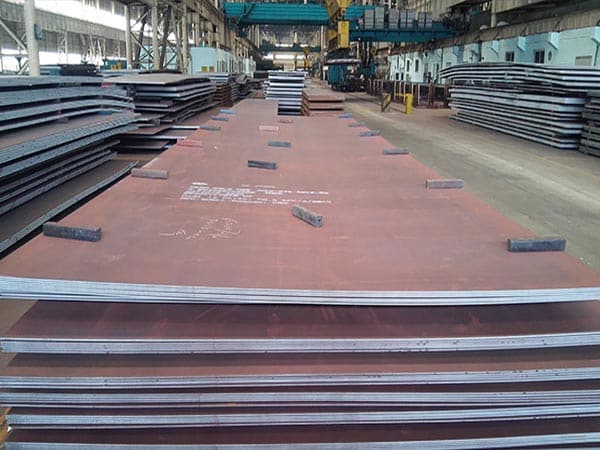
Understanding the Essence of EN 10149-2 S355MC Steel
The automotive and heavy machinery industries demand materials that balance high strength with exceptional formability. S355MC, governed by the EN 10149-2 standard, represents a pinnacle in thermomechanically rolled steel technology. This grade is specifically designed for cold-forming applications where weight reduction and structural integrity are paramount. Unlike traditional structural steels, S355MC undergoes a controlled rolling process at specific temperatures, which refines its grain structure and enhances its mechanical properties without the need for expensive heat treatments. BBNSteel provides this material with a focus on consistency, ensuring that every batch meets the rigorous demands of modern automated manufacturing lines.
The Metallurgy Behind S355MC: Chemical Composition and Micro-alloying
The superior performance of S355MC is not accidental; it is the result of precise chemical engineering. The carbon content is kept intentionally low (typically below 0.12%) to ensure excellent weldability and ductility. However, strength is maintained through the strategic addition of micro-alloying elements such as Niobium (Nb), Vanadium (V), and Titanium (Ti). These elements form fine precipitates during the cooling process, which pin grain boundaries and prevent grain growth, a phenomenon known as grain refinement. This metallurgical approach allows S355MC to achieve a minimum yield strength of 355 MPa while remaining soft enough for complex bending and folding operations. Manganese plays a secondary role in increasing hardenability and solid solution strengthening, while Phosphorus and Sulfur levels are strictly limited to prevent brittleness and improve internal cleanliness.
| Element | Max % Content (EN 10149-2) | BBNSteel Typical Value |
|---|---|---|
| Carbon (C) | 0.12 | 0.08-0.10 |
| Manganese (Mn) | 1.50 | 1.10-1.30 |
| Silicon (Si) | 0.50 | 0.02-0.20 |
| Phosphorus (P) | 0.025 | 0.015 |
| Sulfur (S) | 0.020 | 0.005 |
| Aluminium (Al) | 0.015 (min) | 0.035 |
| Nb + V + Ti | 0.22 | 0.12 |
Mechanical Properties and Structural Reliability
The mechanical profile of S355MC is characterized by its high yield-to-tensile ratio. This is critical for automotive structural components that must absorb energy during an impact while maintaining their shape under operational loads. The minimum yield strength of 355 MPa is the benchmark, but the tensile strength typically ranges between 430 and 550 MPa. Elongation values are equally impressive, often exceeding 19-23% depending on the thickness of the material. This high ductility ensures that the steel can be formed into intricate shapes without cracking or necking. Furthermore, S355MC exhibits excellent impact toughness at low temperatures, making it suitable for vehicles and equipment operating in harsh, cold climates.
Global Equivalents: Mapping S355MC to International Standards
Engineers and procurement specialists often need to identify equivalent grades when working across different regions. While S355MC is a European designation, several other standards offer comparable products. In the United States, ASTM A1011 HSLAS Class 1 Grade 50 is a common alternative, although the chemical requirements may differ slightly. In Japan, JIS G3134 SPFH 540 serves a similar purpose in the automotive sector. In China, GB/T 1591 Q355MC is the direct equivalent. BBNSteel ensures that its S355MC stock not only meets the EN 10149-2 requirements but often overlaps with these international standards, providing a versatile solution for global supply chains. Understanding these equivalents is vital for maintaining design specifications when sourcing materials from different geographical hubs.
| Standard | Equivalent Grade | Key Comparison Factor |
|---|---|---|
| EN 10149-2 | S355MC | Base Standard for Cold Forming |
| GB/T 1591 | Q355MC | Direct Chinese Equivalent |
| JIS G3134 | SPFH 540 | Japanese Automotive Grade |
| ASTM A1011 | HSLAS Grade 50 | US High Strength Low Alloy |
| ISO 6930 | HSA355 | International Standard |
Advanced Processing: Weldability, Cutting, and Forming
One of the primary reasons for the widespread adoption of S355MC is its exceptional processing performance. The low carbon equivalent (CEV) value makes it highly compatible with all standard welding techniques, including MIG, TIG, and laser welding. There is a minimal risk of cold cracking in the heat-affected zone (HAZ), which simplifies the production process by eliminating the need for pre-heating. For cutting operations, the material's clean internal structure and uniform thickness make it an ideal candidate for high-speed laser, plasma, and waterjet cutting. In terms of cold forming, S355MC allows for tight bending radii, which is essential for creating the compact and lightweight structural frames found in modern passenger cars and commercial trucks.
Expanding Industry Applications: Beyond the Chassis
While the automotive sector is the largest consumer of S355MC, its utility extends far beyond car frames. In the heavy machinery industry, it is used for crane jibs, excavator arms, and agricultural equipment where reducing the dead weight of the machine increases payload capacity and fuel efficiency. The construction industry utilizes S355MC for cold-pressed profiles and structural sections that require a high strength-to-weight ratio. Furthermore, the renewable energy sector has begun adopting this grade for wind turbine components and solar racking systems. The versatility of S355MC stems from its ability to provide structural security without the bulkiness associated with traditional hot-rolled carbon steels.
Quality Assurance and the BBNSteel Advantage
Choosing a supplier for S355MC involves more than just looking at the price per ton. BBNSteel differentiates itself through a comprehensive quality management system that tracks the material from the melting stage to the final delivery. Every coil and plate is accompanied by a 3.1 Mill Test Certificate (MTC) as per EN 10204, detailing the exact chemical heat analysis and mechanical test results. BBNSteel also offers value-added services such as precision decoiling, custom slitting, and surface treatments like pickling and oiling (P&O). This ensures that the steel arrives at the customer's facility ready for immediate use in automated stamping or roll-forming lines, reducing downtime and waste. The commitment to tight thickness tolerances and superior flatness makes BBNSteel's S355MC a preferred choice for high-precision engineering projects.
Technical Synthesis of S355MC Performance
The integration of S355MC into a manufacturing workflow offers a strategic advantage by optimizing the balance between material cost and component performance. By utilizing the high yield strength of this grade, designers can specify thinner gauges without compromising the safety or durability of the final product. This leads to a cascading effect of benefits: lower material costs, reduced shipping weights, and improved environmental performance through lower fuel consumption in the end-use vehicles. As global regulations continue to push for lower emissions and higher efficiency, the role of advanced high-strength steels like S355MC will only become more critical. BBNSteel remains at the forefront of this evolution, providing the technical expertise and material quality necessary to drive innovation in the automotive and industrial sectors.
Leave a message