
Why is S900MC cold forming autobobile steel more expensive?
Discover why S900MC steel commands a premium price. Explore its micro-alloying chemistry, TMCP manufacturing, and superior mechanical properties for automotive engineering.
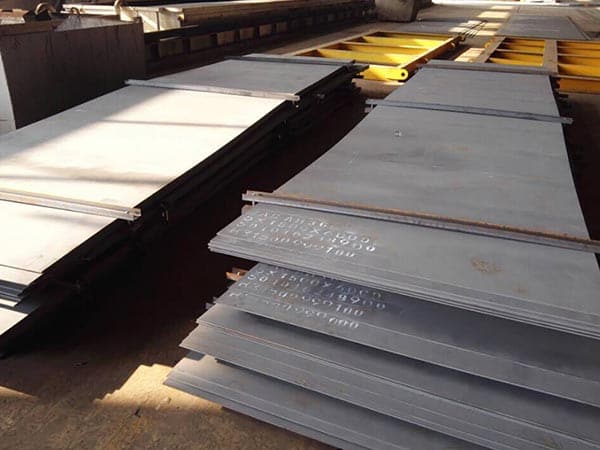
The Engineering Excellence of S900MC Steel
S900MC is a high-yield-strength cold-forming steel that complies with the EN 10149-2 standard. It represents the pinnacle of thermomechanically rolled (TMCP) steels, designed specifically for applications where weight reduction is critical without compromising structural integrity. The higher price point of S900MC compared to conventional structural steels like S355 or even S700MC is a direct reflection of the complex metallurgical processes, high-purity raw materials, and precision engineering required to produce it.
Micro-Alloying Strategy and Raw Material Costs
The foundation of S900MC's performance lies in its chemical composition. Unlike standard carbon steels, S900MC utilizes a sophisticated micro-alloying strategy. Small but precise amounts of Niobium (Nb), Vanadium (V), and Titanium (Ti) are added to the melt. These elements are significantly more expensive than basic iron ore or manganese. Their primary role is to promote grain refinement and precipitation hardening. By creating a fine-grained microstructure, these alloys allow the steel to reach a minimum yield strength of 900 MPa while maintaining the ductility necessary for cold forming. Furthermore, S900MC requires extremely low levels of impurities such as Sulfur (S) and Phosphorus (P). Reducing these elements to near-zero levels requires additional refining steps in the ladle furnace, which increases energy consumption and production time.
| Chemical Element | Max Content (%) |
|---|---|
| Carbon (C) | 0.20 |
| Manganese (Mn) | 2.20 |
| Silicon (Si) | 0.60 |
| Phosphorus (P) | 0.025 |
| Sulfur (S) | 0.015 |
| Aluminium (Al) | 0.015 |
| Nb + V + Ti | 0.22 |
The Complexity of the TMCP Manufacturing Process
The production of S900MC is not a standard hot-rolling procedure. It requires a Thermomechanically Controlled Process (TMCP). This method involves strict control over the heating temperature, the reduction ratios at specific temperature ranges, and the final cooling rate. The goal is to prevent grain growth and ensure a uniform, fine-grained ferritic-bainitic structure. This process requires advanced rolling mills equipped with high-power cooling systems and automated sensors. Because the window for successful rolling is narrow, the risk of production scrap is higher than with lower-grade steels. This lower yield rate and the necessity for high-tech infrastructure contribute heavily to the final market price.
Superior Mechanical Properties and Performance
S900MC is prized for its incredible strength-to-weight ratio. With a minimum yield strength of 900 MPa, it allows engineers to use thinner plates to support the same loads as thicker, heavier sections of lower-grade steel. This is the cornerstone of automotive lightweighting. However, achieving this strength without making the steel brittle is a major technical challenge. S900MC maintains excellent impact toughness even at low temperatures, ensuring that vehicle components do not fail catastrophically in cold climates or under high-impact conditions.
- Minimum Yield Strength: 900 MPa
- Tensile Strength: 930-1200 MPa
- Minimum Elongation (A5): 7-8% depending on thickness
- Bending Radius: Optimized for tight cold forming
Cold Forming and Processing Advantages
Despite its extreme strength, S900MC is specifically designed for cold forming. This means it can be bent, folded, and shaped without the need for pre-heating, which saves the end-user significant energy and time. However, the high strength of the material means that it exhibits significant springback during the bending process. To compensate for this, manufacturers of S900MC must ensure exceptionally consistent mechanical properties across every coil and plate. If the strength varies even slightly, the springback will be unpredictable, leading to dimensional inaccuracies in the final part. The cost of S900MC covers this rigorous quality control and consistency, which is far superior to that of commodity steels.
Weldability and Heat-Affected Zone (HAZ) Integrity
For automotive and heavy machinery manufacturers, weldability is non-negotiable. S900MC features a low carbon equivalent (CEV), which makes it highly weldable using standard methods like MAG or laser welding. However, because the strength of S900MC is derived from its TMCP microstructure, excessive heat input during welding can cause softening in the heat-affected zone (HAZ). Developing a steel that resists this softening while remaining easy to weld is a result of years of R&D. The premium price includes the value of this metallurgical stability, allowing for high-integrity joints in critical structural components like truck chassis and crane booms.
Economic Value through Weight Reduction
While the per-ton price of S900MC is higher, the total cost of the final product often tells a different story. By using S900MC, a manufacturer can reduce the weight of a chassis by up to 30% compared to using S700MC, and even more compared to S355. This weight reduction translates directly into higher payloads for commercial vehicles, lower fuel consumption, and reduced CO2 emissions. In the context of modern environmental regulations and the push for electric vehicles (where battery weight must be offset), the use of S900MC becomes a strategic economic choice. The material pays for itself through improved vehicle efficiency and performance over its lifecycle.
Expanding Applications in Modern Industry
The use of S900MC is expanding rapidly beyond the traditional automotive sector. It is now a preferred material for the manufacturing of mobile cranes, where the boom must be as light as possible to extend further while lifting heavy loads. It is also found in the agricultural sector for high-capacity trailers and in the energy sector for structural components of wind turbines. Each of these industries demands the highest safety standards, and S900MC meets these through its combination of high yield strength, fatigue resistance, and predictable deformation behavior. The investment in S900MC is an investment in the longevity and safety of the final application.
Leave a message