
What is s460mc composition mild steel
Explore the comprehensive guide to S460MC steel. Learn about its chemical composition, mechanical properties, welding capabilities, and why it is the preferred choice for high-strength cold-forming applications.
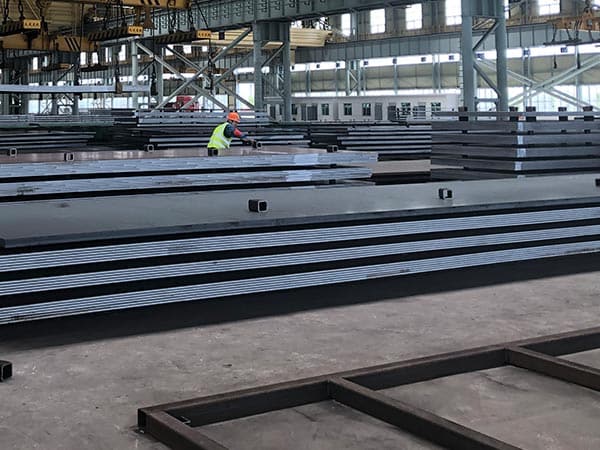
Understanding the Essence of S460MC High-Strength Steel
When engineers and procurement specialists ask what is s460mc composition mild steel, they are usually looking for a material that bridges the gap between traditional carbon steel and high-performance alloys. S460MC is a high-strength, low-alloy (HSLA) steel grade specifically designed for cold-forming applications. Governed by the European standard EN 10149-2, this steel is produced through a thermomechanical rolling process. This method ensures that the steel achieves its high yield strength without the need for excessive alloying elements, maintaining excellent weldability and formability.
While the term "mild steel" is often used colloquially to describe low-carbon steels, S460MC is a significant upgrade. It offers nearly double the yield strength of standard S235 mild steel while retaining a low carbon footprint. This unique combination allows for "lightweighting" in structural designs—using thinner sections to achieve the same load-bearing capacity, which is a critical factor in modern automotive and heavy machinery manufacturing.
The Chemical Blueprint: S460MC Composition Breakdown
The performance of S460MC is rooted in its precise chemical makeup. Unlike standard structural steels that rely heavily on carbon for strength, S460MC utilizes micro-alloying. Elements like Niobium (Nb), Vanadium (V), and Titanium (Ti) are added in minute quantities to refine the grain structure during the thermomechanical rolling process.
| Element | Maximum Percentage (%) |
|---|---|
| Carbon (C) | 0.12 |
| Manganese (Mn) | 1.60 |
| Silicon (Si) | 0.50 |
| Phosphorus (P) | 0.025 |
| Sulfur (S) | 0.015 |
| Aluminum (Al) | 0.015 (min) |
| Niobium (Nb) | 0.09 |
| Vanadium (V) | 0.20 |
| Titanium (Ti) | 0.15 |
Carbon Content: Keeping carbon below 0.12% is vital. This low carbon level ensures that the steel remains ductile and easy to weld, preventing the formation of brittle martensite in the heat-affected zone (HAZ) during welding operations.
Micro-Alloying Elements: The combination of Nb, V, and Ti promotes grain refinement. Smaller grains increase both the strength and the toughness of the steel simultaneously, a feat that is difficult to achieve with traditional heat treatments. This is why S460MC is often referred to as a "fine-grained steel."
Mechanical Performance and Structural Integrity
The "460" in S460MC denotes its minimum yield strength of 460 MPa. This high threshold makes it an ideal candidate for components that must withstand significant stress without permanent deformation. Below is a summary of the mechanical properties for S460MC across typical thickness ranges.
| Property | Value Range |
|---|---|
| Yield Strength (ReH) | Min. 460 MPa |
| Tensile Strength (Rm) | 520 - 670 MPa |
| Elongation (A50mm) | Min. 14% (depending on thickness) |
| Bending Radius (90°) | 0.8t to 1.6t (t = thickness) |
One of the standout features of S460MC is its impact toughness. While EN 10149-2 does not always mandate impact testing unless specified, many manufacturers produce S460MC that performs exceptionally well at low temperatures. This makes it suitable for equipment operating in harsh, cold climates where standard mild steel might suffer from brittle fracture.
Advanced Processing: Welding, Bending, and Cutting
Processing S460MC requires an understanding of its thermomechanical history. Because its strength is derived from the rolling process rather than high alloy content or post-rolling heat treatment, it responds beautifully to modern fabrication techniques.
- Cold Forming: The "C" in S460MC stands for Cold forming. This steel is designed to be bent and folded. Its high ductility allows for tight bending radii without cracking, which is essential for complex chassis components and brackets.
- Welding: S460MC has a very low Carbon Equivalent (CEV). It can be welded using all standard methods, including MIG/MAG, TIG, and submerged arc welding. Preheating is generally unnecessary for standard thicknesses, saving time and energy in the workshop.
- Laser and Plasma Cutting: The clean chemical composition and fine grain structure result in excellent edge quality during thermal cutting. There is minimal hardening of the cut edge, which facilitates subsequent machining or welding.
Environmental Adaptability and Sustainability
In the current industrial landscape, sustainability is a major driver. S460MC contributes to environmental goals through material efficiency. By using S460MC instead of a lower-grade steel like S355, designers can reduce the weight of a structure by up to 20-30% without sacrificing safety. This reduction in weight translates directly to lower fuel consumption in transport vehicles and a smaller carbon footprint during the manufacturing and shipping phases.
Furthermore, the low alloy content makes S460MC highly recyclable. It can be easily integrated back into the steel production cycle without the need for complex separation of expensive alloying elements, supporting a circular economy in the metals industry.
Strategic Industry Applications
The versatility of S460MC has led to its widespread adoption across several demanding sectors. Its ability to handle high loads while remaining lightweight makes it indispensable in the following areas:
- Automotive Industry: Used extensively for truck chassis frames, cross members, and structural reinforcements where weight reduction is paramount for payload optimization.
- Lifting and Handling: Crane booms, telescopic arms, and forklift frames benefit from the high yield strength, allowing for longer reaches and higher lift capacities.
- Construction Equipment: Earthmoving machinery, excavator buckets, and dumper bodies utilize S460MC to withstand the rigors of heavy-duty operation while maintaining a manageable tare weight.
- Agricultural Machinery: Plow frames, seeders, and trailers use this grade to ensure durability in rugged field conditions.
Comparative Advantage: S460MC vs. Conventional Grades
When comparing S460MC to standard structural steels like s355jr or S460QL (quenched and tempered), the advantages become clear. S355JR lacks the strength required for modern lightweight designs, requiring thicker plates that increase costs and weight. On the other hand, S460QL offers similar strength but is produced via quenching and tempering, which can make it more expensive and sometimes more challenging to weld due to higher alloy content.
S460MC occupies the "sweet spot" of the steel market. It provides the high strength of advanced alloys with the ease of processing associated with mild steel. For businesses looking to optimize their production line, S460MC offers a path to higher quality products with lower overall material costs.
Selecting the right material involves balancing performance, cost, and manufacturability. S460MC excels in all three categories, making it a staple in the inventory of forward-thinking engineering firms. Whether you are designing the next generation of electric vehicle chassis or a more efficient heavy-duty trailer, understanding the composition and capabilities of S460MC is the first step toward superior structural performance.
Leave a message