
What is the s460 steel equivalent astm price export to Malaysia
A comprehensive guide to S460 steel equivalents under ASTM standards, mechanical properties, chemical composition, and pricing factors for the Malaysian export market.
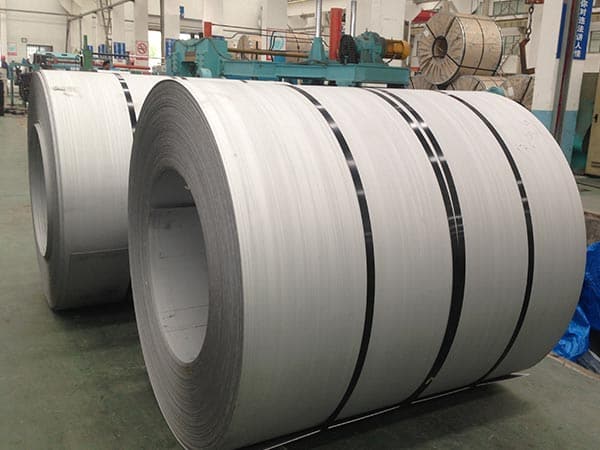
Understanding S460 steel and Its Global Standards
S460 steel is a high-strength, fine-grain structural steel defined under the European standard EN 10025-3 (normalized) or EN 10025-4 (thermomechanically rolled). The '460' designation refers to its minimum yield strength of 460 MPa for thicknesses less than or equal to 16mm. As global engineering projects demand higher weight-to-strength ratios, S460 has become a preferred choice for heavy-duty construction, offshore structures, and bridge engineering.
When sourcing this material from international markets, particularly for projects in Malaysia that may follow American engineering codes, identifying the S460 steel equivalent ASTM grade is critical for compliance and structural integrity. The most common ASTM equivalent for S460 is ASTM A572 Grade 65 or ASTM A913 Grade 65. While they share similar yield strengths, differences in chemical composition and toughness requirements must be scrutinized by procurement officers and structural engineers.
S460 Steel Equivalent ASTM: A Technical Comparison
Finding the exact match between EN and ASTM standards requires looking beyond just the yield strength. S460 is often supplied in various conditions: S460N (normalized), S460M (thermomechanically rolled), and S460QL (quenched and tempered under EN 10025-6). Each has a specific ASTM counterpart.
| EN 10025 Standard | ASTM Equivalent Grade | Yield Strength (min MPa) | Tensile Strength (MPa) |
|---|---|---|---|
| S460N / S460NL | ASTM A572 Grade 65 | 450 - 460 | 520 - 670 |
| S460M / S460ML | ASTM A913 Grade 65 | 450 - 460 | 550 - 700 |
| S460QL / S460QL1 | ASTM A514 / A852 | 460+ | 550 - 720 |
ASTM A572 Grade 65 is a high-strength low-alloy (HSLA) columbium-vanadium structural steel. It is widely used in bolted or welded construction. ASTM A913 Grade 65, produced via the Quenching and Self-Tempering (QST) process, offers excellent weldability and toughness, making it the closest functional match to S460M for seismic-resistant structures in the Malaysian market.
Chemical Composition and Weldability Factors
The chemical makeup of S460 and its ASTM equivalents determines their performance during fabrication. S460 grades are characterized by low carbon equivalent values (CEV), which enhances weldability. This is particularly important for Malaysian infrastructure projects where on-site welding is frequent.
- Carbon Content: S460 typically limits carbon to 0.20%, whereas ASTM A572 Gr 65 allows up to 0.23% depending on thickness. Lower carbon reduces the risk of cold cracking.
- Alloying Elements: Both standards utilize micro-alloying with Niobium (Nb), Vanadium (V), and Titanium (Ti) to achieve fine grain structures.
- Purity: S460NL and S460ML require strict control over Phosphorus and Sulfur to ensure impact toughness at sub-zero temperatures (e.g., -50°C), a feature often exceeding standard ASTM A572 requirements unless specific Charpy V-notch tests are requested.
Mechanical Properties and Environmental Adaptability
S460 steel provides a significant weight saving—up to 30% compared to standard S355 or A36 steel. This reduction in dead weight is vital for high-rise buildings in Kuala Lumpur or offshore platforms in the South China Sea. The material exhibits high ductility, with elongation values typically exceeding 17%.
In terms of environmental adaptability, S460's fine-grain structure provides excellent resistance to brittle fracture. For Malaysian coastal applications, specifying S460 with improved atmospheric corrosion resistance (similar to weathering steel) or applying high-performance coating systems is standard practice to combat the humid, saline environment.
Exporting S460 Steel to Malaysia: Price Factors
The s460 steel price export to Malaysia is influenced by several volatile factors. As of the current market, prices for high-strength structural steel fluctuate based on raw material costs (iron ore and coking coal), energy prices, and shipping freight rates.
- Base Price: S460 usually carries a premium of 15% to 25% over standard s355jr grades due to the complex alloying and rolling processes.
- Logistics: Shipping from major hubs like China, Europe, or India to Port Klang or Johor involves ocean freight, insurance, and port handling fees. Containerized shipping vs. breakbulk affects the final landed cost.
- Import Duties and Taxes: Malaysia may impose anti-dumping duties on certain steel products from specific origins. However, high-grade structural steel like S460 often falls under specialized categories that may qualify for duty exemptions if not locally produced.
- Certification Costs: Compliance with SIRIM (Standard and Industrial Research Institute of Malaysia) is mandatory for structural steel used in Malaysian construction. The cost of testing and certification must be factored into the export price.
Strategic Procurement for the Malaysian Market
For contractors and developers in Malaysia, sourcing S460 requires a strategic approach. Given the technical nature of the material, buyers should request Mill Test Certificates (MTC) according to EN 10204 3.1 or 3.2 to ensure the steel meets the specified yield and impact properties.
Working with suppliers who understand the S460 equivalent ASTM nuances ensures that if a project design is based on American standards, the substituted EN material will perform safely under the same load conditions. It is common to see 'dual-certified' plates that meet both S460 and ASTM A572 Gr 65 requirements, which simplifies the supply chain and reduces inventory complexity.
Processing and Fabrication Insights
Fabricating S460 steel requires specific expertise. Because of its higher strength, the force required for cold forming and cutting is greater than that for mild steel. Preheating is often recommended for thicker sections to prevent hydrogen-induced cracking in the heat-affected zone (HAZ) during welding.
Modern thermal cutting techniques, such as laser or plasma cutting, work exceptionally well with S460, providing clean edges that require minimal post-processing. When exporting to Malaysia, ensuring the local fabricators are equipped with the correct welding consumables (E90 series for SMAW or equivalent for GMAW) is essential to match the base metal's strength.
The Role of S460 in Sustainable Engineering
Using S460 steel contributes to green building initiatives in Malaysia, such as the Green Building Index (GBI). By using less steel to achieve the same structural integrity, the total embodied carbon of a project is reduced. This efficiency not only lowers the material cost but also reduces transportation energy and foundation requirements, making it a cornerstone of modern, sustainable infrastructure development.
Whether it is for the construction of iconic skyscrapers, massive industrial warehouses, or intricate bridge networks, S460 steel and its ASTM equivalents represent the cutting edge of structural engineering. Understanding the price dynamics and technical specifications is the first step toward successful project execution in the competitive Malaysian landscape.
Leave a message