
What is the best quality s420mc steel equivalent?
A comprehensive guide to S420MC steel equivalents, exploring mechanical properties, chemical composition, and industrial applications for high-strength cold-forming steel.
Understanding the S420MC Standard and Its Engineering Significance
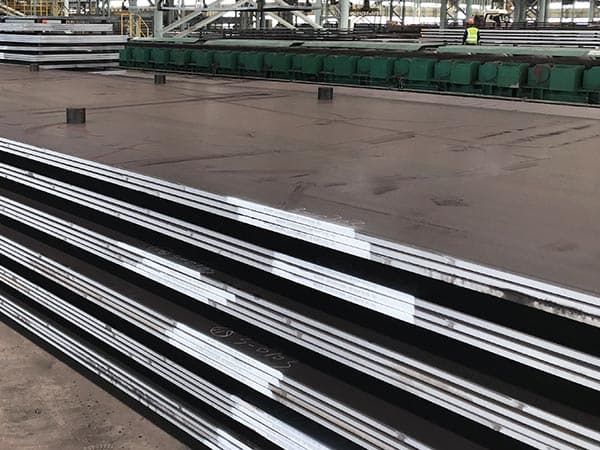
S420MC steel is a high-yield-strength material specifically designed for cold-forming applications. Governed by the EN 10149-2 standard, this thermomechanically rolled steel offers a unique combination of high structural strength and excellent ductility. The "S" denotes structural steel, "420" indicates a minimum yield strength of 420 MPa, "M" signifies its thermomechanically rolled condition, and "C" highlights its suitability for cold forming. In the modern manufacturing landscape, where weight reduction and structural integrity are paramount, S420MC has become a cornerstone material for engineers seeking to optimize performance without increasing mass.
Identifying the Best Quality S420MC Steel Equivalents Globally
When sourcing S420MC, global supply chains often require identifying equivalent grades that meet the same rigorous mechanical and chemical criteria. The best quality equivalent depends heavily on the regional standards governing the project. In the Chinese market, Q420MC (under GB/T 1591 or GB/T 20887) is the direct counterpart, offering nearly identical yield and tensile properties. For North American projects, ASTM A1011 Grade 60 or ASTM A1018 Grade 60 (specifically the HSLAS-F variants) are often cited as the closest matches, though they may differ slightly in their testing protocols and elongation requirements.
In the Japanese industrial sector, JIS G3134 SPFH 590 is frequently utilized as an alternative, particularly in automotive chassis components. While these equivalents share the 420 MPa yield threshold, the "best" quality choice is one that maintains consistency in grain structure and surface finish. High-quality equivalents must ensure that the thermomechanical rolling process is strictly controlled to prevent internal stresses that could lead to cracking during complex bending operations.
| Standard | Equivalent Grade | Yield Strength (min) | Tensile Strength |
|---|---|---|---|
| EN 10149-2 | S420MC | 420 MPa | 480-620 MPa |
| GB/T 1591 | Q420MC | 420 MPa | 480-620 MPa |
| ASTM A1011 | SS Grade 60 / HSLAS Gr 60 | 415 MPa | 520 MPa (min) |
| JIS G3134 | SPFH 590 | 420 MPa | 590 MPa (min) |
Chemical Composition and the Role of Micro-Alloying
The superior performance of S420MC and its high-quality equivalents is rooted in precise chemical engineering. Unlike traditional carbon steels, S420MC utilizes micro-alloying elements such as Niobium (Nb), Titanium (Ti), and Vanadium (V). These elements facilitate grain refinement during the thermomechanical rolling process. A finer grain structure directly translates to higher strength and improved toughness at lower temperatures.
The carbon content is kept exceptionally low (typically below 0.12%) to ensure excellent weldability. Manganese (Mn) is added to enhance hardenability and tensile strength, while Silicon (Si) acts as a deoxidizer. Phosphorus and Sulfur levels are strictly limited to minimize inclusions, which are the primary culprits for brittle failure and poor fatigue resistance. When evaluating an equivalent, the Carbon Equivalent Value (CEV) is a critical metric; a lower CEV indicates better weldability without the need for preheating, a major cost-saver in large-scale structural fabrication.
Mechanical Performance: Beyond the Yield Strength
While the 420 MPa yield strength is the headline figure, the true value of S420MC lies in its elongation and impact energy. For thicknesses less than 3mm, S420MC typically offers a minimum elongation of 16% (on a gauge length of 80mm). This ductility allows the steel to be bent, flanged, and cold-formed into intricate shapes without necking or fracture. High-quality equivalents must mirror this ductility to ensure they can survive the high-strain environments of modern stamping presses.
Furthermore, the impact toughness of S420MC is often tested at -20°C or -40°C. This makes the material suitable for equipment operating in harsh, cold environments, such as mobile cranes or transport trailers in northern latitudes. The ability to absorb energy under dynamic loading is what separates premium S420MC from generic structural steels that might meet the yield strength but fail under impact.
Processing Excellence: Bending, Welding, and Cutting
S420MC is engineered for the workshop. Its cold-forming properties are exceptional, allowing for tight bending radii. For example, a 90-degree bend can often be achieved with a radius as small as 0.5 to 1.0 times the material thickness, depending on the rolling direction. This tight radius capability allows designers to create more compact and efficient structural sections.
- Welding: Due to its low carbon and micro-alloyed chemistry, S420MC is compatible with all standard welding processes, including MIG/MAG, TIG, and submerged arc welding. The heat-affected zone (HAZ) remains stable, maintaining much of the base metal's strength.
- Laser Cutting: The clean surface and uniform chemistry of high-grade S420MC make it ideal for high-speed laser cutting. Minimal dross and a narrow kerf result in parts that require little to no secondary finishing.
- Surface Treatment: The material's surface is typically suitable for hot-dip galvanizing or powder coating, providing long-term corrosion protection in outdoor applications.
Expanding Applications: Where S420MC Excels
The demand for S420MC is driven by industries that prioritize the strength-to-weight ratio. In the automotive industry, it is used for chassis frames, cross members, and longitudinal beams. By replacing thicker, lower-grade steels with thinner S420MC, manufacturers can reduce vehicle weight, thereby improving fuel efficiency and increasing payload capacity without compromising safety.
In the heavy machinery sector, S420MC is the preferred choice for crane booms, telescopic arms, and agricultural equipment. These applications require a material that can withstand high stress while remaining light enough to be mobile. The construction industry also utilizes S420MC for cold-rolled sections and structural profiles where high load-bearing capacity is required in a slim profile. The versatility of S420MC extends to the energy sector, where it is used in the support structures for solar panels and wind turbine components, benefiting from its environmental adaptability and ease of onsite assembly.
Environmental Adaptability and Sustainability
Modern engineering is increasingly focused on the lifecycle impact of materials. S420MC contributes to sustainability goals in two primary ways. First, its high strength allows for material dematerialization—using less steel to achieve the same structural goal. This reduces the carbon footprint associated with ore extraction, smelting, and transportation. Second, S420MC is fully recyclable. At the end of a vehicle or machine's life, the steel can be recovered and reprocessed into new high-strength products without loss of quality.
The thermomechanical rolling process itself is more energy-efficient than traditional quenching and tempering cycles, as it utilizes the heat from the rolling process to achieve the desired microstructure. This makes S420MC a "greener" choice compared to some high-strength alloys that require extensive heat treatment. When sourcing an equivalent, verifying the manufacturer's adherence to environmental standards like ISO 14001 can further ensure the sustainability of the supply chain.
Selection Criteria for Premium S420MC Equivalents
Choosing the best equivalent requires looking beyond the data sheet. Consistency is the hallmark of quality. A premium S420MC equivalent should exhibit minimal variation in mechanical properties across different batches. This ensures that automated forming and welding processes do not need constant adjustment, which reduces downtime and scrap rates.
Buyers should also demand Mill Test Certificates (MTC) that detail the chemical analysis and mechanical test results for each heat. Attention should be paid to the grain size (typically ASTM 8 or finer) and the cleanliness of the steel (low non-metallic inclusion count). In critical applications, ultrasonic testing may be employed to ensure the absence of internal laminations. By focusing on these technical nuances, procurement professionals can secure a material that not only meets the S420MC standard but excels in the most demanding manufacturing environments.
Leave a message