
What is carbon grade 460 steel equivalent equivalent to
Comprehensive guide to Carbon Grade 460 steel equivalents across global standards like EN, ASTM, and GB. Explore mechanical properties, chemical composition, and industrial applications.
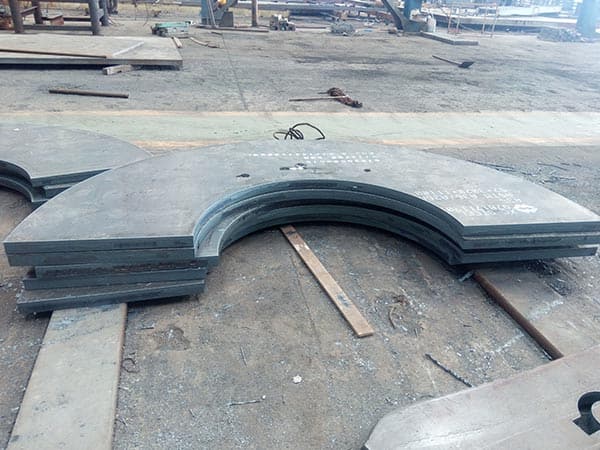
Understanding the Essence of Carbon Grade 460 Steel
Carbon grade 460 steel is a high-strength structural material defined primarily by its minimum yield strength of 460 Megapascals (MPa). In the hierarchy of structural steels, it sits comfortably between the common S355/Q355 grades and the ultra-high-strength quenched and tempered varieties. This specific grade is engineered to provide a superior strength-to-weight ratio, allowing architects and engineers to design lighter yet more robust structures. The "460" designation is not merely a number; it represents a commitment to structural integrity under significant load conditions. Unlike lower-grade carbon steels, Grade 460 often incorporates micro-alloying elements and specialized heat treatment processes to achieve its mechanical profile without compromising ductility or weldability.
Global Equivalents: Mapping Grade 460 Across Standards
Identifying the correct equivalent for Grade 460 requires a nuanced understanding of international standards. Different regions utilize distinct naming conventions, but the underlying mechanical requirements often overlap. The most common equivalents are found within the European (EN), Chinese (GB/T), and American (ASTM) systems. While they are often used interchangeably, subtle differences in chemical composition and testing requirements exist.
| Standard | Grade Designation | Condition | Region |
|---|---|---|---|
| EN 10025-3 | S460N / S460NL | Normalized / Normalized Rolled | Europe |
| EN 10025-4 | S460M / S460ML | Thermomechanically Rolled (TMCP) | Europe |
| EN 10025-6 | S460Q / S460QL | Quenched and Tempered | Europe |
| GB/T 1591 | Q460 (C, D, E) | High Strength Low Alloy (HSLA) | China |
| ASTM A572 | Grade 65 | High-Strength Low-Alloy | USA |
| ASTM A633 | Grade E | Normalized Structural Steel | USA |
| JIS G3106 | SM570 | Welded Structure Steel | Japan |
The European EN 10025 standard is perhaps the most descriptive, categorizing S460 based on its delivery condition. S460N refers to normalized steel, offering excellent grain refinement and uniformity. S460M utilizes Thermo-Mechanical Control Process (TMCP) technology, which achieves high strength through controlled rolling and cooling, often resulting in better weldability due to lower carbon equivalents. S460Q represents the quenched and tempered version, typically used when high toughness at low temperatures is paramount.
Chemical Composition and Micro-Alloying Strategy
The performance of Grade 460 steel is rooted in its chemical blueprint. To reach a 460 MPa yield strength without excessive carbon—which would impair weldability—manufacturers employ micro-alloying. Elements such as Niobium (Nb), Vanadium (V), and Titanium (Ti) are added in minute quantities. These elements promote grain refinement during the cooling process, which simultaneously increases strength and toughness.
- Carbon (C): Typically restricted to below 0.20% to ensure the material remains easy to weld and resistant to cold cracking.
- Manganese (Mn): Often present in ranges of 1.00% to 1.70%, manganese acts as a solid solution strengthener and improves hardenability.
- Silicon (Si): Used as a deoxidizer, usually capped around 0.60%.
- Micro-alloys (Nb, V, Ti): These form fine carbides and nitrides that pin grain boundaries, preventing grain growth during heat treatment or welding.
By maintaining a low Carbon Equivalent Value (CEV), Grade 460 steel ensures that the Heat Affected Zone (HAZ) during welding does not become excessively brittle. This is a vital consideration for heavy-duty structural components where welding is the primary joining method.
Mechanical Properties and Structural Integrity
The defining characteristic of Grade 460 is its mechanical resilience. Beyond the 460 MPa yield strength, the tensile strength typically ranges between 520 and 670 MPa, depending on the specific sub-grade and thickness. Elongation values are generally maintained above 17%, ensuring that the material can undergo significant deformation before failure—a critical safety feature in seismic zones or high-impact environments.
Impact toughness is another critical metric. Grades like S460NL or Q460E are tested at temperatures as low as -40°C or -50°C to ensure they remain ductile in arctic or high-altitude conditions. This resistance to brittle fracture is achieved through rigorous control of impurities like Phosphorus (P) and Sulfur (S), often keeping them below 0.025% and 0.015% respectively.
Advanced Processing and Fabrication Performance
Fabricating with Grade 460 steel requires an understanding of its metallurgical response to heat and mechanical stress. Due to its higher strength compared to S355, higher forces are required for cold forming and bending. However, the material exhibits excellent spring-back predictability, making it suitable for precision components.
Welding Grade 460 is highly efficient, provided the correct consumables are used. For TMCP-processed steels (like S460M), the low CEV often allows for welding with minimal or no preheating, significantly reducing labor costs and production time. When welding normalized grades (S460N), more care must be taken with heat input to avoid grain coarsening in the HAZ, which could lead to a localized drop in toughness. Common welding methods include Submerged Arc Welding (SAW), Gas Metal Arc Welding (GMAW), and Shielded Metal Arc Welding (SMAW).
Environmental Adaptability and Longevity
Grade 460 steel is frequently deployed in harsh environments where durability is non-negotiable. Its environmental adaptability is enhanced through various surface treatments. While the base carbon steel is susceptible to oxidation, its chemistry is compatible with high-quality galvanizing and advanced coating systems. In offshore applications, the fine-grained structure of S460ML provides superior resistance to fatigue induced by wave action and wind loads.
Furthermore, the high strength of the material contributes to environmental sustainability. By using Grade 460 instead of Grade 355, engineers can reduce the total mass of steel required for a project by approximately 20-30%. This reduction leads to lower transportation emissions, less welding consumable usage, and a smaller overall carbon footprint for the construction project.
Diversified Industrial Applications
The versatility of Grade 460 steel makes it a staple in several high-stakes industries. Its ability to withstand extreme loads while remaining relatively lightweight is leveraged in the following sectors:
- Heavy Machinery: Crane booms, excavator arms, and chassis for mining trucks rely on Grade 460 to handle immense stress without adding unnecessary weight.
- Offshore Engineering: Platforms, jackets, and subsea structures utilize S460G2+M or similar grades for their combination of strength and low-temperature impact resistance.
- High-Rise Construction: Column sections and heavy girders in skyscrapers benefit from the increased load-bearing capacity, allowing for more open floor plans.
- Bridge Engineering: Long-span bridges use Grade 460 for main girders to reduce the dead load of the structure, enabling longer spans between piers.
- Wind Energy: Tower sections for large-scale wind turbines require the fatigue resistance and strength provided by normalized or TMCP 460MPa steels.
The selection of the specific equivalent—whether it be Q460, S460, or A572 Gr 65—depends heavily on the local regulatory framework and the specific environmental challenges of the project site. By matching the mechanical requirements with the appropriate global standard, procurement teams can ensure both safety and cost-effectiveness in their material sourcing.
Leave a message