
What is the application scope of S700MC high strength car beam steel
Explore the comprehensive application scope of S700MC high-strength steel. Learn about its mechanical properties, processing advantages, and use in automotive and heavy machinery.
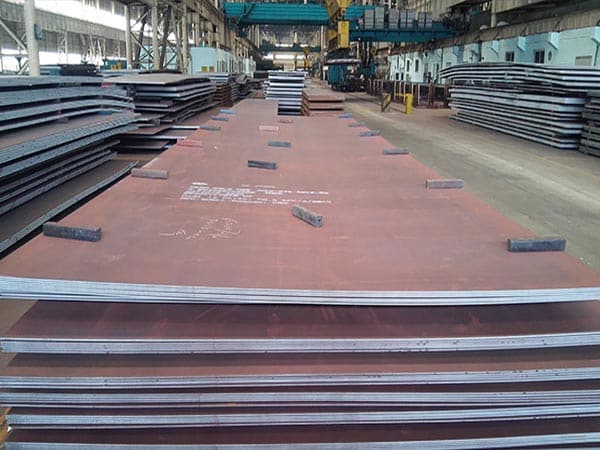
Understanding the Essence of S700MC High-Strength Steel
S700MC is a high-strength, thermomechanically rolled steel specifically designed for cold forming. Governed by the European standard EN 10149-2, this grade represents a sophisticated balance between extreme yield strength and excellent ductility. The 'S' denotes structural steel, '700' signifies a minimum yield strength of 700 MPa, and 'MC' indicates its thermomechanical rolling process and cold-forming suitability. Unlike traditional carbon steels, S700MC achieves its properties through a precise chemical composition involving micro-alloying elements such as Niobium (Nb), Vanadium (V), and Titanium (Ti).这些 elements facilitate grain refinement and precipitation hardening, resulting in a material that is significantly stronger yet lighter than conventional structural steels.
Mechanical Properties and Material Excellence
The core value of S700MC lies in its mechanical performance. With a yield strength reaching 700 MPa and a tensile strength typically ranging between 750 and 950 MPa, it allows engineers to design components that can withstand immense loads. Despite this strength, the elongation values remain impressive, often exceeding 12% to 15% depending on thickness, which ensures the material does not fail brittlely under stress. The impact toughness is another critical attribute; S700MC is often tested at -20°C or -40°C to ensure reliability in cold climates, making it a global solution for mobile equipment.
| Property | Value (Minimum/Range) |
|---|---|
| Yield Strength (ReH) | 700 MPa |
| Tensile Strength (Rm) | 750 - 950 MPa |
| Elongation (A5) | ≥ 12% (for thickness < 3mm) |
| Bending Radius (90°) | 1.5t to 2.0t (depending on thickness) |
Superior Processing Performance: Welding and Forming
One of the primary reasons S700MC has seen widespread adoption is its exceptional processing characteristics. For manufacturers, the ease of integration into existing production lines is paramount. Cold Forming: S700MC is engineered for bending and folding. Because of its fine-grained structure, it exhibits minimal springback compared to other high-strength materials, allowing for tighter tolerances in complex geometries like U-beams and C-channels. Welding Compatibility: Due to its low carbon equivalent (CEV), S700MC offers outstanding weldability. It can be joined using standard methods such as MAG, MIG, and laser welding without the need for extensive preheating. This reduces production time and energy costs while maintaining the structural integrity of the heat-affected zone (HAZ).
The Automotive Industry: Driving Lightweight Innovation
The automotive sector is the largest consumer of S700MC, particularly in the manufacturing of commercial vehicles and heavy trucks. The push for 'lightweighting' is driven by the need to increase fuel efficiency and reduce CO2 emissions. Chassis and Longitudinal Beams: S700MC is the preferred material for truck chassis. By replacing traditional S355 or S500 grades with S700MC, manufacturers can reduce the weight of the frame by up to 30% while maintaining the same load-bearing capacity. This weight saving translates directly into increased payload for the end-user. Cross Members and Reinforcements: The high energy absorption capacity of S700MC makes it ideal for safety-critical components that must withstand impact during collisions.
Expansion into Heavy Machinery and Lifting Equipment
Beyond the automotive world, S700MC has become indispensable in the production of lifting and hauling equipment.
- Mobile Cranes: The telescopic booms of cranes require materials that are both light and incredibly stiff. S700MC allows for longer reach and higher lifting capacities without increasing the overall weight of the vehicle.
- Agricultural Machinery: Modern harvesters, seeders, and trailers face harsh operating environments. S700MC provides the wear resistance and structural durability needed to handle uneven terrain and heavy loads over long service lives.
- Container Handling: Reach stackers and forklifts used in ports utilize S700MC for their main structural frames to ensure stability under extreme dynamic loads.
Environmental Adaptability and Long-Term Durability
S700MC is not just about strength; it is about resilience. The thermomechanical rolling process creates a very clean steel with low impurity levels, which enhances its fatigue resistance. This is crucial for equipment that undergoes millions of load cycles, such as trailer axles or suspension components. Furthermore, its ability to maintain ductility at sub-zero temperatures makes it suitable for use in Arctic environments or high-altitude construction projects. The fine-grained microstructure also provides a better surface for subsequent coating processes, such as galvanizing or painting, which protects the steel from atmospheric corrosion.
Economic Advantages of Utilizing S700MC
While the per-ton cost of S700MC may be higher than standard mild steel, the total cost of ownership is often lower. The reduction in material volume required for a specific design leads to lower shipping costs, less welding consumables, and faster assembly times. Additionally, the enhanced durability reduces maintenance intervals and extends the lifespan of the final product. For logistics companies, a lighter truck made of S700MC means lower fuel consumption every kilometer, providing a competitive edge in a market with rising energy costs.
Strategic Considerations for Engineering Design
When designing with S700MC, engineers must account for its high strength-to-weight ratio by optimizing geometry. Utilizing CAD and Finite Element Analysis (FEA) allows for the removal of material from low-stress areas, further maximizing the benefits of this steel grade. It is also important to consider the orientation of the grain during the cutting and bending process to ensure maximum performance. By leveraging the full potential of S700MC, industries can move toward a more sustainable and efficient future, creating structures that are stronger, lighter, and more reliable than ever before.
Leave a message