
Who makes en 10149-2 equivalent steel plates
Explore the global landscape of EN 10149-2 equivalent steel plates. This guide covers top manufacturers, technical specifications for S315MC to S700MC, and cross-standard comparisons for industrial procurement.
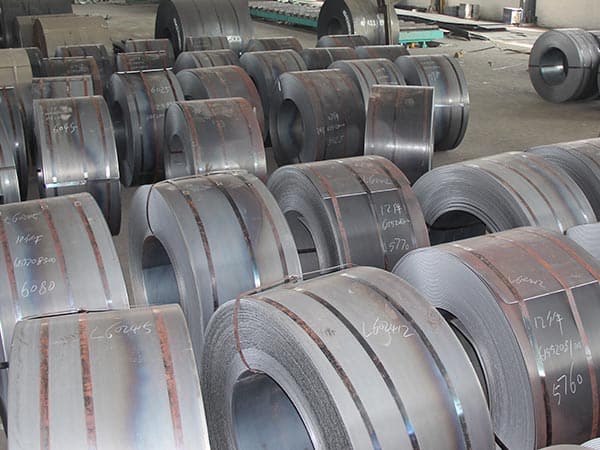
Understanding EN 10149-2 and Its Global Equivalents
EN 10149-2 is the European standard for hot-rolled flat products made of high-yield strength steels for cold forming. These steels are specifically designed to offer high strength combined with excellent cold-forming properties, such as bending, flanging, and cold-bordering. The standard covers grades ranging from S315MC to S700MC, where 'S' stands for structural steel, the number represents the minimum yield strength in MPa, and 'MC' indicates thermomechanically rolled steel suitable for cold forming.
Finding equivalents for EN 10149-2 is a common challenge for global procurement teams and design engineers. Because this standard relies on specific thermomechanical control processing (TMCP), finding a direct substitute requires looking at standards like ASTM (USA), JIS (Japan), and GB/T (China). Identifying the right manufacturer involves evaluating their ability to maintain tight tolerances on chemical composition and mechanical properties while ensuring consistent surface quality.
Top Global Manufacturers of EN 10149-2 Equivalent Steels
The production of high-yield strength steel requires advanced rolling technology and precise cooling systems. Only a handful of global steel mills possess the technology to produce the higher grades like S700MC reliably. Below are the leading manufacturers known for producing equivalents to EN 10149-2.
- SSAB (Sweden): SSAB is perhaps the most famous producer in this category. Their Strenx brand (formerly Domex) is the industry benchmark for S700MC and S900MC equivalents. Strenx performance often exceeds the minimum requirements of EN 10149-2, offering superior flatness and thickness tolerances.
- ArcelorMittal (Luxembourg/Global): They offer the Amstrong range, which is specifically engineered to meet EN 10149-2 specifications. Their products are widely used in the European automotive and heavy machinery sectors.
- ThyssenKrupp (Germany): ThyssenKrupp produces the PERFORM series. This brand is synonymous with high-strength steels that offer exceptional weldability and formability, matching the S315MC to S700MC spectrum.
- Baosteel (China): As one of the largest steel producers globally, Baosteel produces the BS series (e.g., BS700MC), which adheres strictly to EN 10149-2 and GB/T 1591 standards. They are a primary supplier for international heavy equipment manufacturers operating in Asia.
- Nippon Steel (Japan): Their WEL-TEN and S-TEN series include grades that align with the high-strength requirements of the European standard, often used in the production of cranes and chassis.
- POSCO (South Korea): POSCO provides high-strength hot-rolled products under their POSTEN brand, catering to the global shipbuilding and automotive markets with equivalents to S420MC and S500MC.
Technical Comparison: EN 10149-2 vs. Global Standards
When searching for equivalents, it is vital to compare the yield strength, tensile strength, and elongation. The following table provides a general cross-reference for the most common EN 10149-2 grades against other international standards.
| EN 10149-2 Grade | ASTM Equivalent (Approx.) | JIS Equivalent (Approx.) | GB/T Equivalent (Approx.) |
|---|---|---|---|
| S315MC | ASTM A1011 HSLAS Gr 45 | JIS G3134 SPFH 490 | GB/T 1591 Q315MC |
| S355MC | ASTM A1011 HSLAS Gr 50 | JIS G3134 SPFH 540 | GB/T 1591 Q355MC |
| S420MC | ASTM A1011 HSLAS Gr 60 | JIS G3134 SPFH 590 | GB/T 1591 Q420MC |
| S500MC | ASTM A656 Grade 70 | - | GB/T 1591 Q500MC |
| S700MC | ASTM A656 Grade 80 | - | GB/T 1591 Q700MC |
It is important to note that while these equivalents share similar yield strengths, the chemical requirements and impact toughness testing may vary. For instance, ASTM A656 is a structural specification, whereas EN 10149-2 is specifically focused on cold-forming capabilities. Always verify the specific bending radius and welding parameters before substituting grades.
Mechanical and Chemical Properties of S700MC
S700MC is the flagship grade of the EN 10149-2 standard. It represents the pinnacle of high-strength low-alloy (HSLA) technology for cold forming. Its chemical composition is characterized by extremely low carbon content (usually below 0.12%) and micro-alloying with Niobium (Nb), Vanadium (V), and Titanium (Ti). This combination allows for a fine-grained microstructure that provides high strength without sacrificing ductility.
The mechanical properties of S700MC include a minimum yield strength of 700 MPa and a tensile strength between 750 and 950 MPa. Despite this high strength, it maintains a minimum elongation of 10% to 12% (depending on thickness), allowing it to be bent at tight radii. This makes it indispensable for weight-saving designs in the transportation industry, where reducing the curb weight of a trailer can significantly increase payload capacity.
Processing Performance: Welding and Cutting
EN 10149-2 steels are designed for ease of fabrication. Because they are produced via the TMCP route, they have a low carbon equivalent (CEV), which translates to excellent weldability. Traditional welding methods like MAG (Metal Active Gas), MIG (Metal Inert Gas), and Laser welding can be used without the need for extensive preheating, provided the heat input is controlled to prevent grain coarsening in the heat-affected zone (HAZ).
Regarding cutting, these steels are highly compatible with laser, plasma, and waterjet cutting. Laser cutting is particularly effective for S700MC because the steel's clean internal structure and consistent surface finish allow for high-speed processing with minimal distortion. When laser cutting high-strength plates, it is recommended to use 'laser-grade' variants if the manufacturer offers them, as these have optimized surface chemistry for oxygen or nitrogen cutting.
Industrial Applications and Market Demand
The demand for EN 10149-2 equivalent plates is driven by the need for lightweighting and structural efficiency. In the automotive industry, these steels are used for truck chassis, cross members, and bumper reinforcements. By using S700MC instead of traditional s355jr structural steel, engineers can reduce the thickness of components by up to 30% while maintaining the same structural integrity.
In the lifting and mobile equipment sector, these plates are used for crane booms, telescopic arms, and aerial work platforms. The high strength-to-weight ratio allows for longer reaches and higher load capacities. Additionally, the agricultural sector utilizes these steels for plow frames and trailer bodies, where resistance to fatigue and mechanical wear is crucial for long-term durability in harsh environments.
Environmental Adaptability and Durability
While EN 10149-2 is not primarily a weathering steel standard, its fine-grained structure provides better resistance to atmospheric corrosion than standard carbon steels. For extreme environments, many manufacturers offer these grades with improved low-temperature toughness (often designated with a 'L' or specific Charpy V-notch impact values, such as S700MC + V). This ensures that the steel does not become brittle in sub-zero temperatures, making it suitable for equipment used in Arctic mining or high-altitude construction.
When sourcing these materials, it is essential to request a 3.1 or 3.2 Material Test Report (MTR) according to EN 10204. This document verifies the chemical heat analysis and the mechanical test results, ensuring the material meets the stringent requirements of the EN 10149-2 standard or its global equivalent. Partnering with reputable stockholders and mills ensures that the material has been stored and handled correctly to prevent surface pitting or edge damage, which can compromise the cold-forming process.
Leave a message