
What is the strenx 700 equivalent for auto frame hardness?
Discover the best Strenx 700 equivalents for automotive frames. This guide compares S700MC, Q700, and ASTM grades, focusing on hardness, yield strength, and fabrication.
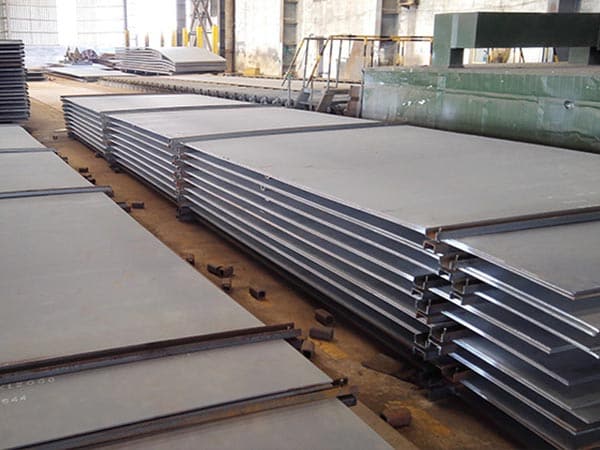
Understanding Strenx 700 in the Context of Automotive Engineering
Strenx 700, produced by SSAB, represents a pinnacle in high-strength structural steel technology. Specifically designed for applications where weight reduction and high load-bearing capacity are critical, it has become a benchmark in the automotive industry, particularly for truck chassis, trailers, and specialized vehicle frames. When engineers ask about the Strenx 700 equivalent for auto frame hardness, they are often looking for materials that match its 700 MPa minimum yield strength while maintaining the specific ductility required for complex forming and safety-critical energy absorption.
The term "hardness" in automotive frames is a bit of a misnomer. While traditional hardness (measured in Brinell or Rockwell) is important for wear resistance, frame integrity relies more heavily on the Yield Strength (ReH) and Tensile Strength (Rm). Strenx 700 typically exhibits a Brinell hardness in the range of 210-250 HBW. However, its true value lies in its thermomechanically rolled microstructure, which allows for thinner gauges without sacrificing structural safety.
Global Equivalents for Strenx 700
Finding an equivalent involves looking at international standards that define thermomechanically rolled high-strength low-alloy (HSLA) steels. The most direct equivalent is the European standard EN 10149-2 S700MC. This grade is widely used across the globe and shares almost identical mechanical properties and chemical compositions with Strenx 700.
- European Standard: EN 10149-2 S700MC
- Chinese Standard: GB/T 1591 Q700D or GB/T 20887.3 HC700/950DK
- American Standard: ASTM A1011/A1011M Grade 100 (Class 1) or ASTM A1018 Grade 100
- Japanese Standard: JIS G3134 SPFH 780 (though yield points may vary slightly)
These equivalents are not always 1:1 replacements in terms of surface quality or thickness tolerances, but for the purpose of structural frame hardness and strength, they serve the same engineering function.
Mechanical Properties and Material Comparison
To understand how these equivalents stack up, we must examine the core mechanical data. Strenx 700 is known for its consistency, which is vital for automated welding and bending processes in automotive assembly lines.
| Property | Strenx 700 | S700MC (EN 10149-2) | Q700D (GB/T 1591) |
|---|---|---|---|
| Yield Strength (MPa) | 700 Min | 700 Min | 700 Min |
| Tensile Strength (MPa) | 750 - 950 | 750 - 950 | 800 - 980 |
| Elongation (A5 %) | 12 - 15 | 12 Min | 12 Min |
| Typical Hardness (HBW) | ~210-250 | ~210-245 | ~220-260 |
The S700MC grade is the most common choice for manufacturers looking for a generic alternative. It provides the same weight-saving benefits, allowing for a reduction in steel thickness by up to 30% compared to conventional S355 grades while maintaining the same load capacity.
The Role of Chemical Composition in Frame Performance
The "hardness" and strength of Strenx 700 and its equivalents are achieved through a precise balance of micro-alloying elements like Niobium (Nb), Vanadium (V), and Titanium (Ti). These elements facilitate grain refinement during the thermomechanical rolling process.
Low carbon content (usually below 0.12%) is a hallmark of these steels. This is critical for weldability. In automotive frames, the heat-affected zone (HAZ) near welds can become a point of failure if the carbon equivalent is too high. Strenx 700 and S700MC maintain a low Carbon Equivalent Value (CEV), ensuring that the frame remains tough and resistant to brittle fracture even after intensive welding.
Fabrication and Processability: Bending and Welding
When substituting Strenx 700 with an equivalent like S700MC, engineers must pay close attention to the minimum bending radius. Automotive frames often feature complex geometries that require tight bends. Strenx 700 is optimized for cold forming, typically allowing a bending radius of 1.0 to 1.5 times the material thickness (depending on the orientation relative to the rolling direction).
Using a lower-quality equivalent might result in micro-cracking at the bend radius if the inclusion levels (like sulfur and phosphorus) are not strictly controlled. High-purity steel is a requirement for maintaining the "hardness" and structural integrity of the frame during the forming process. Proper lubrication and die clearance are also essential when working with 700 MPa steels to prevent springback, which is significantly higher than that of mild steel.
Environmental Adaptability and Impact Toughness
Automotive frames are exposed to extreme environments, from sub-zero temperatures in northern climates to corrosive road salts. Strenx 700 and its high-end equivalents like S700MC are tested for Charpy V-notch impact toughness. Typically, these steels are rated for 40 Joules at -20°C or even -40°C.
This low-temperature toughness is what prevents a vehicle frame from snapping under sudden impact in winter conditions. While "hardness" might suggest brittleness, these HSLA steels are engineered for high fracture toughness. This ensures that in the event of a collision, the frame deforms and absorbs energy rather than shattering, a critical safety feature for passenger and commercial vehicles alike.
Industry Applications Beyond the Main Frame
While the main longitudinal beams of a truck are the primary users of Strenx 700 equivalents, other components benefit from these properties:
- Cross Members: Reducing the weight of cross members lowers the vehicle's center of gravity and increases payload capacity.
- Bumper Brackets: High yield strength ensures these components can withstand minor impacts without permanent deformation.
- Crane Arms and Outriggers: For specialized automotive equipment, the strength-to-weight ratio of S700MC is indispensable.
- Fifth Wheel Mounting Plates: These require a balance of hardness for wear and strength for load distribution.
Economic Impact of Choosing the Right Equivalent
Choosing a Strenx 700 equivalent like S700MC or Q700 can have significant economic advantages. By utilizing the high yield strength, manufacturers can use thinner plates, which reduces the total weight of the vehicle. This leads to lower fuel consumption and increased payload, providing a clear ROI for fleet operators. Furthermore, the excellent weldability of these grades reduces rework and inspection costs in the factory, streamlining the production of high-performance automotive frames.
When sourcing these materials, it is vital to verify the Mill Test Report (MTR) to ensure the yield strength and elongation meet the specific requirements of the design. While many steels claim to be "equivalents," the consistency of the thermomechanical process is what separates premium brands like Strenx from generic commodities.
Leave a message