
What corrodes en 10149-2 s700mc equivalent the fastest?
A technical analysis of the corrosion factors for EN 10149-2 S700MC and its equivalents, detailing environmental triggers, chemical reactions, and industrial vulnerabilities.
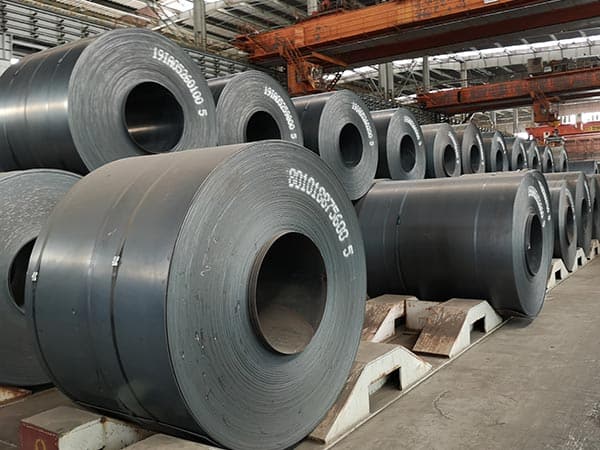
Understanding the Vulnerability of EN 10149-2 S700MC and Its Equivalents
EN 10149-2 S700MC is a high-strength low-alloy (HSLA) steel produced through thermomechanical rolling. While it is celebrated for its exceptional yield strength of 700 MPa and its ability to reduce structural weight in the automotive and heavy machinery industries, it is not inherently corrosion-resistant. When we talk about what corrodes S700MC or its equivalents—such as ASTM A1011 HSLAS-F Grade 80, JSH780, or Q700L—the fastest, we must look at the synergy between its microalloyed chemistry and aggressive environmental catalysts.
Unlike stainless steels that form a self-healing chromium oxide layer, S700MC relies on a fine-grained ferrite and pearlite/bainite structure. This structure is achieved through the precise addition of micro-alloying elements like Niobium (Nb), Vanadium (V), and Titanium (Ti). While these elements provide strength and grain refinement, they do not offer significant protection against electrochemical oxidation. Consequently, in specific environments, the degradation of this steel can be surprisingly rapid.
The Fastest Catalyst: Chloride-Rich Marine and De-icing Environments
Chloride ions represent the most aggressive threat to S700MC. In coastal regions or on winter roads treated with de-icing salts (Sodium Chloride or Calcium Chloride), the corrosion rate of S700MC accelerates exponentially. Chlorides act as a catalyst that penetrates any loose iron oxide scale on the surface, facilitating a rapid electrochemical reaction. Because S700MC is often used in thin-walled sections to save weight, even a moderate corrosion rate can significantly compromise the structural integrity of a chassis or crane arm.
The mechanism involves the chloride ions breaking down the passivity of the steel surface, creating localized pits. These pits act as stress concentrators, which is particularly dangerous for a high-strength material like S700MC. Under cyclic loading, these corrosion pits can transition into fatigue cracks, leading to premature structural failure long before the bulk of the material has thinned out.
Industrial Pollution and Acidic Rain Exposure
Sulfur dioxide (SO2) and nitrogen oxides (NOx) found in heavy industrial zones are the second fastest corrodents. When these gases combine with atmospheric moisture, they form weak sulfuric and nitric acids. S700MC equivalents are highly sensitive to low pH environments. In an acidic medium, the protective rust layer (patina) that might form in a clean rural environment never stabilizes. Instead, the acid continuously dissolves the iron, keeping the metal surface fresh and exposed to further attack.
In environments where the pH drops below 4, the hydrogen evolution reaction becomes a dominant cathodic process. This not only speeds up the loss of metal but also introduces the risk of Hydrogen Induced Cold Cracking (HICC). For a steel with a 700 MPa yield strength, the internal stresses from the thermomechanical rolling process can exacerbate the susceptibility to hydrogen embrittlement if the corrosion process is fast enough to generate significant atomic hydrogen at the surface.
The Impact of Microstructure and Grain Boundaries
The very feature that makes S700MC strong—its ultra-fine grain size—can influence how it corrodes. Fine grains mean a high density of grain boundaries. In certain electrolytic solutions, grain boundaries can become more anodic than the grain interiors. This leads to intergranular corrosion, although this is less common in HSLA steels than in certain stainless grades. However, the presence of micro-alloyed precipitates (carbonitrides of Nb, Ti, V) can create micro-galvanic cells. If the steel is not processed correctly during the cooling phase at the mill, these precipitates can cluster, leading to localized galvanic hotspots that accelerate pitting.
Processing Factors: Welding and Cold Forming
How S700MC is handled during fabrication significantly dictates its corrosion lifespan. Welding is a critical factor. The Heat Affected Zone (HAZ) in S700MC often experiences a slight softening or grain growth. This change in microstructure creates a potential difference between the weld metal, the HAZ, and the base metal. In the presence of an electrolyte, the HAZ can act as a small anode against the large cathode of the base plate, leading to rapid localized corrosion known as "weld decay" or preferential HAZ attack.
Furthermore, S700MC is frequently cold-formed into complex shapes. High levels of residual stress in tight bends can lead to Stress Corrosion Cracking (SCC) when exposed to corrosive media. While S700MC has excellent formability, the stored energy in the deformed lattice makes those specific areas more chemically active and prone to faster oxidation than the flat sections of the same component.
Comparative Technical Specifications
| Property | EN 10149-2 S700MC | ASTM A1011 HSLAS-F Gr 80 | Q700L (GB/T 20887.1) |
|---|---|---|---|
| Yield Strength (min) | 700 MPa | 550 MPa (approx. varies) | 700 MPa |
| Tensile Strength | 750-950 MPa | 620 MPa min | 750-950 MPa |
| Elongation (min) | 12% (t < 3mm) | 12% | 13% |
| Main Alloying Elements | Nb, Ti, V | Nb, V, Ti | Nb, Ti |
| Corrosion Resistance | Low (Requires Coating) | Low (Requires Coating) | Low (Requires Coating) |
Environmental Synergy: Stagnant Water and Crevices
Perhaps the most overlooked factor that corrodes S700MC equivalents the fastest is the combination of design flaws and stagnant water. Crevice corrosion occurs in tight spaces—such as bolted joints, lap welds, or where the steel is in contact with non-metallic gaskets—where oxygen cannot easily circulate. In these oxygen-depleted zones, the chemistry of the trapped water changes, becoming increasingly acidic. For high-strength truck frames or agricultural equipment made of S700MC, mud and debris trapped against the steel surface hold moisture and chlorides, creating a permanent "wet-dry" cycle that is far more damaging than constant immersion.
Protecting S700MC from Rapid Degradation
Given that S700MC is highly susceptible to chloride and acidic environments, protection is mandatory for most applications. Hot-dip galvanizing is a common choice, though the high strength of S700MC requires careful control of the pickling process to avoid hydrogen embrittlement. Alternatively, high-performance organic coatings (epoxy primers with polyurethane topcoats) are used. For automotive applications, E-coating provides a uniform barrier that is essential for reaching the expected service life of the vehicle chassis.
In summary, while EN 10149-2 S700MC offers a revolutionary strength-to-weight ratio for modern engineering, its Achilles' heel is its rapid corrosion rate in chloride-heavy and acidic industrial environments. Engineers must prioritize surface protection and avoid design features that trap moisture to ensure that the high mechanical performance of this steel is not prematurely compromised by environmental degradation.
Leave a message