
What is the stock of en 10149-2 automotive steel s420mc equivalent?
Comprehensive guide on EN 10149-2 S420MC automotive steel, exploring global equivalents, mechanical properties, processing advantages, and stock availability for engineering.
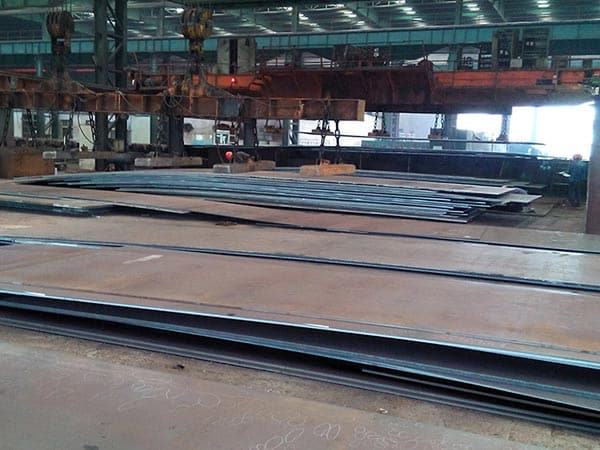
The Engineering Significance of EN 10149-2 S420MC in Modern Manufacturing
In the evolving landscape of automotive engineering and structural design, the demand for materials that balance high strength with exceptional formability has never been higher. EN 10149-2 S420MC stands as a benchmark for thermomechanically rolled steels intended for cold forming. This grade is specifically engineered to provide a minimum yield strength of 420 MPa, making it a cornerstone for weight reduction strategies in vehicle chassis, frames, and structural components. Understanding the stock availability and equivalent grades is crucial for procurement managers and engineers who must navigate global supply chain fluctuations without compromising on technical specifications.
The "S" in S420MC denotes structural steel, "420" indicates the minimum yield strength in megapascals, "M" refers to its thermomechanically rolled condition, and "C" signifies its suitability for cold forming. This combination of attributes allows manufacturers to produce complex geometries that would be impossible with traditional high-strength steels, all while maintaining the structural integrity required for safety-critical applications.
Chemical Composition: The Science of Micro-Alloying
The superior performance of S420MC is rooted in its precise chemical composition. Unlike conventional carbon steels, S420MC utilizes micro-alloying elements such as Niobium (Nb), Titanium (Ti), and Vanadium (V). These elements facilitate grain refinement during the thermomechanical rolling process, which is the primary mechanism for achieving high strength without increasing carbon content. Low carbon levels are essential for maintaining excellent weldability and toughness.
| Element | Carbon (C) % | Manganese (Mn) % | Silicon (Si) % | Phosphorus (P) % | Sulfur (S) % | Al (Total) % |
|---|---|---|---|---|---|---|
| Max Content | 0.12 | 1.60 | 0.50 | 0.025 | 0.015 | 0.015 |
By keeping the carbon equivalent low, S420MC avoids the brittleness often associated with high-strength materials. The addition of micro-alloys ensures that the steel maintains a fine-grained structure even after being subjected to the heat of welding or the stress of severe cold bending.
Identifying Global Equivalents for S420MC
When S420MC stock is limited or when projects span multiple geographical regions, identifying accurate equivalents is vital. Different national standards utilize varying nomenclature, but the core mechanical properties remain comparable. Cross-referencing these standards ensures that the substituted material will perform identically under load and during fabrication.
| Standard | Equivalent Grade | Region/Organization |
|---|---|---|
| ASTM | A1011 HSLAS Grade 60 Class 1 / A1018 | USA / International |
| JIS G3134 | SPFH 590 | Japan |
| GB/T 1591 | Q420BF / Q420MC | China |
| ISO 6930 | HSE 420 | International |
| VDA 239-100 | HR420LA | German Automotive Association |
While ASTM A1011 Grade 60 is a frequent substitute in North American markets, it is important to verify the specific thermomechanical processing requirements, as S420MC often offers tighter tolerances on thickness and superior surface quality compared to generic HSLAS (High-Strength Low-Alloy Steel) grades. In the Chinese market, Q420MC is the direct counterpart, widely used in heavy machinery and commercial vehicle production.
Mechanical Properties and Structural Performance
The primary reason for selecting S420MC is its mechanical profile. It provides a significant upgrade from standard S235 or S355 grades, allowing for thinner gauges to be used without sacrificing load-bearing capacity. This "down-gauging" is the primary driver for fuel efficiency in the automotive sector.
- Yield Strength (ReH): Minimum 420 MPa for thicknesses ≤ 16mm.
- Tensile Strength (Rm): 480 - 620 MPa.
- Elongation (A80mm): Minimum 16% to 19% depending on thickness, ensuring the material can withstand deformation without cracking.
- Impact Toughness: Often tested at -20°C or -40°C to ensure performance in cold climates.
These properties are not just numbers; they represent the material's ability to absorb energy during a collision (crashworthiness) and its fatigue resistance over millions of vibration cycles in a truck chassis.
Processing Advantages: Bending, Welding, and Cutting
The "MC" designation highlights the material's prowess in cold forming. Unlike high-carbon steels that may require pre-heating or exhibit significant springback, S420MC is remarkably predictable. Cold bending can be performed with small radii, which is essential for compact automotive component designs.
Weldability: Due to its low carbon equivalent (CEV), S420MC can be welded using all standard methods, including MIG/MAG, TIG, and laser welding. The heat-affected zone (HAZ) remains stable, maintaining the fine-grained structure that gives the steel its strength. This eliminates the need for post-weld heat treatment in most applications, reducing production time and costs.
Laser Cutting: The clean chemical composition and consistent surface finish of EN 10149-2 steels make them ideal for high-speed laser cutting. There is minimal dross, and the edges remain precise, which is critical for automated assembly lines where tight tolerances are mandatory.
Applications Across Diverse Industries
While the automotive industry is the largest consumer of S420MC, its utility extends far beyond passenger cars. Any industry requiring a high strength-to-weight ratio can benefit from this grade.
- Commercial Vehicles: Longitudinal beams for truck frames, cross-members, and trailer chassis.
- Construction Machinery: Crane booms, excavator arms, and support structures where weight reduction increases lifting capacity.
- Agricultural Equipment: Plow frames, harvester components, and silage trailers that must endure harsh outdoor environments.
- Storage Systems: High-rise racking and heavy-duty shelving where structural safety is paramount.
Environmental Adaptability and Sustainability
S420MC plays a pivotal role in the green transition of the manufacturing sector. By enabling the use of thinner materials to achieve the same structural performance, it directly reduces the total mass of vehicles. This leads to lower fuel consumption and reduced CO2 emissions during the vehicle's operational life. Furthermore, as a micro-alloyed steel, it is fully recyclable. The scrap generated during the stamping or cutting process can be returned to the electric arc furnace (EAF) to produce new high-quality steel, supporting a circular economy.
Factors Influencing Stock and Sourcing Strategies
The availability of S420MC stock is influenced by several factors, including global steel production cycles, raw material costs (particularly micro-alloys like Niobium), and regional demand from major automotive OEMs. To ensure a stable supply, many manufacturers maintain strategic partnerships with service centers that specialize in EN 10149-2 products.
When sourcing S420MC, it is essential to request Mill Test Certificates (MTC) to EN 10204 3.1 standards. This ensures that the material meets the specific yield and tensile requirements of the EN 10149-2 standard. For critical applications, buyers should also verify the surface finish (typically Class A or B) to ensure compatibility with subsequent coating or painting processes. Understanding the equivalent grades mentioned earlier provides a safety net, allowing for procurement flexibility during periods of high market volatility.
By integrating S420MC into designs, engineers are not just choosing a material; they are adopting a high-performance solution that optimizes manufacturing efficiency, enhances product safety, and contributes to global sustainability goals.
Leave a message