
Which steel grade is equivalent to s700mc steel density
A comprehensive technical guide on S700MC steel density, equivalent grades across global standards, mechanical properties, and industrial applications for high-strength engineering.
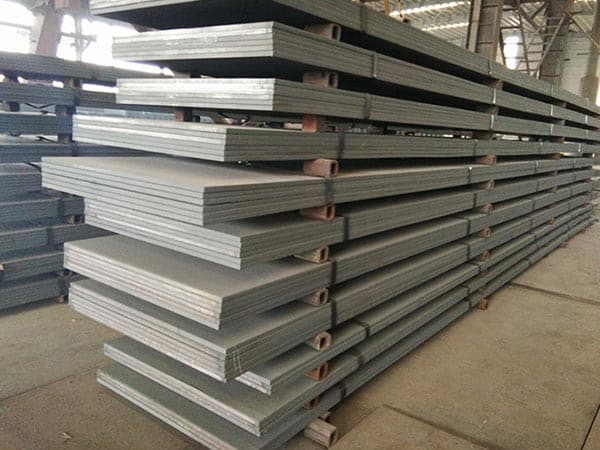
Understanding the Physical Constants: S700MC Steel Density
When evaluating high-strength low-alloy (HSLA) steels, the question of density often arises during the initial design and weight-calculation phase. For S700MC steel, the density is a standard physical constant of approximately 7.85 g/cm³ (or 7850 kg/m³). This value is virtually identical across the spectrum of carbon steels, including mild steel (S235), structural steel (S355), and even ultra-high-strength grades. The critical distinction for engineers is not a unique density value, but the strength-to-weight ratio. By utilizing S700MC, which offers a minimum yield strength of 700 MPa, designers can specify thinner sections to support the same loads as thicker, heavier sections of lower-grade steel, thereby achieving significant weight reduction without altering the material density itself.
Global Equivalent Grades to S700MC
Identifying equivalents for S700MC requires looking at standards that govern hot-rolled, high-yield strength steels intended for cold forming. S700MC is defined under the European standard EN 10149-2. Finding a direct match involves comparing chemical compositions and mechanical thresholds across different international bodies.
| Standard Organization | Equivalent Grade | Key Comparison Factor |
|---|---|---|
| Chinese Standard (GB/T) | Q700D / Q700E | Matches yield strength and low-temperature impact requirements. |
| American Standard (ASTM) | A1011 / A1018 Grade 100 | Similar yield strength, though chemical limits differ slightly. |
| Japanese Standard (JIS) | JIS G3134 SPFH 780 | Focuses on high-strength automotive structural components. |
| International Standard (ISO) | ISO 6930-2 HSB 690 | High-yield strength steel for cold forming applications. |
| Proprietary Brands | Strenx 700MC / Domex 700MC | Often exceeds standard requirements for surface finish and flatness. |
Metallurgical Composition and Microstructure
The performance of S700MC is a result of Thermomechanically Rolled (TMCP) processing combined with precise micro-alloying. Unlike traditional quenched and tempered steels, S700MC achieves its strength through grain refinement and precipitation hardening. The addition of elements like Niobium (Nb), Vanadium (V), and Titanium (Ti) allows the steel to maintain a fine-grained structure during the rolling process. This metallurgical approach ensures that the steel remains highly ductile and weldable despite its extreme strength.
- Carbon (C): Kept below 0.12% to ensure excellent weldability and prevent brittleness.
- Manganese (Mn): Typically up to 2.10% to enhance strength and hardenability.
- Silicon (Si): Limited to 0.60% to maintain surface quality during galvanizing or painting.
- Micro-alloys (Nb, V, Ti): These elements are the secret to the 700 MPa yield strength, forming carbides that pin grain boundaries.
Mechanical Performance Metrics
S700MC is engineered for demanding structural environments where failure is not an option. The "700" in its name refers to the minimum yield strength of 700 MPa. However, its tensile strength and elongation are equally vital for fabrication. The material exhibits a tensile strength range of 750 to 950 MPa, providing a robust safety margin between the point of permanent deformation and actual fracture.
| Property | Value (Nominal) | Testing Condition |
|---|---|---|
| Yield Strength (ReH) | ≥ 700 MPa | Transverse to rolling direction |
| Tensile Strength (Rm) | 750 - 950 MPa | Standard tensile test |
| Elongation (A80mm) | ≥ 10% - 12% | Depending on thickness (t < 3mm or ≥ 3mm) |
| Impact Energy (KV) | 40J at -20°C | Optional based on specific grade variants (e.g., L) |
Processing Characteristics: Bending and Welding
One of the primary reasons S700MC is favored in manufacturing is its cold forming capability. Despite its high strength, it can be bent to tight radii. For thicknesses (t) less than 3mm, a minimum bending radius of 1.0t is often achievable, while thicker plates may require 1.5t to 2.0t. This flexibility allows for the creation of complex profiles like C-channels and Z-sections used in vehicle chassis.
Welding S700MC is highly efficient due to its low Carbon Equivalent (CEV). Standard methods such as MIG/MAG, TIG, and submerged arc welding are all applicable. However, fabricators must manage heat input carefully. Excessive heat can lead to grain growth in the Heat Affected Zone (HAZ), which may locally reduce the yield strength. Maintaining a cooling time (t8/5) between 5 and 20 seconds is generally recommended to preserve the fine-grained microstructure.
Strategic Industrial Applications
The transition from traditional S355 structural steel to S700MC is driven by the need for efficiency. In the transportation industry, every kilogram saved in the chassis or trailer frame translates directly into increased payload capacity or reduced fuel consumption. This makes S700MC the material of choice for long-haul trailer manufacturers and heavy-duty truck OEMs.
Mobile crane manufacturers utilize S700MC for telescopic boom sections. The high strength allows for longer reaches and higher lifting capacities without increasing the weight of the crane itself, which is critical for road legality and stability. Similarly, in the waste management sector, refuse collection vehicles benefit from the wear resistance and strength of S700MC in the hopper and compaction mechanisms.
Environmental Adaptation and Sustainability
S700MC contributes significantly to green engineering goals. By reducing the total volume of steel required for a project, it lowers the carbon footprint associated with material production, transportation, and eventual recycling. Furthermore, its chemistry is optimized for modern coating systems. Whether the end-use environment involves corrosive road salts or industrial atmospheres, S700MC responds well to hot-dip galvanizing and advanced powder coatings, ensuring a long service life with minimal maintenance.
Final Technical Assessment for Material Selection
Choosing S700MC over its equivalents or lower-strength counterparts involves a holistic view of the project's lifecycle. While the raw material cost per ton may be higher than S355, the total project cost often decreases due to lower material usage, reduced welding consumables, and lower shipping weights. When searching for an equivalent grade, engineers must verify that the substitute matches the EN 10149-2 requirements for both yield strength and cold formability to ensure structural integrity. S700MC remains a benchmark in the industry for balancing extreme mechanical performance with ease of fabrication.
Leave a message