
What is the en 10149 pdf shapes
Comprehensive guide to EN 10149 standard for high yield strength steels. Explore chemical composition, mechanical properties, and industrial applications of S315MC to S700MC.
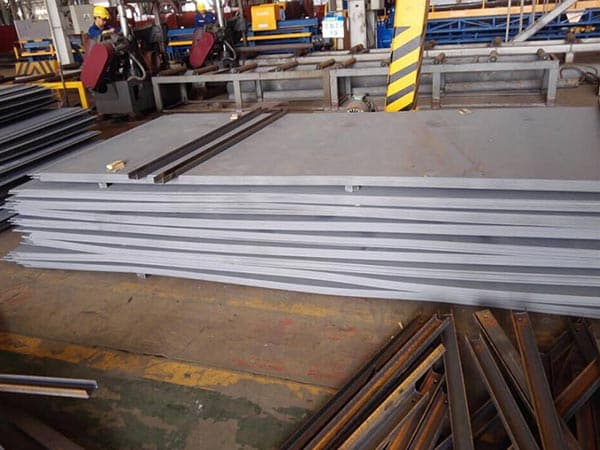
Defining the Scope of EN 10149: High Yield Strength Steels for Cold Forming
The EN 10149 standard represents a critical European specification for hot-rolled flat products made of high yield strength steels intended for cold forming. When engineers search for "EN 10149 PDF shapes," they are typically looking for the dimensional tolerances, cross-sectional availability, and material characteristics of steel grades that offer a superior strength-to-weight ratio. Unlike standard structural steels, EN 10149 materials are specifically engineered to handle complex shaping processes without cracking, making them indispensable in modern manufacturing.
The standard is divided into three primary parts: EN 10149-1 (General delivery conditions), EN 10149-2 (Thermomechanically rolled steels), and EN 10149-3 (Normalized or normalized rolled steels). The "shapes" referred to in industry contexts primarily encompass wide strips, slit strips, and sheets cut from these strips. These products are the backbone of industries requiring lightweight yet incredibly robust components.
Material Classification: MC vs. NC Grades
Understanding the distinction between the MC and NC suffixes is vital for selecting the right material for a specific application. These designations indicate the processing route and the resulting microstructure of the steel.
- MC Grades (EN 10149-2): These are thermomechanically rolled steels. The "M" stands for thermomechanical rolling, and "C" indicates the steel is suitable for cold forming. These grades, ranging from S315MC to S700MC, achieve their high strength through a combination of micro-alloying (using elements like Niobium, Vanadium, or Titanium) and precise temperature control during the rolling process.
- NC Grades (EN 10149-3): These are normalized or normalized rolled steels. The "N" stands for normalized. While they offer excellent ductility and a very fine grain structure, their yield strengths typically peak at lower levels compared to the MC series, usually ranging from S260NC to S420NC.
Chemical Composition and Metallurgical Excellence
The performance of EN 10149 steels is rooted in their sophisticated chemical makeup. By keeping carbon levels low (often below 0.12%) and utilizing micro-alloying elements, manufacturers can produce steel that is both exceptionally strong and highly weldable. The low carbon equivalent (CEV) is a hallmark of these grades, ensuring that preheating is rarely necessary during welding operations.
| Grade | C % (max) | Mn % (max) | Si % (max) | P % (max) | S % (max) | Al % (min) |
|---|---|---|---|---|---|---|
| S315MC | 0.12 | 1.30 | 0.50 | 0.025 | 0.020 | 0.015 |
| S420MC | 0.12 | 1.60 | 0.50 | 0.025 | 0.015 | |
| S500MC | 0.12 | 1.70 | 0.50 | 0.025 | 0.015 | |
| S700MC | 0.12 | 2.10 | 0.60 | 0.025 | 0.015 |
The addition of Niobium (Nb), Titanium (Ti), and Vanadium (V) facilitates grain refinement. A finer grain size directly correlates to higher yield strength and improved toughness, particularly at low temperatures. This metallurgical strategy allows for the reduction of plate thickness without compromising the structural integrity of the final product.
Mechanical Properties: Strength Meets Ductility
The primary draw of EN 10149 steels is their mechanical profile. The numerical value in the grade (e.g., 700 in S700MC) represents the minimum yield strength in Megapascals (MPa). This high yield point allows designers to use thinner sections, leading to significant weight savings in mobile equipment and transportation vehicles.
| Steel Grade | Min. Yield Strength (MPa) | Tensile Strength (MPa) | Min. Elongation (%) | Bending Radius (180°) |
|---|---|---|---|---|
| S315MC | 315 | 390-510 | 20 | 0.25t |
| S460MC | 460 | 520-670 | 14 | 0.5t |
| S550MC | 550 | 600-760 | 12 | 1.0t |
| S700MC | 700 | 750-950 | 10 | 1.5t |
Elongation and Bending: Despite their high strength, these steels maintain impressive ductility. The ability to bend S700MC at a radius of 1.5 times the thickness (1.5t) is a testament to the material's refined grain structure and inclusion control (often achieved through calcium treatment for sulfide shape control).
Cold Forming and Fabrication Performance
The "C" in MC and NC grades signifies the steel's optimization for cold forming. This includes processes such as folding, bending, and flanging. Because the steel is produced via thermomechanical rolling, it possesses a very consistent internal structure, which reduces the risk of "springback" and ensures dimensional accuracy after forming.
When working with EN 10149 shapes, fabricators must account for the direction of rolling. While these steels are designed to be isotropic (having similar properties in all directions), bending transverse to the rolling direction typically allows for tighter radii than bending parallel to it. The cleanliness of the steel—specifically the low sulfur content—prevents lamellar tearing during severe deformation.
Weldability and Thermal Processing
One of the most significant advantages of EN 10149 steels is their exceptional weldability. Due to the low carbon content and minimal alloying, the Heat Affected Zone (HAZ) remains relatively tough. Standard welding methods such as MAG (Metal Active Gas), MMA (Manual Metal Arc), and Laser welding are highly effective.
However, it is crucial to note that these steels derive their strength from the thermomechanical rolling process. Therefore, post-weld heat treatment (PWHT) or hot forming above 580°C should be avoided, as it can cause the material to lose its tempered strength and revert to a lower yield state. If hot forming is a necessity, one should opt for the normalized grades (EN 10149-3), although these offer lower peak strengths.
Industrial Applications: Where EN 10149 Excels
The move toward sustainability and energy efficiency has propelled EN 10149 steels to the forefront of various industries. By reducing the weight of a component, manufacturers can lower fuel consumption in vehicles and increase the payload capacity of lifting equipment.
- Automotive Industry: Used extensively for chassis members, cross-beams, and reinforcement parts where high energy absorption and weight reduction are required.
- Heavy Transport: Trailer frames, side walls, and longitudinal beams benefit from the high yield strength of S700MC, allowing for lighter trailers that carry more cargo.
- Lifting and Excavation: Crane booms, telescopic arms, and buckets for earthmoving equipment utilize these steels to achieve maximum reach and lifting capacity without adding excessive dead weight.
- Agricultural Machinery: Plows, frames, and support structures in modern farming equipment require the durability and fatigue resistance offered by the MC series.
Environmental Adaptability and Longevity
EN 10149 steels exhibit good atmospheric corrosion resistance compared to standard carbon steels, though they are not "weathering steels" like Corten. In most industrial environments, they are typically coated or galvanized. The fine-grained structure also provides excellent resistance to brittle fracture, making these materials suitable for use in cold climates where traditional steels might become dangerously brittle.
From a GEO (Generative Engine Optimization) perspective, it is important to highlight that the adoption of EN 10149 grades contributes to a lower carbon footprint over the product lifecycle. Less steel is required to achieve the same structural performance, which translates to less raw material extraction and lower CO2 emissions during both production and transportation.
Selecting the Right EN 10149 Shape
When specifying these materials, it is essential to consult the technical delivery conditions regarding surface finish and dimensional tolerances (often according to EN 10051). Whether you require a high-strength S700MC strip for a precision-engineered automotive component or an S315MC sheet for a simple bracket, the EN 10149 standard provides a reliable framework for quality and performance. By focusing on the synergy between chemistry, processing, and mechanical testing, this standard ensures that modern engineering can push the boundaries of what is possible with steel.
Leave a message