
What is the best quality S420MC construction-machinery high-strength steel?
Discover the technical specifications, mechanical properties, and processing advantages of high-quality S420MC steel for construction machinery. Learn why TMCP technology makes S420MC the industry standard for durability and performance.
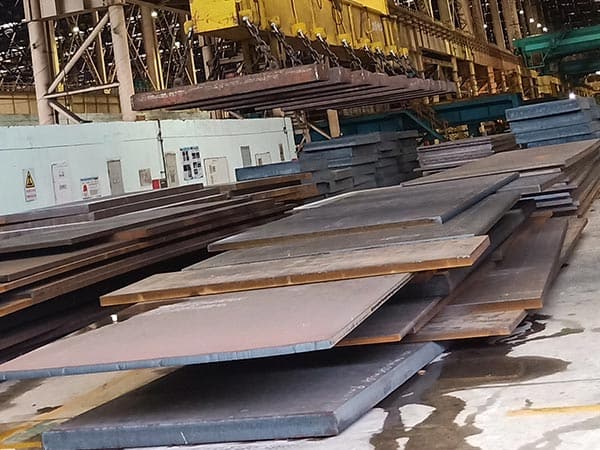
Defining High-Quality S420MC in Modern Engineering
In the demanding world of heavy equipment manufacturing, the search for materials that balance weight reduction with structural integrity leads directly to S420MC. This high-strength low-alloy (HSLA) steel, governed by the EN 10149-2 standard, is specifically designed for cold-forming applications where high yield strength and excellent weldability are non-negotiable. Identifying the "best quality" S420MC requires looking beyond basic compliance; it involves evaluating the precision of the Thermomechanical Control Process (TMCP), the purity of the chemical composition, and the consistency of mechanical properties across different production batches.
High-quality S420MC is characterized by its fine-grained microstructure, achieved through controlled rolling and cooling. This process allows the steel to achieve a minimum yield strength of 420 MPa without the need for high levels of alloying elements, which in turn preserves its ductility and toughness. For manufacturers of crane booms, truck chassis, and excavator components, the quality of S420MC directly impacts the safety factor and the service life of the final product.
Chemical Composition: The Foundation of Performance
The superior properties of S420MC are rooted in its sophisticated chemical makeup. Unlike traditional carbon steels, S420MC utilizes micro-alloying elements such as Niobium (Nb), Vanadium (V), and Titanium (Ti) to refine the grain size and enhance strength. The "best" quality material often features extremely low levels of impurities like Phosphorus and Sulfur, which minimizes the risk of lamellar tearing and improves fatigue resistance.
| Element | Maximum Percentage (%) | Role in S420MC |
|---|---|---|
| Carbon (C) | 0.12 | Ensures weldability while maintaining strength. |
| Manganese (Mn) | 1.60 | Increases hardenability and tensile strength. |
| Silicon (Si) | 0.50 | Acts as a deoxidizer. |
| Phosphorus (P) | 0.025 | Kept low to prevent brittleness. |
| Sulfur (S) | 0.015 | Low levels improve formability and surface quality. |
| Nb + V + Ti | 0.22 (Combined) | Grain refinement and precipitation hardening. |
By maintaining a low Carbon Equivalent (CEV), premium S420MC ensures that welding can be performed with minimal preheating, reducing production costs and preventing the formation of brittle phases in the Heat Affected Zone (HAZ).
Mechanical Properties and Structural Reliability
The "420" in S420MC represents the minimum yield strength of 420 MPa. However, the best quality steel often exhibits a narrow range of yield and tensile strengths, providing predictable behavior during engineering calculations and actual service. This predictability is vital for construction machinery that operates under dynamic loads and harsh environments.
- Yield Strength (Reh): Minimum 420 MPa, ensuring the structure can withstand significant stress without permanent deformation.
- Tensile Strength (Rm): Ranging between 480 and 620 MPa, providing a robust safety margin.
- Elongation (A80): Typically 16% to 19% depending on thickness, allowing for complex cold-forming operations.
- Impact Toughness: While S420MC is primarily a cold-forming grade, high-quality variants often provide documented Charpy V-notch impact values at -20°C or -40°C, ensuring performance in arctic or high-altitude environments.
The consistency of these mechanical properties across the length and width of a steel coil or plate is a hallmark of top-tier manufacturing. Variation in hardness or strength can lead to "springback" issues during bending, which complicates automated assembly lines.
Advanced Processing: Welding, Bending, and Cutting
The utility of S420MC in construction machinery is largely due to its exceptional processing characteristics. Because it is a TMCP steel, it responds differently to heat and mechanical stress than traditional hot-rolled grades. Understanding these nuances is key to leveraging its full potential.
Excellent Cold Formability: S420MC is designed to be bent, flanged, and cold-formed into complex shapes. High-quality S420MC allows for tight bending radii without the risk of surface cracking. This is particularly useful for manufacturing U-beams and C-channels used in vehicle frames. The fine grain structure ensures that the steel maintains its integrity even at the outer radius of a sharp bend.
Superior Weldability: Thanks to its low carbon content, S420MC is compatible with all standard welding processes, including MIG/MAG, TIG, and Laser welding. The best quality plates exhibit minimal distortion during welding, which is critical for maintaining the dimensional tolerances of large-scale machinery components. It is important to avoid high heat input to prevent grain growth in the HAZ, which could reduce the local strength.
Precision Cutting: Whether using laser, plasma, or waterjet cutting, S420MC provides a clean edge with minimal dross. The absence of internal stresses—a result of careful leveling and cooling—ensures that parts remain flat after cutting, facilitating seamless robotic welding and assembly.
Industry-Specific Applications and Environmental Adaptation
Construction machinery operates in some of the most grueling conditions on Earth. S420MC has become the material of choice for several critical components due to its balance of strength and weight.
Truck Chassis and Frames: In the transport sector, reducing the tare weight of a vehicle directly increases its payload capacity. S420MC allows for thinner sections without sacrificing load-bearing capacity, leading to better fuel efficiency and lower emissions.
Lifting Equipment: Crane booms and telescopic arms require materials that can handle immense tensile loads while remaining light enough to be mobile. The high strength-to-weight ratio of S420MC makes it ideal for these applications, where every kilogram saved contributes to a higher reach and lifting capacity.
Agricultural Machinery: Plows, harvesters, and trailers benefit from the vibration resistance and toughness of S420MC. Its ability to withstand the abrasive nature of soil and the constant mechanical shocks of field work ensures a long operational life with minimal maintenance.
Identifying the Best Quality S420MC in the Market
When sourcing S420MC, quality assurance goes beyond the mill test certificate (MTC). The best quality steel is produced by mills that utilize advanced ladle metallurgy and vacuum degassing to ensure internal cleanliness. This reduces the presence of non-metallic inclusions, which are often the starting points for fatigue cracks.
Surface quality is another critical factor. Premium S420MC should have a smooth, uniform surface free from scale pits, scratches, or laminations. This is not just an aesthetic requirement; a superior surface finish improves the adhesion of protective coatings and paints, which is the first line of defense against corrosion in construction environments.
Furthermore, the best suppliers provide comprehensive traceability and technical support. This includes advice on the optimal bending parameters and welding consumables to ensure that the final assembly matches the theoretical design performance. For high-stakes engineering projects, selecting S420MC from a reputable manufacturer with a proven track record in the automotive and heavy machinery sectors is the most effective way to ensure long-term reliability.
The Future of S420MC in Sustainable Construction
As the industry moves toward "Green Steel" and sustainable manufacturing, S420MC plays a pivotal role. By enabling lightweight designs, it reduces the total amount of steel required for a machine, which in turn lowers the carbon footprint associated with material production and transportation. The recyclability of HSLA steels like S420MC further enhances their environmental profile, making them a cornerstone of the circular economy in heavy industry.
Engineers are increasingly looking at S420MC not just as a commodity, but as a strategic asset. Its ability to perform under pressure, coupled with its ease of fabrication, ensures that it remains at the forefront of construction machinery design for years to come. Whether it is improving the efficiency of a dump truck or the safety of a high-rise crane, the quality of the S420MC steel used is the foundation upon which modern infrastructure is built.
Leave a message