
10mm thickness S960MC high strength alloy steel yield strength Mpa
Explore the comprehensive properties of 10mm S960MC high-strength alloy steel. This guide covers its 960 MPa yield strength, chemical composition, welding techniques, and industrial applications for heavy machinery and structural engineering.
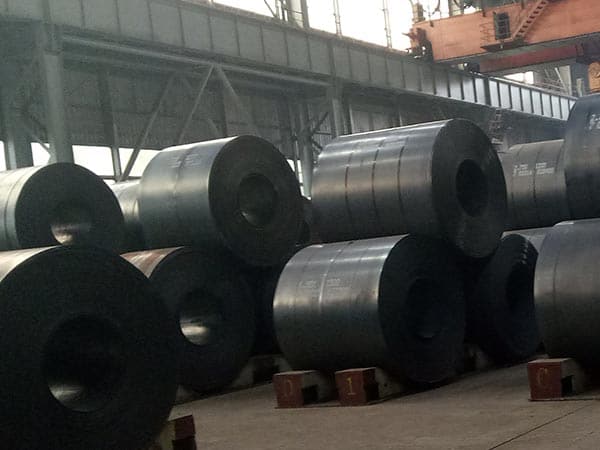
The Engineering Excellence of S960MC High-Strength Steel
S960MC represents the pinnacle of thermomechanically rolled high-strength low-alloy (HSLA) steels. Classified under the EN 10149-2 standard, this grade is specifically designed for cold-forming applications where weight reduction and high load-bearing capacity are critical. For a 10mm thickness, S960MC provides an exceptional balance between extreme yield strength and workable ductility, making it a preferred choice for modern engineering challenges.
The nomenclature 'S960MC' reveals its primary characteristics: 'S' denotes structural steel, '960' represents the minimum yield strength of 960 MPa, 'M' indicates thermomechanically rolled delivery conditions, and 'C' signifies its suitability for cold forming. At a 10mm gauge, this material allows engineers to replace thicker, heavier conventional steel plates, effectively reducing the dead weight of structures without compromising safety or integrity.
Mechanical Properties and Yield Strength Dynamics
The defining feature of S960MC is its yield strength. While standard structural steels like S355 offer a yield point of 355 MPa, S960MC nearly triples that performance. This allows for the design of significantly slimmer components. The 10mm thickness is particularly popular in mobile crane manufacturing and heavy-duty chassis construction.
| Property | Value (10mm Thickness) |
|---|---|
| Minimum Yield Strength (ReH) | 960 MPa |
| Tensile Strength (Rm) | 980 - 1250 MPa |
| Minimum Elongation (A50mm) | 7% - 10% |
| Typical Hardness | 300 - 350 HBW |
It is important to note that the yield strength is maintained across the longitudinal and transverse directions, though slight variations may occur based on the rolling direction. The high tensile strength (up to 1250 MPa) ensures that the material can withstand extreme stress cycles, which is vital for equipment operating in dynamic environments.
Chemical Composition and Micro-Alloying Strategy
The superior performance of S960MC is not achieved through high carbon content, which would impair weldability. Instead, it relies on a precise micro-alloying strategy involving elements like Niobium (Nb), Vanadium (V), and Titanium (Ti). These elements facilitate grain refinement during the thermomechanical rolling process, creating a fine-grained microstructure that stops crack propagation and enhances toughness.
| Element | Maximum Content (%) |
|---|---|
| Carbon (C) | 0.20 |
| Manganese (Mn) | 2.20 |
| Silicon (Si) | 0.60 |
| Phosphorus (P) | 0.025 |
| Sulfur (S) | 0.010 |
| Aluminium (Al) | 0.015 |
The low carbon equivalent (CEV) is the secret behind the material's excellent weldability. By keeping carbon levels low and utilizing the strengthening effects of Manganese and micro-alloys, S960MC avoids the brittleness often associated with ultra-high-strength materials.
Processing and Fabrication Techniques for 10mm S960MC
Fabricating with 10mm S960MC requires specialized knowledge to preserve its mechanical properties. Since the strength is derived from the thermomechanical rolling process, excessive heat input can lead to softening in the heat-affected zone (HAZ).
- Welding: Use low-hydrogen consumables to prevent cold cracking. MAG (Metal Active Gas) welding is the most common method. Preheating is generally not required for 10mm thickness unless the ambient temperature is very low or the humidity is high.
- Cold Forming: Despite its high strength, S960MC is designed for bending. However, the minimum bending radius must be strictly followed. For a 10mm plate, a radius of 3.0 to 4.0 times the thickness (30mm-40mm) is typically recommended to avoid surface cracking.
- Cutting: Laser and plasma cutting are highly effective. Due to the clean chemical composition, S960MC produces a narrow kerf and high-quality edges, reducing the need for secondary machining.
Environmental Resilience and Toughness
High-strength steels are often criticized for being brittle at low temperatures. However, S960MC is engineered to maintain impact toughness even in sub-zero conditions. This makes it suitable for equipment used in arctic mining or offshore applications. The fine-grained structure ensures that the material absorbs energy rather than fracturing when subjected to sudden impacts.
Furthermore, the surface quality of S960MC is typically superior to standard hot-rolled plates. The thin, tightly adherent scale provides a better base for protective coatings, enhancing the corrosion resistance of the final product in harsh industrial environments.
Primary Application Industries
The shift toward S960MC is driven by the global demand for efficiency. By using 10mm S960MC instead of 15mm or 20mm standard steel, manufacturers can significantly reduce fuel consumption in transport vehicles and increase the lifting capacity of cranes.
- Lifting Equipment: Telescopic booms for mobile cranes where weight at the tip must be minimized.
- Transportation: Lightweight chassis for trailers and heavy-duty trucks to maximize payload.
- Construction Machinery: High-stress components in excavators, loaders, and concrete pumps.
- Energy Sector: Structural supports for wind turbines and offshore platforms where high strength-to-weight ratios are mandatory.
Selecting S960MC for 10mm applications is an investment in longevity and performance. While the raw material cost per ton may be higher than lower grades, the overall project cost is often lower due to reduced material volume, lower welding consumables usage, and decreased transport costs for the finished assembly.
Leave a message