
Is S355MC hot-rolled pickled strip hot or cold rolled?
Discover the technical reality of S355MC hot-rolled pickled strip. This guide explores its manufacturing process, mechanical properties, and why it serves as a high-performance alternative to cold-rolled steel.
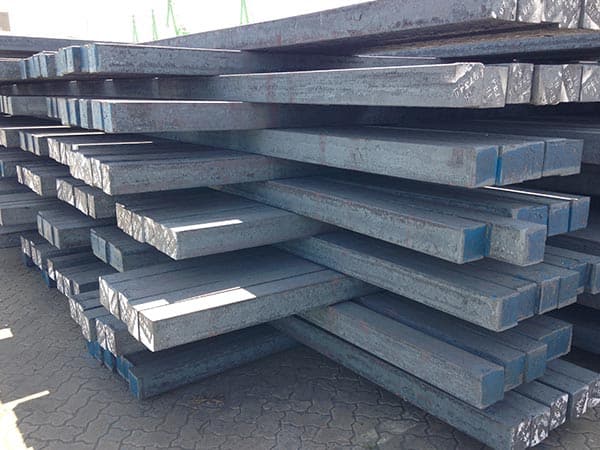
Defining the Nature of S355MC: Hot or Cold?
The question of whether S355MC hot-rolled pickled strip is hot or cold rolled is central to understanding its application in modern engineering. To provide a direct answer: S355MC is fundamentally a hot-rolled product. However, it is not standard hot-rolled steel. It is produced through a specialized thermomechanical rolling process and subsequently undergoes a pickling treatment. This combination allows it to bridge the gap between traditional hot-rolled plates and expensive cold-rolled sheets, offering superior surface quality and high yield strength.
According to the EN 10149-2 standard, S355MC is classified as a high-yield strength steel for cold forming. The "MC" suffix denotes its characteristics: "M" stands for thermomechanically rolled, and "C" indicates its suitability for cold forming. While it originates in the hot rolling mill, the pickling process removes the iron oxide scale, giving it a smooth, clean finish that many users mistake for cold-rolled steel at first glance.
The Metallurgy of Thermomechanical Rolling
Standard hot rolling usually occurs at temperatures where the steel is fully austenitic and recrystallization happens freely. In contrast, the production of S355MC involves precise temperature control during the final rolling passes. By rolling at temperatures just above or within the dual-phase region, the grain structure of the steel is significantly refined.
This fine-grained structure is achieved through micro-alloying. Elements such as Niobium (Nb), Vanadium (V), and Titanium (Ti) are added in small quantities. These elements form carbides and nitrides that pin grain boundaries, preventing grain growth during the cooling process. The result is a steel strip with a high yield strength of at least 355 MPa, combined with excellent toughness and ductility, which would be difficult to achieve through traditional hot rolling alone.
The Role of Pickling and Oiling
The "Pickled" part of the S355MC description refers to the chemical cleaning process. During hot rolling, oxygen in the air reacts with the hot metal to form a layer of scale (magnetite and hematite). For many precision applications, this scale is detrimental because it is abrasive to stamping dies and prevents high-quality painting or welding.
By passing the S355MC strip through an hydrochloric acid bath, the scale is dissolved. The strip is then rinsed and usually oiled to prevent flash rusting. This pickled surface provides several advantages:
- Extended Tool Life: Without abrasive scale, stamping and punching tools last significantly longer.
- Superior Weldability: A clean surface ensures better electrical contact and cleaner weld pools.
- Enhanced Coating Adhesion: Paint, powder coatings, and galvanizing adhere much better to a pickled surface than a scaled one.
- Improved Aesthetics: The silver-grey finish is suitable for visible structural components.
Mechanical Properties and Performance Standards
S355MC is engineered for strength and formability. Its mechanical properties are far superior to standard structural steels like s355jr when it comes to complex shaping. The following table outlines the typical mechanical requirements for S355MC according to EN 10149-2:
| Property | Value (Thickness ≤ 3mm) | Value (Thickness > 3mm) |
|---|---|---|
| Yield Strength (ReH MPa) | Min 355 | Min 355 |
| Tensile Strength (Rm MPa) | 430 - 550 | 430 - 550 |
| Elongation (A80mm %) | Min 19 | - |
| Elongation (A5 %) | - | Min 23 |
| 180° Cold Bend (Mandrel Diameter) | 0.5 x Thickness | 0.5 x Thickness |
The low carbon equivalent of S355MC ensures that it remains ductile even at high strength levels. The bending performance is particularly noteworthy; the ability to bend the material 180 degrees over a mandrel with a diameter only half the thickness of the plate demonstrates its exceptional cold-forming capacity.
Processing Performance: Bending, Welding, and Cutting
One of the primary reasons engineers select S355MC is its predictable processing behavior. Because it is thermomechanically rolled, the internal stresses are more uniform compared to standard hot-rolled plates.
Bending and Folding: S355MC allows for tight bending radii without cracking. This is critical for the manufacturing of U-beams, C-channels, and complex automotive brackets. When designing parts, it is important to account for the rolling direction, although S355MC's fine grain structure makes it less sensitive to transverse vs. longitudinal cracking than lower-grade steels.
Laser and Plasma Cutting: The absence of scale on pickled S355MC allows for high-speed laser cutting. Standard hot-rolled steel with scale can cause "blow-outs" or inconsistent cuts due to the uneven absorption of the laser beam. Pickled S355MC ensures a clean, perpendicular cut edge, often eliminating the need for secondary edge grinding.
Welding: S355MC is highly weldable using all standard methods (MIG/MAG, TIG, Laser, Resistance welding). Its low alloy content means that pre-heating is generally not required for typical thicknesses, and the risk of cold cracking in the Heat Affected Zone (HAZ) is minimal.
Environmental Adaptability and Durability
While S355MC is not a weathering steel (like Corten), its refined microstructure provides a degree of uniformity that helps in consistent corrosion protection. When properly coated, S355MC components exhibit excellent longevity in harsh environments. In the heavy machinery sector, parts made from S355MC are often subjected to cyclic loading. The fatigue strength of S355MC is superior to traditional S355JR because the thermomechanical process reduces the number of inclusions and creates a more homogenous matrix, which slows down the initiation of fatigue cracks.
Strategic Industry Applications
The unique position of S355MC as a high-strength, pickled, hot-rolled product makes it the material of choice for several critical industries:
- Automotive Industry: Used extensively for chassis parts, cross members, and suspension components where weight reduction (down-gauging) is required without sacrificing safety.
- Heavy Machinery: Crane arms, excavator components, and agricultural machinery benefit from the high yield strength and excellent weldability.
- Storage Systems: High-density racking and shelving systems use S355MC to maintain structural integrity while keeping the profile thin and lightweight.
- Transport: Truck trailers and cold-formed sections for railway wagons utilize S355MC for its balance of strength and impact resistance.
Economic Advantages: S355MC vs. Cold Rolled Steel
Why use S355MC instead of cold-rolled steel (like HC340LA)? The primary reason is cost-efficiency. Cold rolling is an energy-intensive process that involves multiple stages of reduction and annealing. S355MC achieves similar mechanical properties through the thermomechanical rolling process directly on the hot strip mill. By choosing S355MC hot-rolled pickled strip, manufacturers can achieve:
- Lower Material Costs: Generally, HRPO (Hot Rolled Pickled and Oiled) steel is cheaper per ton than cold-rolled steel of equivalent strength.
- Thickness Availability: Cold rolling is usually limited to thicknesses below 3mm. S355MC is readily available from 1.5mm up to 12mm or more, allowing for high-strength designs in thicker gauges.
- Reduced Waste: The high formability allows for more complex part integration, reducing the number of components and welds needed in an assembly.
Technical Comparison: S355MC vs. S355JR
It is common to confuse S355MC with S355JR, as both share a minimum yield strength of 355 MPa. However, their internal chemistry and intended use are vastly different. S355JR is a general structural steel (EN 10025-2) with higher carbon content and fewer micro-alloys. It is designed for static structures and is prone to cracking if subjected to severe cold bending. S355MC, being a grain-refined steel, is purpose-built for the dynamic stresses of manufacturing, making it the far superior choice for any component that requires bending, flanging, or intricate cold forming.
S355MC hot-rolled pickled strip is a sophisticated engineering material that combines the raw strength of hot-rolled steel with the surface precision and formability usually associated with cold-rolled products. Understanding its thermomechanical origins and the benefits of its pickled surface allows manufacturers to optimize their production processes, reduce costs, and build more durable, lightweight structures.
Leave a message