
What is the forecast trend of S460MC steel for construction machinery in the coming week
An expert analysis of S460MC steel performance, processing advantages, and a detailed market forecast for the upcoming week in the construction machinery industry.
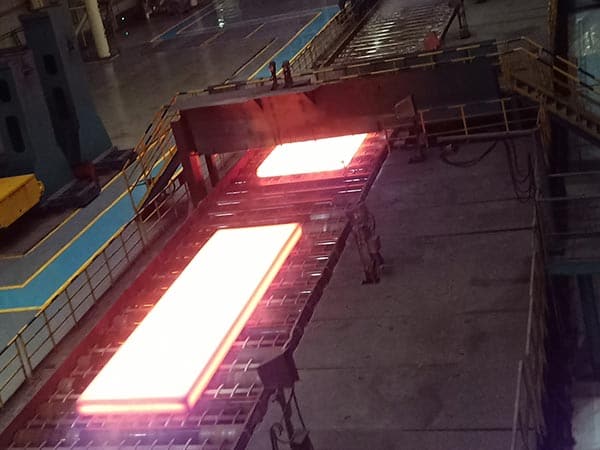
Technical Superiority of S460MC in Heavy-Duty Applications
S460MC steel, governed by the EN 10149-2 standard, represents a pinnacle of thermomechanically rolled (TMCP) high-yield strength steel. For manufacturers of construction machinery, this material is not merely a commodity but a strategic asset. The "S" denotes structural steel, while "460" signifies a minimum yield strength of 460 MPa, and "MC" indicates it is intended for cold forming. This combination of high strength and excellent formability allows for the design of lighter, more efficient components without sacrificing structural integrity.
The micro-alloying elements within S460MC, such as Niobium (Nb), Vanadium (V), and Titanium (Ti), play a critical role in grain refinement. By controlling the cooling process during rolling, steel mills achieve a fine-grained microstructure that enhances both toughness and weldability. This is particularly vital for equipment like crane booms, excavator arms, and truck chassis, where the material must withstand cyclic loading and extreme stress concentrations.
Mechanical Performance and Structural Integrity
When analyzing the mechanical properties of S460MC, it is essential to look beyond the basic yield strength. The tensile strength typically ranges between 520 and 670 MPa, providing a robust safety margin. Furthermore, the elongation properties—often exceeding 14% for thicknesses under 3mm—ensure that the material can undergo significant deformation during the manufacturing process without cracking.
| Property | Value (Thickness ≤ 16mm) |
|---|---|
| Yield Strength (MPa) | ≥ 460 |
| Tensile Strength (MPa) | 520 - 670 |
| Elongation A80mm (%) | ≥ 14 |
| Bending Radius (90°) | 0.8t to 1.2t |
The impact toughness of S460MC is another critical factor. While the standard focuses on cold forming, the inherent cleanliness of the steel (low sulfur and phosphorus content) ensures reliable performance in sub-zero temperatures, a common requirement for construction machinery operating in northern climates or high-altitude regions.
Processing Advantages: Welding, Cutting, and Bending
Efficiency in the workshop is a primary driver for selecting S460MC. Its low carbon equivalent (CEV) makes it exceptionally weldable using standard methods such as MAG, MIG, and laser welding. Unlike traditional high-strength steels that might require extensive pre-heating, S460MC can often be welded at ambient temperatures, reducing energy costs and cycle times.
- Precision Laser Cutting: The uniform microstructure and flat surface finish of S460MC hot-rolled pickled and oiled (HRPO) sheets allow for high-speed laser cutting with minimal dross, ensuring clean edges for subsequent welding.
- Cold Bending Excellence: Despite its high strength, S460MC exhibits predictable springback characteristics. This allows operators to achieve tight bending radii, which is essential for creating complex, weight-optimized structural profiles.
- Surface Quality: The removal of mill scale through pickling provides a superior surface for painting and coating, enhancing the corrosion resistance of the final machinery.
Environmental Adaptability and Lifecycle Benefits
Sustainability in the construction machinery sector is increasingly focused on "lightweighting." By upgrading from S355MC to S460MC, engineers can reduce the thickness of structural components by approximately 15-20% while maintaining the same load-bearing capacity. This reduction in weight translates directly into lower fuel consumption for the end-user and reduced CO2 emissions during both the manufacturing and operational phases.
Moreover, the enhanced fatigue resistance of S460MC extends the service life of heavy equipment. In environments characterized by high vibration and repetitive stress, such as mining or road construction, the ability of S460MC to resist crack initiation and propagation is a significant advantage over lower-grade alternatives.
Market Forecast for S460MC in the Coming Week
Predicting the trend for S460MC requires a multi-faceted look at raw material costs, mill utilization rates, and downstream demand from the construction machinery sector. For the coming week, several key indicators suggest a period of cautious stability with a slight upward bias.
Supply Side Dynamics: Major steel mills in Asia and Europe have maintained steady production levels, but maintenance schedules for several large-scale hot strip mills are approaching. This could lead to a localized tightening of supply for specific widths and thicknesses of S460MC. Inventory levels at the distributor level are currently reported as "moderate," meaning there is no significant glut to suppress prices.
Raw Material Influence: The price of iron ore has shown resilience over the past ten days, supported by renewed infrastructure stimulus talk in major economies. Coking coal prices remain elevated due to logistical constraints. These input costs provide a firm floor for S460MC pricing, making significant downward movements unlikely in the short term.
Demand Analysis: Within the construction machinery sector, there is a seasonal uptick in orders as fleet operators prepare for the peak construction months. Manufacturers of excavators and mobile cranes are reporting stable order books, which sustains a consistent pull-through of high-strength steel grades. Specifically, the demand for S460MC in the 4mm to 12mm thickness range remains particularly strong.
Regional Variations: In the European market, energy surcharges continue to be a wildcard, though they have stabilized recently. In the North American market, the focus remains on domestic availability and the impact of trade policies on imported high-strength coils. For the coming week, expect spot prices to fluctuate within a narrow range of ±1.5%, with lead times for new mill orders potentially stretching by another week.
Strategic Procurement Recommendations
Given the forecast of stability with upward pressure, procurement teams should consider securing immediate requirements for S460MC to hedge against potential price hikes later in the month. The focus should be on sourcing high-quality, certified material that meets the stringent EN 10149-2 requirements, as inferior substitutes can lead to costly failures in high-stress applications.
Monitoring the "spread" between S355 and S460 is also advisable. Currently, the value proposition of S460MC remains high, as the performance gains far outweigh the modest price premium. Engineering teams should continue to explore the transition to even higher grades like S700MC for non-critical components to further optimize weight, but for primary structural members, S460MC remains the industry benchmark for reliability and cost-effectiveness.
The coming week will likely serve as a transition period. While no drastic price spikes are anticipated, the underlying fundamentals—strong demand from the heavy equipment sector and firm raw material costs—suggest that the window for "low-cost" procurement is narrowing. Staying informed on mill-specific output and regional logistics will be key to navigating the S460MC market successfully.
Leave a message