
What are the top ten BS700MC tensile test plants in Bangladesh
Discover the leading facilities for BS700MC tensile testing in Bangladesh. This guide explores the technical specifications, mechanical properties, and industrial applications of high-strength thermomechanical steel.
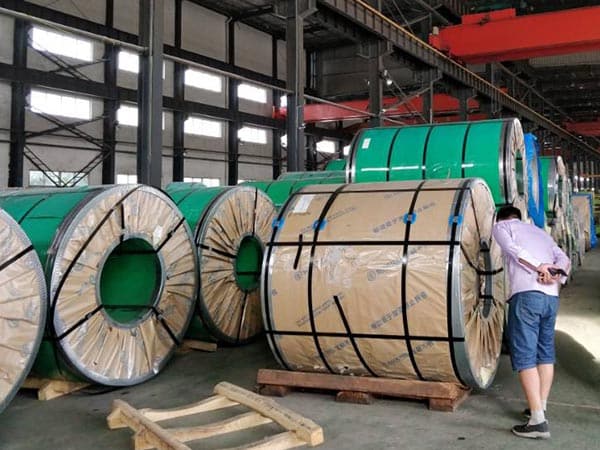
The Significance of BS700MC in Bangladesh's Industrial Evolution
As Bangladesh undergoes a massive transformation in its infrastructure and manufacturing sectors, the demand for high-strength, low-alloy (HSLA) steels like BS700MC has surged. BS700MC is a thermomechanically rolled steel designed for cold forming, offering a minimum yield strength of 700 MPa. Testing this material requires specialized equipment and expertise due to its high load capacity and specific elongation characteristics.
Finding reliable tensile test plants in Bangladesh is crucial for engineers and procurement officers to ensure structural integrity in heavy-duty applications. These facilities must adhere to international standards such as ISO 6892-1 to accurately measure yield strength, ultimate tensile strength, and A50 elongation percentages.
Core Mechanical Properties of BS700MC
BS700MC is characterized by its fine-grained microstructure, achieved through controlled rolling and cooling processes. Understanding these properties is essential before evaluating testing facilities.
| Property | Value Range | Testing Importance |
|---|---|---|
| Yield Strength (ReH) | Min 700 MPa | Determines the point of permanent deformation. |
| Tensile Strength (Rm) | 750 - 950 MPa | The maximum stress the material can withstand. |
| Elongation (A5) | Min 12% | Indicates the ductility for cold forming. |
| Impact Strength | 40J at -20°C (Optional) | Critical for low-temperature environments. |
The high yield-to-tensile ratio of BS700MC makes it a favorite for weight reduction in vehicle chassis and crane booms. However, this same strength requires tensile testing machines with high frame stiffness and precise extensometers to capture the narrow elastic-plastic transition zone.
Top Facilities for BS700MC Tensile Testing in Bangladesh
While many local labs handle mild steel, testing 700MPa grade material requires sophisticated Universal Testing Machines (UTM) with capacities often exceeding 600kN or 1000kN. Here are the primary entities providing these services:
- BUET (Bangladesh University of Engineering and Technology): The Department of Materials and Metallurgical Engineering (MME) offers the most authoritative testing services in the country. Their labs are equipped with high-precision UTMs capable of handling high-strength alloys.
- BCSIR (Bangladesh Council of Scientific and Industrial Research): A government-led facility that provides comprehensive material characterization, including chemical analysis and mechanical testing.
- BSRM (Bangladesh Steel Re-Rolling Mills) Central Lab: As a giant in the local steel industry, BSRM maintains state-of-the-art laboratories that often assist third-party projects in verifying high-grade steel properties.
- SGS Bangladesh: A global leader in inspection and certification, SGS provides ISO-certified tensile testing that is internationally recognized, vital for export-oriented projects.
- Intertek Bangladesh: Similar to SGS, Intertek offers specialized metallurgical testing and is frequently used by the automotive and energy sectors.
- CUET (Chittagong University of Engineering and Technology): Serves the industrial hub of Chattogram, providing vital testing services for the shipbuilding and heavy engineering sectors.
- Military Institute of Science and Technology (MIST): Their civil and mechanical engineering labs provide high-standard testing often utilized for government infrastructure projects.
- Abul Khair Steel (AKS) Quality Control Lab: Equipped with modern testing rigs, they ensure that high-strength plates meet the rigorous demands of modern construction.
- GPH Ispat Research Center: Utilizing ultra-modern technology, GPH's facilities are capable of testing high-performance steel grades under various strain rates.
- TUV SUD Bangladesh: Provides third-party validation and testing services, ensuring that BS700MC meets specific European or American standards as required by contractors.
Technical Requirements for Accurate BS700MC Testing
Testing BS700MC is not as straightforward as testing standard S235 or S355 grades. The strain rate control is vital. Because BS700MC is thermomechanically processed, its grain structure is highly sensitive to the speed of the test. ISO 6892-1 Method A (strain rate control) is preferred over Method B (stress rate control) to ensure repeatability.
Another critical factor is specimen preparation. For BS700MC, the edges of the tensile specimens must be polished to remove any heat-affected zones from laser or plasma cutting, as these can initiate premature cracks during the test, leading to false low elongation readings.
Cold Forming and Processability Performance
Beyond tensile strength, the performance of BS700MC in a workshop environment is a key selling point. Its low carbon equivalent (CEV) ensures excellent weldability. When testing at a plant, engineers often request a bend test alongside the tensile test.
- Minimum Bend Radius: For BS700MC, the recommended internal bend radius is typically 1.5 to 2.0 times the thickness (t). Testing labs verify if the material can withstand this without micro-cracking.
- Hole Expansion Capacity: This is crucial for parts that require punched holes which are subsequently expanded. It measures the local ductility of the steel.
- Welded Joint Tensile Test: Often, the test is not just on the base metal but on a welded specimen to ensure the Heat Affected Zone (HAZ) does not soften significantly below the 700 MPa threshold.
Environmental Adaptability in the Bangladesh Climate
Bangladesh’s climate is characterized by high humidity and, in coastal regions, high salinity. While BS700MC is not a weathering steel, its fine grain structure provides a slightly better uniform corrosion resistance compared to traditional hot-rolled steels. However, for long-term durability in projects like the Padma Bridge rail links or Rooppur Nuclear Power Plant components, BS700MC is usually paired with advanced coating systems.
Testing plants often conduct Salt Spray Tests or Cyclic Corrosion Tests to determine how the steel-substrate interacts with protective paints or galvanization. This ensures that the high-strength benefits are not compromised by premature oxidation.
Expanding Applications: Where BS700MC is Moving the Needle
The shift towards BS700MC in Bangladesh is driven by the need for efficiency. In the transportation sector, using BS700MC for truck trailers reduces the curb weight by up to 30%, allowing for higher payloads and lower fuel consumption. This is a direct response to the government's strict axle-load regulations.
In the telecommunications sector, the construction of taller, lighter mobile towers requires materials that can withstand high wind loads while being easy to transport to remote rural areas. BS700MC provides the perfect balance of strength-to-weight ratio for these structures.
The lifting and excavation industry also benefits. Mobile cranes and excavators manufactured or assembled locally are increasingly incorporating BS700MC in their telescopic booms to ensure they can handle extreme loads without the risk of buckling.
Choosing the Right Testing Partner
When selecting a tensile test plant in Bangladesh for BS700MC, it is not enough to look at the price. Calibration certificates of the UTM, the expertise of the lab technicians in handling HSLA steels, and the ability to provide digital stress-strain curves are the real benchmarks of quality. A proper test report should include the yield point (ReH or Rp0.2), the tensile strength (Rm), and a clear indication of the fracture location.
By leveraging the capabilities of top-tier labs like BUET or international bodies like SGS, stakeholders can guarantee that their BS700MC supply chain is robust, safe, and ready for the demanding engineering challenges of the future.
Leave a message