
What is the hardness of S900MC cold forming?
An in-depth analysis of S900MC steel hardness, mechanical properties, and cold forming capabilities. Learn about its 900MPa yield strength, chemical composition, and practical application tips for heavy-duty engineering.
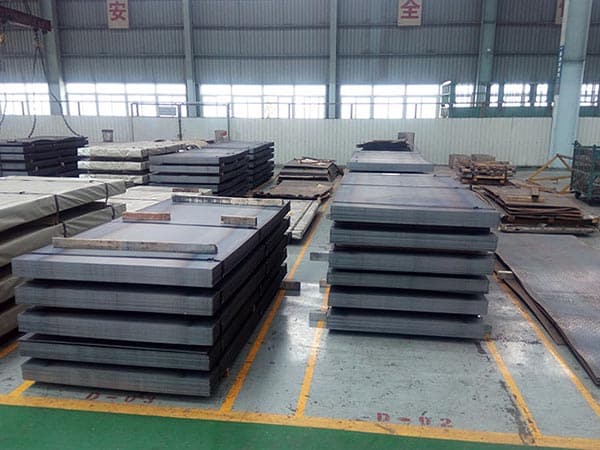
Defining the Hardness and Nature of S900MC
When discussing the hardness of S900MC, it is essential to recognize that this grade is a thermomechanically rolled, high-strength low-alloy (HSLA) steel designed specifically for cold forming. Unlike tool steels or quenched and tempered wear plates, S900MC is not defined primarily by a hardness specification in the EN 10149-2 standard. Instead, its identity revolves around its yield strength. However, for engineering purposes, the typical hardness of S900MC generally ranges between 280 and 340 HBW (Brinell) or approximately 290 to 360 HV (Vickers).
This hardness is a byproduct of its ultra-fine grain structure and specific alloying elements rather than a heat-treatment process like quenching. The balance between high hardness and ductility is what makes S900MC a preferred choice for weight-saving designs where structural integrity is paramount. Understanding this hardness is crucial for selecting the right tooling and calculating the forces required during fabrication processes such as shearing, punching, and bending.
Chemical Composition: The Foundation of Strength
The hardness and mechanical prowess of S900MC are rooted in its precise chemical makeup. By utilizing thermomechanical rolling, manufacturers can achieve high strength with a relatively low carbon equivalent, which significantly improves weldability and toughness compared to traditional structural steels.
| Element | Maximum Content (%) |
|---|---|
| Carbon (C) | 0.20 |
| Manganese (Mn) | 2.20 |
| Silicon (Si) | 0.60 |
| Phosphorus (P) | 0.025 |
| Sulphur (S) | 0.015 |
| Aluminium (Al) | 0.015 (min) |
| Niobium (Nb) + Titanium (Ti) + Vanadium (V) | 0.22 |
The micro-alloying elements like Niobium and Titanium play a critical role. They form fine precipitates that pin grain boundaries during the rolling process, preventing grain growth and resulting in a refined microstructure. This refinement is the primary driver behind the material's high hardness and yield strength.
Mechanical Properties and Performance Indicators
To fully answer the question of hardness, one must look at the tensile properties that define the material's resistance to deformation. S900MC provides a remarkable strength-to-weight ratio, allowing engineers to reduce section thickness without sacrificing the load-bearing capacity of the structure.
- Yield Strength (ReH): Minimum 900 MPa.
- Tensile Strength (Rm): 930 to 1200 MPa.
- Elongation (A5): Minimum 7% to 10% (depending on thickness).
- Impact Energy: Often tested at -20°C or -40°C to ensure low-temperature toughness.
The high yield strength means that S900MC can withstand significantly higher stresses than standard S355 steel before undergoing permanent plastic deformation. This makes it ideal for components subjected to extreme mechanical loads.
Cold Forming Characteristics and Bending Behavior
Despite its high hardness and strength, S900MC is specifically engineered for cold forming. However, the process requires more power and precision than lower-grade steels. When bending S900MC, the internal stress within the material is substantial, leading to a phenomenon known as springback.
Fabricators must account for a larger minimum bending radius to avoid cracking on the outer tension surface. For S900MC, the recommended inner bending radius is typically 3 to 4 times the material thickness (t), depending on whether the bend is transverse or longitudinal to the rolling direction. Using high-quality dies and ensuring the edges of the plate are smooth (deburred) are vital steps to prevent crack initiation during the forming process.
Springback Management: Because S900MC has high elastic energy, it will "spring back" more than mild steel once the forming pressure is released. Over-bending the part by several degrees is usually necessary to achieve the desired final angle. Advanced CNC press brakes with angle-sensing systems are highly recommended for working with this grade.
Weldability and the Heat-Affected Zone (HAZ)
A common concern with high-hardness steels is how they react to the heat of welding. S900MC excels here due to its low carbon content. It can be welded using standard methods such as MIG/MAG, TIG, and submerged arc welding. However, because the strength is derived from the thermomechanical rolling process, excessive heat input can soften the material in the Heat-Affected Zone (HAZ).
To maintain the integrity of the S900MC structure, it is recommended to:
- Limit the heat input (kJ/mm) to prevent excessive grain growth in the HAZ.
- Avoid preheating unless the thickness or ambient conditions strictly require it.
- Use high-strength fillers that match the mechanical properties of the base metal.
- Ensure rapid cooling through the 800°C to 500°C range (t8/5 time) to preserve the fine-grained structure.
Industrial Applications and Strategic Advantages
The unique combination of hardness, strength, and formability allows S900MC to be used in demanding environments where weight reduction is a competitive advantage. By using S900MC, manufacturers can create lighter vehicles that consume less fuel and carry higher payloads.
Heavy Lifting and Transportation: Telescopic booms for cranes, truck chassis frames, and trailers often utilize S900MC to handle high lifting moments and dynamic loads while keeping the tare weight low.
Automotive Industry: Safety components, cross members, and reinforced structures in heavy-duty trucks benefit from the energy absorption capabilities and high yield strength of this steel.
Agriculture and Mining: Equipment such as harrow frames, spreader components, and support structures for mining machinery utilize S900MC to resist the harsh mechanical stresses encountered in the field.
Environmental Adaptability and Fatigue Resistance
S900MC is not just about static strength; it is also designed to perform under cyclic loading and varying environmental conditions. Its fine-grained structure provides excellent fatigue resistance, which is critical for components like chassis that undergo millions of stress cycles during their service life.
Furthermore, the low-temperature toughness of S900MC ensures that the material remains ductile and resistant to brittle fracture even in arctic conditions. This makes it a reliable choice for global equipment manufacturers who export machinery to diverse climates. While it does not have the natural corrosion resistance of weathering steel or stainless steel, it provides an excellent substrate for modern protective coatings, including powder coating and galvanizing (with proper silicon control).
Practical Tips for Working with S900MC
If you are integrating S900MC into your production line, consider the following technical nuances to optimize your results:
- Cutting: Laser and plasma cutting are highly effective. Due to the material's hardness, ensure your laser parameters are tuned to prevent dross buildup, which can act as a stress concentrator during subsequent bending.
- Tooling Wear: Expect higher wear on shear blades and bending tools compared to S355. Use hardened tool steel for your dies to extend service life.
- Surface Preparation: The mill scale on S900MC is usually thin and tightly adherent. For high-quality welding or painting, shot blasting or pickling is recommended to ensure a clean surface.
- Directional Properties: Always check the rolling direction. Bending transverse to the rolling direction is generally safer and allows for a slightly tighter radius than bending parallel to it.
By understanding the hardness and mechanical limits of S900MC, engineers can push the boundaries of modern design, creating structures that are stronger, lighter, and more durable than ever before. The transition to S900MC represents a move toward sophisticated material science where chemistry and processing work in harmony to deliver peak performance.
Leave a message