
What is the main use of S315MC pickled steel coil
Explore the comprehensive guide to S315MC pickled steel coil. Learn about its chemical composition, mechanical properties, superior formability, and why it is the preferred choice for automotive chassis and structural engineering.
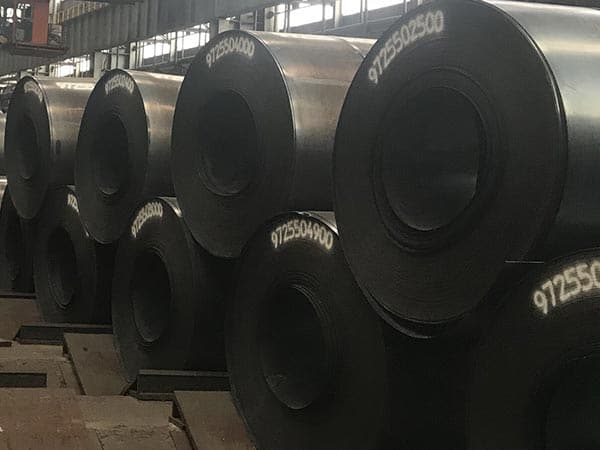
Understanding S315MC Pickled Steel Coil: An Overview
S315MC is a high-strength, low-alloy (HSLA) steel grade specifically designed for cold forming. It is governed by the European standard EN 10149-2, which specifies hot-rolled flat products made of high yield strength steels for cold forming. The "S" stands for structural steel, "315" denotes the minimum yield strength of 315 MPa, and "MC" indicates that the steel is thermomechanically rolled.
The term pickled steel coil refers to the surface treatment process where the hot-rolled steel is passed through an acid bath (usually hydrochloric acid) to remove surface oxides, scales, and impurities. Following the pickling process, the steel is typically oiled to prevent corrosion. This results in a clean, smooth, and uniform surface that is ideal for subsequent processing steps such as painting, galvanizing, or precision welding.
The Chemical Composition and Microstructure of S315MC
The exceptional performance of S315MC is rooted in its precise chemical makeup. Unlike traditional carbon steels, S315MC utilizes micro-alloying elements to achieve high strength without sacrificing ductility. The low carbon content ensures excellent weldability, while elements like niobium (Nb), vanadium (V), and titanium (Ti) refine the grain structure during the thermomechanical rolling process.
| Element | Maximum Percentage (%) |
|---|---|
| Carbon (C) | 0.12 |
| Manganese (Mn) | 1.30 |
| Silicon (Si) | 0.50 |
| Phosphorus (P) | 0.025 |
| Sulfur (S) | 0.020 |
| Aluminium (Al) | 0.015 |
This lean chemical design allows the steel to maintain a fine-grained ferrite-pearlite microstructure. This microstructure is the secret behind the steel's ability to withstand significant deformation during cold pressing and bending operations without cracking.
Mechanical Properties: Strength Meets Flexibility
The primary reason engineers select S315MC pickled steel coil is its balanced mechanical profile. It offers a significant step up from standard S235JR grades while remaining more workable than higher-strength grades like S700MC. The pickling process further enhances these properties by ensuring that surface defects do not act as stress concentrators during forming.
- Yield Strength: Minimum 315 MPa, providing robust structural integrity.
- Tensile Strength: Ranging between 390 and 510 MPa.
- Elongation: Excellent ductility, typically exceeding 20-24% depending on thickness, allowing for complex geometries.
- Impact Strength: Good low-temperature toughness, making it suitable for varying climates.
Why the Pickling Process is Critical for S315MC
While hot-rolled S315MC is available, the pickled and oiled (P&O) version is often preferred for several technical reasons. The removal of the hard, abrasive iron oxide scale protects downstream equipment. For instance, when S315MC is used in stamping dies, pickled steel significantly reduces tool wear compared to non-pickled hot-rolled steel.
Furthermore, the clean surface of S315MC pickled steel coil is essential for high-quality welding. Scale can cause weld porosity and poor fusion. By using pickled steel, manufacturers ensure deeper weld penetration and a cleaner finish. Additionally, the smooth surface provides an excellent substrate for powder coating and electro-galvanizing, ensuring superior aesthetic results and long-term corrosion resistance.
The Main Uses of S315MC Pickled Steel Coil
The versatility of S315MC makes it a staple in industries where weight reduction and structural reliability are paramount. Because it is thinner and stronger than traditional mild steel, it allows for the design of lighter components without compromising safety.
1. Automotive Industry: The Primary Consumer
The automotive sector is the largest user of S315MC pickled steel. It is used extensively for structural components that require high strength and complex forming. Examples include:
- Chassis Frames: The high yield strength ensures the vehicle can withstand heavy loads and dynamic stresses.
- Longitudinal and Cross Members: These components benefit from the steel's energy-absorbing capabilities during impacts.
- Suspension Parts: The excellent fatigue resistance of S315MC makes it ideal for parts subjected to constant vibration.
- Seat Frames and Brackets: Where precision forming and weight savings are critical.
2. Heavy Machinery and Equipment
In the manufacture of cranes, excavators, and agricultural machinery, S315MC is used for non-critical structural parts and protective housings. Its ability to be cold-bent into sharp angles without fracture allows designers to create streamlined and efficient machine bodies. Pickled S315MC is particularly favored here because these machines are often painted, and the pickled surface ensures maximum paint adhesion.
3. Cold-Formed Profiles and Tubing
S315MC is a preferred material for producing high-strength cold-rolled sections, such as C-purlins, Z-purlins, and structural tubes. These profiles are used in modern warehouse construction and solar panel mounting systems. The high strength-to-weight ratio allows for longer spans and reduced material usage, leading to significant cost savings in large-scale infrastructure projects.
4. Storage Systems and Shelving
For heavy-duty industrial racking and automated storage and retrieval systems (ASRS), S315MC provides the necessary stiffness and load-bearing capacity. The pickled surface is beneficial here as it allows for high-speed automated welding and clean finishes in indoor environments.
Processing Advantages: Welding and Forming
One of the standout features of S315MC is its weldability. Due to its low carbon equivalent (CEV), it can be welded using all standard methods, including MIG/MAG, TIG, and laser welding, without the need for preheating or post-weld heat treatment in most applications. This simplifies the production line and reduces energy costs.
Regarding formability, S315MC exhibits minimal springback compared to higher-strength alloys. This predictability in the press shop allows for tighter tolerances and more consistent part dimensions. Whether it is deep drawing, bending, or flanging, S315MC performs reliably across large production batches.
Environmental and Economic Impact
The shift toward S315MC pickled steel coil is also driven by environmental considerations. By using high-strength steel, manufacturers can reduce the overall weight of vehicles and structures. In the transport sector, lighter vehicles consume less fuel and emit fewer greenhouse gases. Furthermore, the longevity and recyclability of HSLA steels contribute to a circular economy.
From an economic perspective, while S315MC may have a higher per-ton cost than basic S235 steel, the ability to use thinner gauges to achieve the same structural strength results in a lower total material cost and reduced shipping weights. The pickled surface also eliminates the need for in-house cleaning or grit blasting, further streamlining the manufacturing process.
Comparison with Other Steel Grades
When choosing between S315MC and other grades, it is important to understand the trade-offs. Compared to S355MC, S315MC offers slightly better ductility and is easier to form into extremely tight radii. Compared to DC01 (Cold Rolled), S315MC offers much higher strength, although cold-rolled steel typically has a superior surface finish and tighter thickness tolerances.
For applications where the surface will be exposed to the elements without coating, S315MC pickled and oiled steel must be treated or painted immediately after the oil is removed, as the bare steel is highly reactive. However, for most structural and automotive applications, the combination of strength, formability, and surface cleanliness makes S315MC an unbeatable choice.
Selecting the Right S315MC Supplier
To maximize the benefits of S315MC pickled steel coil, sourcing from a reputable mill is essential. Quality factors to look for include consistent thickness across the width of the coil, uniform oiling to prevent rust spots, and precise control of the thermomechanical rolling process to ensure consistent mechanical properties. High-quality S315MC should always come with a Mill Test Certificate (MTC) to verify compliance with EN 10149-2 standards.
Leave a message