
Five causes of cracks in S700MC automotive steel sheet during quenching
A professional technical analysis of the metallurgical and mechanical factors leading to quenching cracks in S700MC automotive steel, focusing on thermal stress, phase transformation, and chemical segregation.
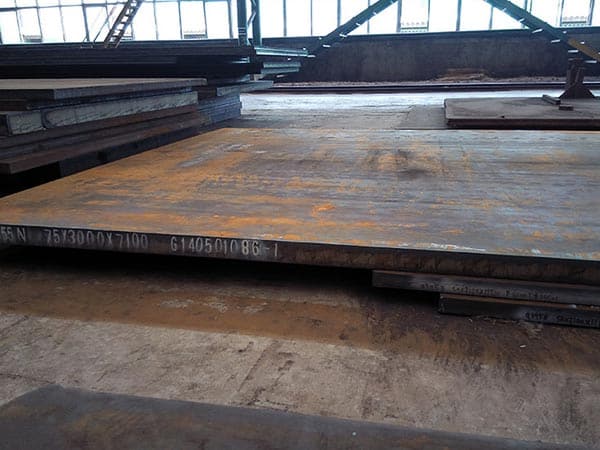
Metallurgical Characteristics of S700MC Automotive Steel
S700MC is a high-strength low-alloy (HSLA) steel grade governed by the EN 10149-2 standard, specifically designed for cold-forming applications in the automotive and heavy machinery industries. Its exceptional yield strength of at least 700 MPa is achieved through Thermomechanically Controlled Processing (TMCP), which refines the grain size to an ultra-fine level and utilizes micro-alloying elements like Titanium (Ti), Niobium (Nb), and Vanadium (V) for precipitation hardening. Unlike traditional carbon steels, S700MC relies on its specific rolling history rather than post-rolling heat treatment to reach its mechanical properties. However, during manufacturing processes such as welding or localized induction hardening, the material may undergo rapid cooling cycles—effectively a quenching process. When this occurs, the material becomes susceptible to cracking, a phenomenon that compromises the structural safety of chassis components, longitudinal beams, and crane structures. Understanding the root causes of these cracks requires a deep dive into the interaction between thermal physics and microstructural evolution.
Cause 1: Excessive Thermal Gradient and Macroscopic Residual Stress
The primary driver of cracking during any quenching operation is the development of a severe thermal gradient between the surface and the core of the steel sheet. Although S700MC is typically produced in relatively thin gauges (often between 2mm and 10mm for automotive use), the rate of heat extraction during water or oil quenching can create significant temperature differentials. As the surface cools rapidly, it attempts to contract, but the still-hot core resists this contraction. This creates high tensile stresses on the surface. If the cooling medium is applied unevenly, or if the geometry of the part is complex with sharp corners and varying thicknesses, the resulting thermal stress can exceed the local fracture toughness of the material. In S700MC, the fine-grained structure provides some resistance to crack initiation, but the high yield strength means that once a crack starts, the stored elastic energy is substantial, leading to rapid propagation. The Biot number, which characterizes the ratio of heat transfer at the surface to heat conduction within the part, plays a critical role here; a high Biot number during quenching is a frequent precursor to thermal shock cracking.
Cause 2: Martensitic Transformation and Volumetric Expansion
While S700MC is not a "hardenable" steel in the traditional sense like 42CrMo4, its chemical composition—particularly the Manganese (Mn) content which can reach up to 2.10%—increases its hardenability significantly. When heated above the Ac3 transformation temperature and subsequently quenched, the austenite does not transform back into the ductile ferrite-pearlite structure intended by the TMCP process. Instead, it may transform into martensite or lower bainite. The transformation from austenite to martensite involves a significant volume expansion (approximately 1% to 4% depending on carbon content). In S700MC, even with low carbon levels (typically ≤ 0.12%), the volumetric change combined with the high hardness of the resulting martensitic phase creates intense localized stresses. Because the surface transforms to martensite first, it becomes hard and brittle while the interior is still transforming and expanding. This "transformation stress" acts in concert with thermal stress, often peaking at the moment the core reaches the Martensite Start (Ms) temperature, leading to longitudinal or transverse cracks along the edges of the sheet.
| Element | C (max) | Mn (max) | Si (max) | P (max) | S (max) | Al (min) | Nb (max) | Ti (max) |
|---|---|---|---|---|---|---|---|---|
| S700MC Content (%) | 0.12 | 2.10 | 0.60 | 0.025 | 0.015 | 0.015 | 0.09 | 0.22 |
Cause 3: Micro-segregation of Alloying Elements and Banded Structures
During the continuous casting process of S700MC slabs, alloying elements like Manganese, Phosphorus, and Sulfur can undergo micro-segregation, leading to a "banded" microstructure in the final rolled sheet. Manganese segregation, in particular, lowers the local transformation temperature in certain layers of the steel. During a quenching cycle, these Manganese-rich bands transform into martensite at lower temperatures than the surrounding matrix. This asynchronous transformation creates micro-stresses at the interfaces between the bands. Furthermore, the presence of elongated Manganese Sulfide (MnS) inclusions acts as a stress concentrator. When the quenching stress is applied, these inclusions provide easy pathways for crack initiation. The high Titanium content in S700MC, while beneficial for grain refinement, can also form large, angular TiN (Titanium Nitride) precipitates if the nitrogen levels are not strictly controlled. These hard particles are incoherent with the steel matrix and often serve as the nuclei for quenching cracks, especially when located near the surface or in areas of high tensile stress.
Cause 4: Hydrogen-Induced Cold Cracking (HICC)
Hydrogen embrittlement is a critical factor in the cracking of high-strength steels like S700MC during and after quenching. Hydrogen can be introduced into the steel during the melting process, through pickling, or most commonly, during welding processes that precede a quenching cycle (such as in the heat-affected zone). At high temperatures, hydrogen has high solubility and mobility in the austenitic lattice. However, as the steel is quenched and transforms into a body-centered cubic (BCC) or body-centered tetragonal (BCT) structure, the solubility of hydrogen drops drastically. The hydrogen atoms become trapped at dislocations, grain boundaries, and the interfaces of micro-alloying precipitates (NbC, TiC). The combination of high residual tensile stress from the quench and the presence of trapped hydrogen leads to a reduction in the cohesive strength of the atomic bonds. This results in delayed cracking, where the part may appear intact immediately after quenching but develops cracks hours or days later. The high yield strength of S700MC makes it particularly sensitive to this phenomenon, as the material lacks the local plasticity required to relax the stress around hydrogen traps.
| Mechanical Property | Yield Strength (MPa) | Tensile Strength (MPa) | Elongation A80mm (%) | Bending Radius (180°) |
|---|---|---|---|---|
| Minimum Value | 700 | 750 - 950 | 10 - 12 | 1.5t - 2.0t |
Cause 5: Interaction Between Residual Cold-Working Stress and Surface Defects
S700MC is frequently used for complex cold-formed parts such as truck frames and chassis components. The cold-forming process introduces significant work hardening and residual tensile stresses into the material. If these parts are subsequently subjected to localized quenching (for instance, to harden a specific wear surface), the quenching stress is superimposed on the existing cold-working stress. This cumulative stress state often exceeds the ultimate tensile strength of the material. Additionally, surface quality plays a decisive role. Any micro-cracks, scratches, or heavy scale resulting from the rolling or forming process act as notches. During the rapid contraction associated with quenching, these notches create a stress intensity factor (K) that may exceed the fracture toughness (K1c) of the hardened microstructure. The sensitivity of S700MC to surface notches increases significantly once the fine-grained ferrite is transformed into a more brittle martensitic or bainitic state during the quenching cycle.
Technical Strategies for Crack Mitigation
To prevent cracking in S700MC during processes involving rapid cooling, engineers must focus on controlling the cooling rate and the initial state of the material. Implementing a pre-heating stage before any localized high-temperature treatment can reduce the thermal gradient. Utilizing polymer quenchants instead of water can provide a more uniform and slower cooling rate, minimizing the impact of the Leidenfrost effect. From a metallurgical perspective, ensuring low levels of impurities like Phosphorus and Sulfur is essential to minimize grain boundary embrittlement. Furthermore, if welding is involved, using low-hydrogen consumables and maintaining proper interpass temperatures is vital to prevent hydrogen-induced failures. By respecting the TMCP origins of S700MC and avoiding unnecessary full-scale quenching, manufacturers can leverage the high strength of this grade without the risks associated with brittle fracture and quenching-induced defects.
Leave a message