
Where can purchase S900MC automotive steel supplier with heavy thickness
Discover where to purchase heavy thickness S900MC automotive steel. This guide covers technical specifications, processing capabilities, and industry applications for high-strength steel procurement.
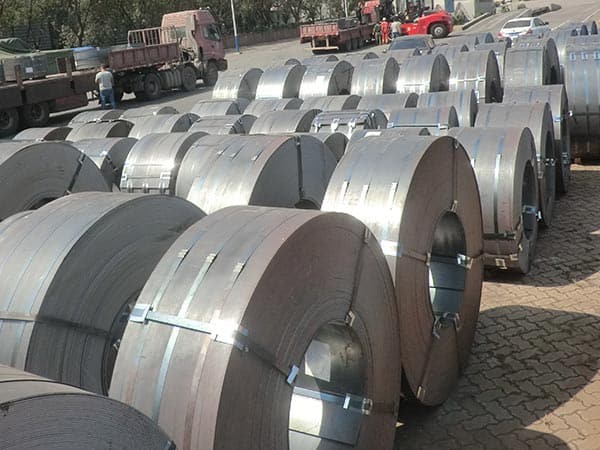
Understanding the Scarcity and Technical Demands of Heavy Thickness S900MC
Finding a reliable supplier for S900MC automotive steel with heavy thickness is a significant challenge for procurement departments and structural engineers. S900MC, governed by the EN 10149-2 standard, represents the pinnacle of thermo-mechanically rolled high-yield strength steels. While standard automotive sheets are commonly found in thicknesses under 4mm, "heavy thickness" in the context of S900MC typically refers to plates ranging from 6mm to 15mm, and occasionally up to 20mm depending on the mill's specialized rolling capabilities. The difficulty in sourcing these gauges stems from the complex cooling and rolling processes required to maintain a fine-grained microstructure across a thicker cross-section without sacrificing ductility or weldability.
Chemical Composition and Metallurgical Integrity
The performance of heavy-gauge S900MC is rooted in its precise chemical makeup. Unlike traditional high-strength steels that rely on high carbon content, S900MC utilizes a low-carbon design combined with micro-alloying elements such as Niobium (Nb), Vanadium (V), and Titanium (Ti). This metallurgical approach ensures that even at greater thicknesses, the steel maintains excellent toughness and weldability.
| Element | Maximum Content (%) |
|---|---|
| Carbon (C) | 0.20 |
| Manganese (Mn) | 2.20 |
| Silicon (Si) | 0.60 |
| Phosphorus (P) | 0.025 |
| Sulfur (S) | 0.015 |
| Aluminium (Al) | 0.015 |
The low carbon equivalent (CEV) is critical for heavy plates because it reduces the risk of cold cracking during welding operations. Suppliers specializing in heavy thickness S900MC must demonstrate consistent control over these trace elements to prevent the formation of coarse grains during the thermo-mechanical control process (TMCP).
Mechanical Performance: Beyond the 900 MPa Yield Strength
The primary reason for selecting S900MC is its exceptional yield strength, which must be at least 900 MPa. However, when dealing with heavy thickness, the elongation and impact energy become equally vital metrics. Engineers must verify that the supplier's material meets the following mechanical criteria:
- Yield Strength (ReH): Minimum 900 MPa.
- Tensile Strength (Rm): 930 to 1200 MPa.
- Elongation (A5): Minimum 7% to 10% (depending on thickness).
- Impact Toughness: Often tested at -20°C or -40°C to ensure structural integrity in cold climates.
Heavy thickness plates offer a unique advantage in load-bearing applications where weight reduction is mandatory but structural volume cannot be compromised. By using 10mm S900MC instead of 20mm conventional S355 steel, manufacturers can reduce component weight by over 50% while maintaining the same load capacity.
Processing Performance: Bending and Welding Heavy Plates
One of the most common questions when purchasing heavy S900MC is how it behaves during fabrication. Despite its extreme strength, S900MC is designed for cold forming. However, as thickness increases, the minimum bending radius also increases. For a 10mm plate, a typical bending radius might be 3 to 4 times the thickness (3t to 4t), requiring high-tonnage press brakes and precision tooling.
Welding heavy S900MC requires adherence to strict heat input limits. Because the steel derives its strength from the TMCP process, excessive heat can soften the heat-affected zone (HAZ), leading to a localized drop in strength. High-quality suppliers often provide detailed welding consumables recommendations and pre-heating guidelines tailored to the specific plate thickness to ensure the joint matches the base metal's performance.
Where to Identify High-Quality S900MC Suppliers
When searching for a supplier, focus on those who have direct partnerships with Tier-1 steel mills capable of advanced TMCP rolling. Look for the following indicators of a reliable source:
- Mill Certification: Ensure they provide EN 10204 3.1 or 3.2 certificates for every batch.
- Processing Services: Suppliers who offer laser or plasma cutting are often better equipped to handle heavy S900MC, as they understand the material's internal stress profiles.
- Inventory Depth: Heavy thickness S900MC is rarely a "stock item" for small distributors. Look for specialized high-strength steel service centers.
- Technical Support: A top-tier supplier will offer guidance on the transition from traditional steels to S900MC, including FEA (Finite Element Analysis) support for weight-saving designs.
Expanding Applications: Beyond the Automotive Chassis
While the "MC" in S900MC stands for thermomechanically rolled (M) and cold forming (C), its utility extends far beyond automotive frames. The heavy thickness variants are increasingly sought after in sectors where high stress and weight sensitivity intersect:
Lifting and Handling Equipment: Telescopic crane booms and outriggers utilize heavy S900MC to reach higher altitudes with lower self-weight, directly increasing the crane's lifting capacity.
Agricultural Machinery: Large-scale harvesters and soil preparation tools use these plates to withstand the abrasive and high-torque environments of modern industrial farming.
Transport and Logistics: Beyond light trucks, heavy-duty semi-trailers and specialized oversized-load transporters rely on S900MC for main longitudinal beams, ensuring they can carry massive industrial components without buckling.
Environmental Adaptability and Longevity
S900MC exhibits good atmospheric corrosion resistance compared to standard carbon steels due to its refined microstructure. In heavy thickness applications, this translates to a longer service life for structural components exposed to the elements. Furthermore, the ability to use thinner sections of S900MC to replace thicker mild steel reduces the total energy consumption during transport and assembly, contributing to a lower carbon footprint for the final product.
When procuring this material, it is essential to verify the surface quality. Heavy plates should be free from laminations and surface defects that could act as stress concentrators, especially in dynamic loading environments. Many premium suppliers offer shot-blasted and primed plates to protect the material during storage and initial fabrication stages.
Strategic Procurement Considerations
Purchasing heavy thickness S900MC is not just about price per ton; it is about total cost of ownership. The initial higher cost of the material is offset by the reduction in welding volume (due to thinner plates), lower shipping costs of the final product, and the ability to design more competitive, high-performance machinery. Potential buyers should evaluate suppliers based on their ability to provide consistent mechanical properties across different heats, as variability can lead to unpredictable results during automated bending or welding processes.
To secure a reliable supply chain, consider establishing long-term agreements with distributors who have a global reach. This ensures priority access to mill runs, which is crucial given that heavy-gauge S900MC is often produced in specific rolling campaigns rather than continuous production. By aligning with a supplier that understands the technical nuances of high-strength steel, manufacturers can confidently push the boundaries of modern engineering.
Leave a message