
Which elements in EN10111 DD1 steel for cold forming automobile
Explore the chemical composition and mechanical performance of EN10111 DD1 steel. This guide details how specific elements like Carbon and Manganese optimize DD1 for complex automotive cold forming and deep drawing applications.
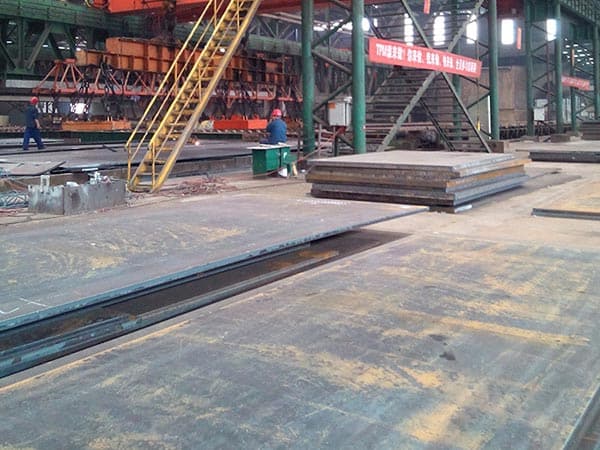
The Chemical Architecture of EN10111 DD1 Steel
EN10111 DD1 represents the foundational grade within the European standard for continuously hot-rolled low carbon steel sheets and strips intended for cold forming. The designation 'DD' refers to its specialized suitability for Deep Drawing, a process where the steel is stretched into complex three-dimensional shapes. The performance of DD1 in the automotive press shop is dictated entirely by its chemical equilibrium. Unlike high-strength structural steels that rely on complex alloying, DD1 achieves its utility through the deliberate minimization of hardening elements.
Carbon (C): The Primary Softening Agent
In the metallurgical profile of EN10111 DD1, Carbon is the most strictly controlled element. The standard specifies a maximum carbon content of 0.12%. In the context of automotive cold forming, carbon is often viewed as a double-edged sword. While it provides strength, it also increases hardness and reduces ductility. By keeping carbon levels low, the microstructure remains predominantly ferritic—a soft, ductile phase of iron that allows for maximum dislocation movement during stamping. This low carbon concentration ensures that the material does not work-harden too rapidly, allowing for deeper draws and more intricate geometries without the risk of necking or fracture.
Manganese (Mn) and Its Role in Ductility
Manganese is present in DD1 at levels up to 0.60%. Its role is multifaceted. Primarily, manganese acts as a deoxidizer during the steelmaking process, removing oxygen that could otherwise form gas pockets or inclusions. Furthermore, manganese combines with residual sulfur to form manganese sulfides (MnS). Without sufficient manganese, sulfur would form iron sulfides, which are brittle and can lead to 'hot shortness' or cracking during the hot rolling process. In the final product, manganese provides a subtle boost to the yield strength without significantly compromising the elongation properties required for automotive components like seat frames and brackets.
Phosphorus (P) and Sulfur (S): Controlling Impurities
Both Phosphorus and Sulfur are considered impurities in deep-drawing steels and are capped at 0.045% each in EN10111 DD1. Phosphorus can increase the strength of steel through solid solution hardening, but it also significantly raises the ductile-to-brittle transition temperature. For automotive parts that may be exposed to cold climates, maintaining low phosphorus is essential for impact resistance. Sulfur, if not properly managed, forms elongated inclusions that can act as stress concentrators during the cold forming process. By refining these elements to minimal levels, steel producers ensure that DD1 maintains a high degree of internal cleanliness, which is critical for achieving a smooth surface finish after drawing.
Mechanical Properties and Stamping Performance
| Mechanical Property | Specification (Thickness ≤ 3mm) | Significance in Automotive Manufacturing |
|---|---|---|
| Yield Strength (Re) | 170 - 340 MPa | Determines the force required to initiate permanent deformation. |
| Tensile Strength (Rm) | Max 440 MPa | The maximum stress the material can withstand before failing. |
| Elongation (A80) | Min 28% | Indicates the material's ability to stretch before breaking. |
| Surface Quality | Pickled and Oiled (P&O) | Ensures clean contact with dies and prevents tool wear. |
The mechanical profile of DD1 is optimized for the 'blanking and piercing' and 'forming' stages of automotive production. With a minimum elongation of 28%, DD1 can be transformed into deep-drawn shells such as oil pans, transmission covers, and various housing components. The relatively low yield strength (starting at 170 MPa) means that smaller, more energy-efficient presses can be used to shape the parts, reducing the overall carbon footprint of the manufacturing facility.
The Importance of the Pickled and Oiled Surface
Most EN10111 DD1 steel used in the automotive industry is supplied in the Pickled and Oiled (P&O) condition. During the hot rolling process, a layer of iron oxide (scale) forms on the surface. If this scale is not removed, it can damage the expensive stamping dies and lead to poor surface quality on the finished part. Pickling involves passing the steel through an acid bath to strip away the scale, while the oiling process provides temporary corrosion protection and acts as a pre-lubricant for the stamping process. This surface treatment is vital for maintaining the high-speed production cycles required in modern automotive assembly lines.
Automotive Applications and Component Design
The versatility of DD1 makes it a staple in the production of non-structural automotive parts. Designers specify DD1 when the geometry of a part is too complex for higher-strength grades. For instance, the intricate folds of a spare tire well or the tight radii of a suspension arm bracket are perfectly suited for the high ductility of DD1. While it may not provide the crash-energy absorption of Boron steel or Dual Phase steel, its role in the vehicle's secondary structure is indispensable. It provides the necessary rigidity and shape for mounting hardware, interior trim supports, and fluid reservoirs.
Weldability and Joining Technologies
Because EN10111 DD1 has a very low carbon equivalent, its weldability is excellent. It can be joined using a variety of methods, including spot welding, MIG/MAG welding, and laser welding. In the automotive industry, where robotic welding is the standard, the consistency of DD1's chemical composition ensures that weld parameters remain stable across different batches of material. There is minimal risk of hardening in the heat-affected zone (HAZ), which preserves the fatigue life of the welded assembly. This makes DD1 an ideal candidate for complex assemblies where multiple stamped parts are joined together to form a larger module.
Comparative Analysis: DD1 vs. Higher Grades
Within the EN10111 standard, there are several grades ranging from DD11 to DD14. While DD1 is the basic grade for cold forming, grades like DD13 and DD14 offer even higher levels of ductility and are often 'non-aging.' DD1, being the entry-level grade, is cost-effective for parts with moderate forming requirements. For automotive engineers, selecting DD1 over a higher grade like DD14 is often a matter of balancing material cost with the severity of the deformation. If the part design allows for the slightly lower elongation of DD1, significant cost savings can be realized over high-volume production runs.
Environmental Resilience and Lifecycle
The simplicity of the chemical makeup of EN10111 DD1 contributes to its sustainability. It is a highly recyclable material, as it contains no expensive or difficult-to-separate alloying elements like chromium or nickel. At the end of a vehicle's life, DD1 components can be easily shredded and melted down to produce new steel. Furthermore, the material's compatibility with modern coating technologies—such as cathodic dip painting (KTL) and zinc plating—ensures that automotive parts made from DD1 can withstand the corrosive effects of road salt and moisture for the entire lifespan of the vehicle.
Processing Considerations for Optimal Results
To maximize the potential of EN10111 DD1, manufacturers must pay close attention to grain size and rolling direction. The ferritic grain structure should be uniform to prevent 'orange peel' defects on the surface of drawn parts. Additionally, because DD1 is a hot-rolled product, it may exhibit slight anisotropy, meaning its properties can vary slightly depending on whether the steel is stretched parallel or perpendicular to the rolling direction. Skilled tool and die designers account for this when laying out the blank on the coil, ensuring that the most critical bends are oriented to take advantage of the material's peak ductility.
Leave a message