
What is the alloy DD14 steel for cold forming automobile
Comprehensive guide to DD14 steel properties, chemical composition, mechanical performance, and its critical role in automotive cold forming and deep drawing applications.
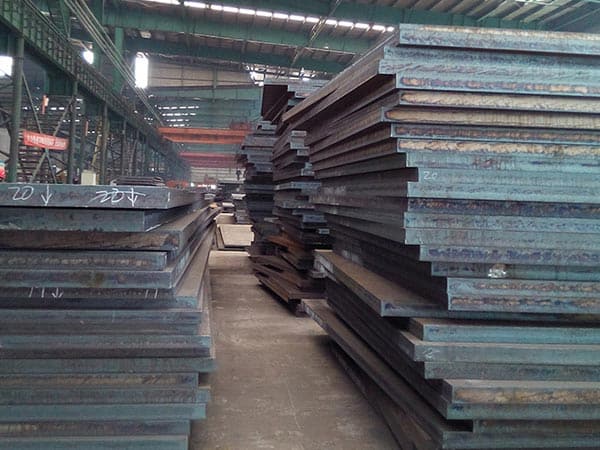
Understanding the Essence of DD14 Steel in Modern Manufacturing
DD14 steel represents the pinnacle of hot-rolled low-carbon steels specifically designed for cold forming and deep drawing applications. Governed by the European standard EN 10111, this material is engineered to meet the rigorous demands of the automotive industry, where complex geometries and structural integrity must coexist. Unlike standard structural steels, DD14 is optimized for ductility, allowing it to undergo significant plastic deformation without fracturing or developing surface defects.
The nomenclature "DD" signifies its intended use for drawing (D) and deep drawing (D), while the number "14" indicates its position as the highest grade within the EN 10111 series for formability. When compared to its siblings—DD11, DD12, and DD13—DD14 offers the most superior elongation properties and the lowest yield strength, making it the preferred choice for the most challenging stamping operations in vehicle production.
Chemical Composition: The Foundation of Ductility
The exceptional performance of DD14 is a direct result of its precisely controlled chemical makeup. By maintaining extremely low levels of carbon and impurities, metallurgists ensure that the ferrite matrix remains soft and highly mobile during forming processes.
| Element | Maximum Percentage (%) |
|---|---|
| Carbon (C) | 0.08 |
| Manganese (Mn) | 0.35 |
| Phosphorus (P) | 0.025 |
| Sulfur (S) | 0.025 |
Carbon Content: With a maximum of 0.08%, the low carbon content minimizes the formation of pearlite, which would otherwise increase hardness and reduce the steel's ability to stretch. This "clean" chemistry is vital for preventing work hardening too early in the stamping cycle.
Manganese and Impurities: Manganese is kept low to maintain softness, while strict limits on phosphorus and sulfur prevent brittle phases that could lead to cracking during high-speed cold forming. This purity ensures that the steel exhibits isotropic properties, meaning it behaves consistently regardless of the rolling direction.
Mechanical Properties and Deformation Capabilities
For automotive engineers, the mechanical profile of DD14 is its most compelling feature. The material is characterized by a low yield point and a high elongation at break, which are the primary indicators of a material's suitability for deep drawing.
| Property | Value (for thickness ≤ 3mm) |
|---|---|
| Yield Strength (Re) | 170 - 290 MPa |
| Tensile Strength (Rm) | Max 340 MPa |
| Elongation (A80mm) | ≥ 38% |
The minimum elongation of 38% is a critical benchmark. It allows the steel to be pulled into deep, complex die cavities—such as those required for oil pans or spare wheel wells—without thinning out excessively or tearing. The relatively narrow yield strength range (170-290 MPa) provides manufacturers with predictable springback behavior, ensuring dimensional accuracy in mass-produced components.
Processing Performance: Beyond Simple Stamping
DD14 steel is not only defined by how it stretches but also by how it interacts with various manufacturing processes. Its versatility extends to welding, surface treatment, and edge finishing.
- Excellent Weldability: Due to its low carbon equivalent, DD14 is compatible with all standard welding methods, including spot welding, MIG/MAG, and laser welding. This is essential for integrating stamped parts into the larger vehicle chassis or body-in-white (BIW) assembly.
- Surface Quality: DD14 is frequently supplied in a pickled and oiled (P&O) condition. Pickling removes the hot-rolled scale, providing a clean, smooth surface that reduces die wear and improves the final paint appearance.
- Edge Ductility: During blanking and punching, DD14 maintains clean edges with minimal burr formation, which reduces the risk of fatigue cracks initiating from the edges of the part during the vehicle's lifespan.
Strategic Applications in the Automotive Industry
The automotive sector utilizes DD14 where high-strength steel is too brittle and standard mild steel is insufficient for the required depth of draw. It bridges the gap between structural utility and extreme formability.
Chassis and Suspension Components: Many brackets, cross-members, and reinforcement plates that require intricate folding and deep draws are fabricated from DD14. Its ability to absorb energy also makes it useful for certain non-structural crash-relevant components that need to deform predictably.
Interior Structures: Seat frames and adjustment mechanisms often involve complex geometries that are stamped in single or progressive dies. DD14 ensures these parts can be manufactured with high precision and low scrap rates.
Fluid Reservoirs: The classic application for DD14 is the automotive oil pan. The deep-drawing process required to create the reservoir shape demands a material that can flow into the die without failing, a task for which DD14 is specifically optimized.
Environmental Adaptability and Longevity
While DD14 is a low-carbon steel and inherently susceptible to oxidation, its role in the automotive lifecycle is protected through advanced coating technologies. When used in the underbody or engine compartment, DD14 components are typically galvanized or E-coated (electrophoretic coating).
The material's fine-grained microstructure contributes to its fatigue resistance. In the vibrating environment of a moving vehicle, components made of DD14 can withstand millions of cycles of low-stress loading, provided the design accounts for its tensile limits. Furthermore, the recyclability of DD14 is 100%, aligning with global sustainability goals for the circular economy in vehicle manufacturing.
Comparative Analysis: DD11 vs. DD14
Choosing between grades in the EN 10111 standard often comes down to the complexity of the part. While DD11 is suitable for simple bending and light forming, it lacks the ductility for deep draws. DD14, conversely, is the "premium" choice for forming. Using DD14 where DD11 might suffice is an over-specification, but using DD11 for a DD14-level part will result in high failure rates and torn blanks.
Engineers must balance the higher cost of DD14 against the reduction in manufacturing defects. In high-volume automotive production, the reliability of DD14 often leads to lower total cost of ownership by minimizing press downtime and material waste.
Future Trends: DD14 in the Age of Electric Vehicles (EVs)
As the industry shifts toward electric vehicles, the demand for lightweighting has pushed many components toward high-strength steels (AHSS). However, DD14 remains indispensable for the complex housings required for battery cooling systems and intricate shielding components. Its ability to be formed into tight spaces and complex airtight shapes ensures its continued relevance even as vehicle architectures evolve.
By leveraging the unique properties of DD14, manufacturers can continue to push the boundaries of automotive design, creating safer, more efficient, and more complex vehicle systems that meet the demands of modern transportation.
Leave a message