
What is the difference between S700MC automotive steel sheet and medium thick plate
Explore the critical differences between S700MC automotive steel sheets and medium-thick plates. This guide covers mechanical properties, processing capabilities, and industry applications for high-strength steel.
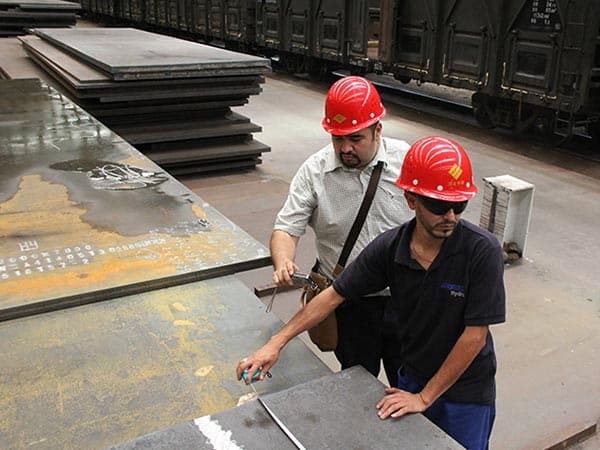
The Fundamentals of S700MC High-Strength Steel
S700MC is a high-strength, low-alloy (HSLA) steel grade specifically designed for cold forming. According to the EN 10149-2 standard, the designation 'S' stands for structural steel, '700' represents the minimum yield strength of 700 MPa, 'M' indicates it is thermomechanically rolled, and 'C' signifies its suitability for cold forming. While the chemical composition remains relatively consistent across different product forms, the distinction between S700MC automotive steel sheet and medium-thick plate lies in the manufacturing process, dimensional tolerances, and structural integrity required for specific engineering tasks.
Understanding these differences is crucial for engineers focusing on automotive lightweighting and heavy-duty structural design. The shift from traditional structural steels to S700MC allows for significant weight reduction without compromising safety or load-bearing capacity.
Manufacturing Processes: Strip vs. Discrete Plate
The primary technical difference begins at the mill. S700MC steel sheets are typically produced on a continuous hot strip mill. The steel is rolled into a coil (hot-rolled strip) and then leveled and cut to length. This process ensures high production efficiency and a very fine, uniform grain structure due to the rapid cooling and controlled rolling passes.
In contrast, S700MC medium-thick plates (often exceeding 8mm to 12mm in thickness) may be produced on a Quarto mill or a specialized heavy plate mill. The cooling rates for thicker sections are naturally slower than for thin strips. To maintain the 700 MPa yield strength in thicker plates, manufacturers must precisely control the micro-alloying elements like Niobium (Nb), Vanadium (V), and Titanium (Ti) to ensure grain refinement through the entire cross-section of the plate.
Mechanical Properties and Performance Comparison
While both forms must meet the minimum yield strength of 700 MPa, their mechanical behavior under stress varies slightly due to the 'size effect' and rolling reduction ratios. Below is a comparison of typical mechanical properties:
| Property | S700MC Sheet (Nominal < 3mm) | S700MC Plate (Nominal > 10mm) |
|---|---|---|
| Yield Strength (MPa) | Min. 700 | Min. 700 |
| Tensile Strength (MPa) | 750 - 950 | 750 - 950 |
| Elongation (A80mm / A5%) | Min. 10% (A80) | Min. 12% (A5) |
| Bending Radius (180°) | 0.5t to 1.0t | 1.5t to 2.0t |
Elongation values are measured differently; sheets use the A80mm gauge length, while thicker plates use the A5 proportional gauge. S700MC sheet often exhibits superior surface quality and tighter thickness tolerances, which are essential for high-precision automated welding and stamping in automotive assembly lines.
Processing Performance: Bending, Welding, and Cutting
The cold formability of S700MC is its most celebrated attribute. Despite its high strength, the material behaves exceptionally well during bending and folding operations. However, the thickness of the medium-thick plate necessitates a larger internal bending radius to prevent micro-cracking on the outer tension surface.
Welding Compatibility: Both sheet and plate forms possess a low carbon equivalent (CEV), typically below 0.39%. This ensures excellent weldability using standard methods like MAG, MIG, and laser welding. For medium-thick plates, preheating is generally unnecessary, but heat input must be strictly controlled to avoid softening the Heat Affected Zone (HAZ), which could lead to a localized drop in strength.
Laser Cutting: S700MC sheets are ideal for high-speed fiber laser cutting, leaving clean edges with minimal dross. Medium-thick plates require optimized laser parameters to maintain perpendicularity and surface smoothness, especially when the parts are intended for critical structural joints in crane booms or chassis frames.
Environmental Adaptability and Durability
S700MC is designed to perform in demanding environments. Its thermomechanical rolling process results in a fine-grained ferrite-bainite microstructure that offers excellent low-temperature toughness. Many S700MC variants are tested for impact energy at -20°C or even -40°C, ensuring the material does not become brittle in arctic conditions.
While S700MC is not a 'weathering steel' like Corten, its dense surface scale (on hot-rolled sheets) provides a basic level of protection during storage. For automotive applications, these sheets are often pickled and oiled (P&O) to provide a clean surface for subsequent coating, painting, or galvanizing, significantly enhancing the vehicle's service life against corrosion.
Strategic Industry Applications
The choice between sheet and plate is dictated by the load requirements and the scale of the final product. S700MC automotive steel sheets are the backbone of modern transportation efficiency. They are used extensively for:
S700MC medium-thick plates find their home in heavy engineering and lifting equipment:
- Telescopic Crane Booms: The high strength-to-weight ratio allows cranes to reach higher and lift heavier loads without increasing the base weight.
- Agricultural Machinery: Used in plow frames and harvester components where abrasion resistance and structural strength are both required.
- Trailer Construction: Specifically for the main load-bearing floor supports and side walls of heavy-duty trailers.
Optimizing Material Selection for Engineering Projects
When deciding between S700MC sheet and plate, designers must consider the dimensional tolerance standards. Sheets usually follow EN 10051, offering very tight control over thickness variations across the width of the coil. Medium-thick plates follow EN 10029, which allows for slightly larger deviations but provides the flatness required for large-scale structural welding.
Cost-efficiency is another factor. Utilizing S700MC sheets in coils can reduce scrap rates through optimized nesting in continuous blanking lines. Conversely, purchasing discrete plates is more practical for low-volume, high-thickness structural components where the setup time for a coil line would be prohibitive.
By leveraging the high yield strength of S700MC, manufacturers can reduce material thickness by up to 30% compared to conventional S355 steel. This reduction not only lowers material costs but also reduces welding consumables and transportation energy, contributing to a lower overall carbon footprint for the finished product.
Leave a message