
Is S700MC steel for large truss truck boom and tool steel the same?
Detailed technical comparison between S700MC high-strength steel and tool steel, focusing on mechanical properties, welding, and truck boom applications.
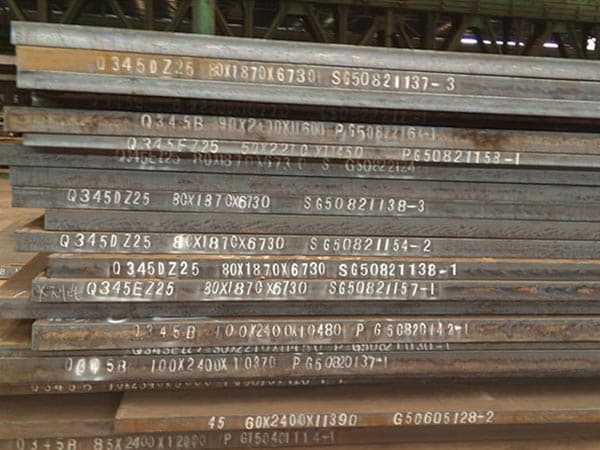
The Fundamental Distinction Between S700MC and Tool Steel
In the complex landscape of metallurgy, the nomenclature of 'high-performance steel' often leads to confusion among procurement specialists and junior engineers. Specifically, when discussing materials for heavy-duty lifting equipment like large truss truck booms, the question frequently arises: Is S700MC the same as tool steel? The short answer is a definitive no. While both materials represent the pinnacle of steel engineering, they are designed for diametrically opposed functional requirements. S700MC is a high-strength low-alloy (HSLA) steel optimized for structural weight reduction and weldability, whereas tool steel is a high-carbon, high-alloy material designed for hardness, abrasion resistance, and heat stability.
Understanding the nuances between these two categories is critical for the safety and efficiency of mobile cranes, concrete pumps, and heavy-duty transport vehicles. Choosing the wrong material for a truss boom could lead to catastrophic structural failure or an inability to manufacture the component due to welding complications.
S700MC: The Backbone of Modern Lifting Technology
S700MC, governed by the EN 10149-2 standard, is a thermomechanically rolled steel. The 'S' denotes structural steel, '700' represents the minimum yield strength of 700 MPa, and 'MC' indicates it is intended for cold forming (C) and produced via thermomechanical rolling (M). This material is the industry standard for large truss truck booms because it allows for significantly thinner wall sections without sacrificing load-bearing capacity.
The secret to S700MC's performance lies in its micro-alloying. By adding minute amounts of Niobium (Nb), Vanadium (V), and Titanium (Ti), manufacturers achieve a fine-grained microstructure during the controlled rolling process. This fine grain size is the only mechanism that simultaneously increases both strength and toughness, a combination that is vital for truck booms operating in dynamic, high-stress environments.
Tool Steel: Engineered for Cutting and Shaping
In contrast, tool steels (such as D2, H13, or M2) are formulated to maintain a sharp edge or resist deformation under extreme pressure and temperature. They contain significantly higher carbon content (often 0.5% to over 2.0%) and high levels of alloying elements like Chromium, Tungsten, Molybdenum, and Vanadium. These elements form hard carbides that provide the wear resistance necessary for drills, dies, and molds.
While a tool steel might have a higher ultimate tensile strength than S700MC after specialized heat treatment, it lacks the ductility and weldability required for large-scale structural fabrication. Tool steels are notoriously brittle; if used in a truss boom, the structure would likely crack under the vibration and flexing inherent in heavy lifting operations.
Comparative Analysis: Chemical Composition and Weldability
The primary reason S700MC and tool steel are not interchangeable is their chemical footprint, which dictates how they react to heat during welding. The following table highlights the typical differences in chemical composition (approximate weight %):
| Element | S700MC (Structural HSLA) | Typical Tool Steel (e.g., D2) |
|---|---|---|
| Carbon (C) | Max 0.12% | 1.40% - 1.60% |
| Manganese (Mn) | Max 2.10% | Max 0.60% |
| Chromium (Cr) | Trace | 11.0% - 13.0% |
| Silicon (Si) | Max 0.60% | Max 0.60% |
| Micro-alloys (Nb, V, Ti) | Sum Max 0.22% | High V and Mo content |
Weldability is the deal-breaker for truck boom applications. S700MC features a very low carbon equivalent (CEV), making it highly suitable for conventional welding processes like MAG or laser welding. Because the strength is derived from the thermomechanical rolling process rather than high carbon content, the heat-affected zone (HAZ) remains relatively stable, provided heat input is strictly controlled. Tool steel, however, requires extensive pre-heating and post-weld heat treatment (PWHT) to prevent cold cracking, making it economically and technically unfeasible for a 40-meter truss boom structure.
Mechanical Performance in Dynamic Loading
Truck booms are subjected to cyclic loading, wind forces, and sudden shocks. S700MC is engineered with high impact toughness, often tested at -20°C or -40°C, ensuring the steel does not turn brittle in cold climates. Tool steels are generally not rated for sub-zero impact toughness in the same way, as their primary metric is Rockwell Hardness (HRC).
- Yield Strength: S700MC provides a reliable 700 MPa yield, allowing for predictable elastic deformation.
- Elongation: S700MC typically offers 10-13% elongation, providing a safety buffer by deforming before breaking.
- Fatigue Resistance: The fine-grained structure of S700MC is specifically resistant to the initiation of fatigue cracks.
Process Performance: Cold Forming vs. Machining
The 'C' in S700MC stands for cold forming. Large truss booms are often constructed from U-shaped profiles or hexagonal sections formed from flat plates. S700MC's excellent bendability allows for tight radii without surface cracking, which is essential for modern aerodynamic and weight-optimized boom designs. Tool steel, especially in its hardened state, cannot be cold-formed; it must be machined or ground into shape, which is a slow and expensive process reserved for small, high-precision components.
Environmental Adaptability and Longevity
Large truss truck booms operate in diverse environments, from humid coastal regions to dry, dusty construction sites. S700MC, while requiring standard corrosion protection (like painting or galvanizing), offers excellent surface quality for coating adhesion. Its low alloy content makes it less susceptible to certain types of stress corrosion cracking compared to highly alloyed tool steels, which can be sensitive to environmental embrittlement if not properly tempered.
Why S700MC Wins for Large Truss Truck Booms
The selection of S700MC over tool steel (or even standard S355 structural steel) is driven by the strength-to-weight ratio. In the world of mobile cranes and truck-mounted booms, every kilogram saved in the boom structure is an extra kilogram of lifting capacity or a reduction in fuel consumption for the carrier vehicle. S700MC allows engineers to push the limits of height and reach while maintaining a legal road weight.
Using tool steel for such a structure would not only be prohibitively expensive but would also result in a boom that is too heavy, too brittle, and impossible to weld reliably. The two materials belong to different worlds: S700MC is the marathon runner—strong, flexible, and enduring—while tool steel is the diamond-tipped drill—hard, uncompromising, and specialized.
Technical Summary for Engineers
When specifying materials for high-stress structural components, it is vital to look beyond the 'tensile strength' figure. S700MC provides the necessary toughness, weldability, and formability that tool steels lack. For the manufacturing of large truss truck booms, S700MC remains the superior choice, offering a balanced profile that ensures both the manufacturability of the equipment and the safety of the operator on-site. Always verify the mill test certificates (MTC) to ensure the material meets the EN 10149-2 requirements for grain size and yield strength to guarantee the integrity of the truss structure.
Leave a message