
S960MC on sale for engineering and machine structural use
Discover S960MC high-strength steel properties, chemical composition, and mechanical performance. Learn why S960MC is the top choice for engineering and machine structural applications.
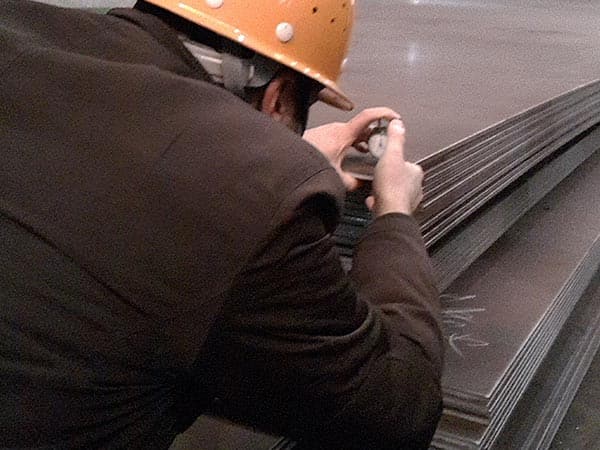
The Evolution of High-Strength Structural Steel: S960MC in Modern Engineering
In the competitive landscape of heavy machinery and structural engineering, the pursuit of materials that offer higher strength-to-weight ratios has led to the widespread adoption of S960MC. This grade represents the pinnacle of thermomechanically rolled, high-yield-strength steel designed specifically for cold forming. As engineering requirements become more stringent, S960MC provides a solution that balances extreme load-bearing capacity with the ductility required for complex fabrication. Unlike traditional structural steels, S960MC is engineered at the microscopic level to deliver a minimum yield strength of 960 MPa, enabling engineers to reduce wall thicknesses without sacrificing structural integrity.
The demand for S960MC on sale for engineering and machine structural use is driven by the global shift toward sustainability and efficiency. By utilizing thinner sections of ultra-high-strength steel, manufacturers can significantly reduce the dead weight of mobile equipment, leading to lower fuel consumption and higher payload capacities. This material is not merely a commodity but a strategic asset for industries ranging from mobile crane manufacturing to the production of high-performance truck chassis and agricultural equipment.
Thermomechanical Processing: The Secret to S960MC Performance
The exceptional properties of S960MC are a direct result of the Thermomechanical Control Process (TMCP). This advanced rolling technique involves precise temperature control and specific deformation sequences during the milling process. Unlike conventional quenching and tempering, TMCP refines the grain structure of the steel to a sub-micron level. This fine-grained microstructure is the primary reason why S960MC achieves such high strength while maintaining excellent weldability and low-temperature toughness.
During the rolling process, micro-alloying elements such as niobium, vanadium, and titanium are used to pin grain boundaries and prevent grain growth. This results in a highly uniform and dense crystalline structure. For the machine structural designer, this means the material behaves predictably under stress, with consistent mechanical properties across the entire plate or coil. The absence of heavy alloying elements also ensures that the carbon equivalent value (CEV) remains low, which is a critical factor for successful welding operations in workshop environments.
Chemical Composition and Material Integrity
The chemical makeup of S960MC is strictly governed by the EN 10149-2 standard. The focus is on maintaining a low carbon content to ensure that the steel does not become brittle during rapid cooling or welding. The inclusion of micro-alloys is carefully balanced to maximize precipitation hardening and grain refinement.
| Element | Maximum Content (%) |
|---|---|
| Carbon (C) | 0.20 |
| Manganese (Mn) | 2.20 |
| Silicon (Si) | 0.60 |
| Phosphorus (P) | 0.025 |
| Sulphur (S) | 0.015 |
| Aluminium (Al) | 0.015 |
| Nb + V + Ti | 0.22 |
This lean chemical design ensures that S960MC remains highly workable. The low sulphur content, in particular, enhances the steel's cleanliness, reducing the risk of lamellar tearing and improving the quality of the edges after laser or plasma cutting. For engineering firms, this high purity translates to fewer defects and lower scrap rates during the manufacturing cycle.
Mechanical Superiority: Strength, Ductility, and Toughness
The defining characteristic of S960MC is its mechanical performance. With a minimum yield strength of 960 MPa, it is nearly three times stronger than standard S355 structural steel. This massive increase in strength allows for a radical redesign of structural components. However, strength alone is not enough; the material must also possess sufficient elongation to withstand forming and dynamic loading.
| Mechanical Property | Specified Value |
|---|---|
| Yield Strength (ReH) | Min 960 MPa |
| Tensile Strength (Rm) | 1000 - 1250 MPa |
| Elongation (A5) | Min 7% (thickness < 3mm: 6%) |
| Bending Radius (90°) | 3.0x to 4.0x thickness |
While the elongation figures might appear lower than those of mild steels, they are perfectly optimized for the high-stress environments where S960MC is typically deployed. The toughness of the material is also a vital consideration, especially for machinery operating in cold climates. S960MC often meets stringent impact energy requirements at -20°C or even -40°C, ensuring that structures do not fail catastrophically under sudden shock loads.
Advanced Fabrication: Bending and Cutting S960MC
Working with ultra-high-strength steel requires a deep understanding of its physical behavior. When cold forming S960MC, operators must account for its high yield strength, which necessitates higher bending forces compared to conventional steels. Springback is also more pronounced; therefore, the over-bending angle must be precisely calculated to achieve the desired final geometry. Using high-quality tooling and ensuring a smooth edge finish before bending can prevent the formation of micro-cracks at the outer radius.
Cutting S960MC is best achieved using laser or high-definition plasma systems. The fine-grained structure of the steel responds exceptionally well to thermal cutting, producing a narrow heat-affected zone (HAZ). Because the material is thermomechanically rolled, it possesses low internal stresses, which minimizes distortion during and after the cutting process. This dimensional stability is crucial for machine structures where tight tolerances are required for subsequent assembly and robotic welding.
Welding Guidelines for Maintaining Structural Integrity
Welding S960MC is straightforward provided that the correct parameters are followed. The goal is to preserve the high-strength properties of the base metal within the weld joint and the surrounding HAZ. Because S960MC derives its strength from its fine grain structure rather than high alloy content, it is sensitive to excessive heat input. High heat can lead to grain coarsening in the HAZ, which significantly reduces the local yield strength and toughness.
- Low Heat Input: Use welding processes that allow for controlled, low heat input to minimize the width of the HAZ.
- Cooling Rates: Monitor the t8/5 cooling time to ensure it stays within the recommended range for high-strength steels.
- Consumables: Match the filler metal to the strength of the base material or use slightly under-matched consumables if the design allows, to improve crack resistance.
- Preheating: Generally, S960MC does not require preheating due to its low carbon equivalent, but moisture must be removed from the joint area to prevent hydrogen-induced cracking.
By adhering to these technical guidelines, fabricators can produce welded structures that maintain the full 960 MPa yield strength across the entire assembly, ensuring the safety and longevity of the machine structure.
Industrial Applications: Where S960MC Excels
The versatility of S960MC makes it indispensable in several high-stakes industries. In the crane and lifting sector, S960MC is used to manufacture telescopic booms and outriggers. The weight savings achieved allow cranes to reach higher and lift heavier loads while remaining within road-legal weight limits. This directly impacts the operational flexibility and profitability of crane rental companies.
The transport industry utilizes S960MC for the construction of lightweight trailers, timber trucks, and tankers. A lighter chassis means more payload per trip, reducing the number of journeys required and lowering the overall carbon footprint of logistics operations. In the mining and earthmoving sector, S960MC is found in the structural frames of massive dump trucks and loaders, where it provides the durability needed to withstand extreme vibrations and heavy impact loads.
Agricultural machinery also benefits from S960MC. Modern sprayers, spreaders, and tillage equipment are becoming larger and more complex. Using high-strength steel allows these machines to be larger without becoming so heavy that they cause excessive soil compaction. The environmental adaptation of S960MC, including its resistance to atmospheric corrosion when properly coated, ensures a long service life even in harsh outdoor conditions.
Economic Impact and Sustainable Engineering
Investing in S960MC is a decision that pays dividends throughout the lifecycle of a product. While the initial cost per ton may be higher than that of standard carbon steel, the total cost of ownership is often lower. Reduced material usage means lower shipping costs and less welding wire consumed. Furthermore, the increased efficiency of the final machine—whether through higher payloads or lower fuel consumption—provides a significant competitive advantage to the end-user.
From a sustainability perspective, S960MC contributes to the circular economy by enabling the design of longer-lasting, more efficient machinery. The reduction in raw material consumption during the manufacturing phase, combined with the energy savings during the operational phase, aligns with global efforts to reduce industrial carbon emissions. As engineering standards continue to evolve, S960MC stands as a testament to how material science can drive progress in machine structural design.
Choosing the right supplier for S960MC is essential. Quality assurance certifications, such as those verifying compliance with EN 10204 3.1 or 3.2, provide the necessary traceability for critical engineering projects. When sourcing S960MC on sale, it is vital to ensure that the material meets the exact specifications required for the intended application, ensuring that the structural integrity of the machine is never compromised.
Leave a message