
What is grade S700MC exporterl?
A comprehensive guide to S700MC high-strength steel, covering its chemical composition, mechanical properties, processing advantages, and its role in global industrial exports.
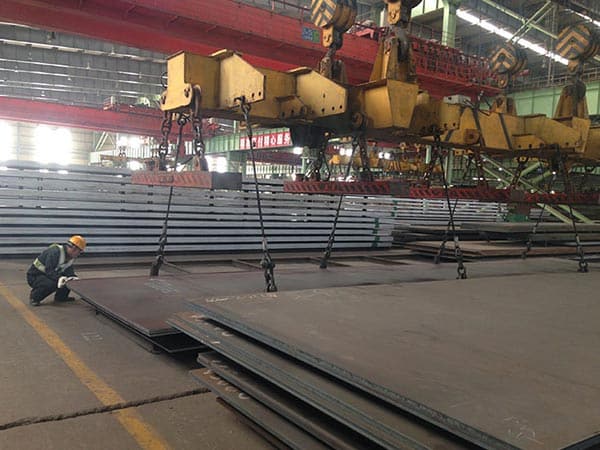
Understanding the Essence of S700MC High-Strength Steel
In the evolving landscape of modern engineering, the demand for materials that combine extreme strength with reduced weight has led to the prominence of S700MC. This grade is a high-strength, thermomechanically rolled steel specifically designed for cold forming. The 'S' denotes structural steel, '700' represents its minimum yield strength of 700 MPa, and 'MC' indicates its thermomechanical rolling process (M) and its suitability for cold forming (C). As a cornerstone of the EN 10149-2 standard, S700MC has become a preferred choice for exporters and manufacturers worldwide who seek to optimize structural integrity without the penalty of excessive mass.
Choosing an S700MC exporter involves more than just sourcing a product; it requires an understanding of the material's sophisticated metallurgical profile. Unlike traditional carbon steels, S700MC achieves its superior properties through a precise balance of micro-alloying elements and controlled cooling during production. This results in a fine-grained microstructure that offers exceptional toughness and weldability, making it indispensable for heavy-duty applications.
Chemical Composition: The Science of Micro-Alloying
The performance of S700MC is rooted in its chemical makeup. By keeping carbon levels low, the steel maintains excellent weldability and ductility, while the addition of elements like niobium, vanadium, and titanium provides the necessary strength through grain refinement and precipitation hardening.
| Element | Maximum Content (%) |
|---|---|
| Carbon (C) | 0.12 |
| Manganese (Mn) | 2.10 |
| Silicon (Si) | 0.60 |
| Phosphorus (P) | 0.025 |
| Sulfur (S) | 0.015 |
| Aluminum (Al) | 0.015 |
| Niobium (Nb) | 0.09 |
| Vanadium (V) | 0.20 |
| Titanium (Ti) | 0.22 |
This low-carbon equivalent (CEV) ensures that the steel can be welded using standard industrial methods without the risk of cold cracking, a common issue in higher-carbon structural steels. For an exporter, providing detailed Material Test Certificates (MTC) according to EN 10204 3.1 is vital to verify these chemical thresholds.
Mechanical Properties: Power and Resilience
The primary reason engineers specify S700MC is its impressive strength-to-weight ratio. By utilizing a yield strength of 700 MPa, designers can reduce the thickness of components compared to conventional S355 steel, often leading to weight savings of 30% to 40%. This efficiency is critical in the transport and lifting industries.
| Property | Value Range |
|---|---|
| Yield Strength (ReH) | Min. 700 MPa |
| Tensile Strength (Rm) | 750 - 950 MPa |
| Elongation (A5) | Min. 10% - 12% (depending on thickness) |
| Impact Energy (Charpy-V) | Typically 40J at -20°C or -40°C |
Beyond raw strength, the impact toughness of S700MC ensures that the material remains reliable even in sub-zero temperatures. This environmental adaptability is a key selling point for exporters shipping to regions with harsh climates, such as Northern Europe, Canada, or high-altitude mining sites.
Exceptional Cold Forming and Bending Capabilities
One of the standout features of S700MC is its ability to be cold-formed into complex shapes despite its high strength. The thermomechanical rolling process creates a fine-grained structure that resists cracking during tight bending operations. This makes it ideal for manufacturing longitudinal beams, frames, and cross-members in the automotive and trucking industries.
- Bending Radius: For thicknesses (t) less than 3mm, a minimum bending radius of 1.0t is often achievable.
- Consistency: The uniform microstructure ensures predictable spring-back, which is essential for automated robotic bending and stamping lines.
- Surface Quality: S700MC is often supplied with a pickled and oiled surface, facilitating better adhesion for coatings and reducing wear on forming tools.
Exporters focusing on the precision manufacturing sector emphasize these forming characteristics, as they directly impact the production efficiency and tool life of the end-user.
Advanced Welding and Fabrication Insights
Fabricating with S700MC requires an understanding of its thermal history. Because the strength is derived from thermomechanical rolling (TMCP), excessive heat input during welding can potentially soften the Heat Affected Zone (HAZ). However, due to its low carbon content, S700MC is generally more forgiving than quenched and tempered steels.
Using low-hydrogen welding consumables and controlling the interpass temperature allows for high-quality joints that match the base metal's strength. Common methods include MAG (Metal Active Gas), SAW (Submerged Arc Welding), and laser welding. For heavy machinery exporters, the ease of fabrication translates to lower labor costs and faster turnaround times for complex assemblies like crane booms and chassis frames.
Industry Applications: Where S700MC Excels
The versatility of S700MC has pushed it into various high-stakes industrial sectors. Its ability to handle high loads while keeping the overall structure light makes it a favorite for mobile equipment.
- Transportation: Truck chassis, trailers, and specialized transport vehicles benefit from increased payload capacity due to reduced dead weight.
- Lifting Equipment: Telescopic cranes, mobile cranes, and aerial work platforms require the high yield strength of S700MC to extend reach and capacity.
- Agricultural Machinery: Large-scale harvesters and soil preparation equipment use S700MC for durability in high-stress areas.
- Renewable Energy: Components for wind turbine transport and specialized mounting structures.
Global exporters see high demand in these sectors because the long-term fuel savings and increased efficiency provided by lightweight S700MC structures far outweigh the initial material cost.
Environmental Impact and Sustainability
In the current era of carbon footprint reduction, S700MC plays a pivotal role. By allowing for thinner sections, the total amount of steel required for a project is reduced, which directly lowers the CO2 emissions associated with steel production and transportation. Furthermore, vehicles built with S700MC consume less fuel over their operational lifespan due to their lighter weight. This "green" aspect is increasingly highlighted by exporters to align with the sustainability goals of international corporations.
What to Look for in an S700MC Exporter
When sourcing S700MC internationally, the reliability of the exporter is as critical as the steel itself. A reputable exporter should provide comprehensive logistics support, ensuring that the high-strength plates or coils are handled correctly to prevent physical damage or corrosion during sea freight. Key indicators of a quality exporter include:
- Certification: Full traceability with MTCs to EN 10204 3.1 or 3.2.
- Dimensional Accuracy: Adherence to tight tolerances (e.g., EN 10051 or EN 10029) for thickness, width, and flatness.
- Processing Services: The ability to offer value-added services like laser cutting, decoiling, or shot blasting.
- Global Reach: Experience in navigating customs, duties, and international shipping standards.
The global market for S700MC continues to expand as industries transition from traditional heavy steels to high-performance micro-alloyed grades. By understanding the technical nuances and processing advantages of this material, manufacturers can unlock new levels of engineering excellence and economic efficiency.
Leave a message