
What is the best S900MC exporting quality
A comprehensive guide to S900MC high-strength steel, focusing on export quality standards, chemical composition, processing capabilities, and industrial applications for global buyers.
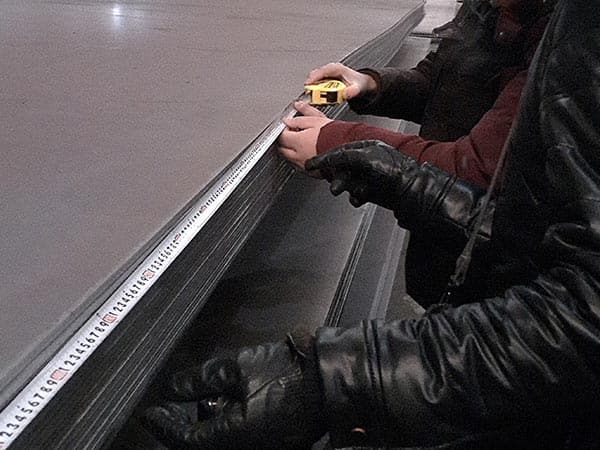
Defining S900MC: The Pinnacle of Thermomechanical Rolling
S900MC is a high-yield-strength structural steel produced through the thermomechanical rolling process (TMCP), governed by the EN 10149-2 standard. The "S" denotes structural steel, "900" represents a minimum yield strength of 900 MPa, and "MC" signifies that the material is thermomechanically rolled and intended for cold forming. For international buyers, the best exporting quality is defined not just by the numbers on a mill test certificate, but by the consistency of its micro-alloyed structure and the precision of its surface finish. This steel is designed to replace traditional quenched and tempered grades, offering superior weldability and formability while significantly reducing the weight of heavy-duty components.
Chemical Composition and the Role of Micro-Alloying
The performance of S900MC hinges on its precise chemical makeup. Unlike standard carbon steels, S900MC utilizes a sophisticated blend of micro-alloying elements such as Niobium (Nb), Vanadium (V), and Titanium (Ti). These elements facilitate grain refinement during the thermomechanical rolling process, which is essential for achieving high strength without sacrificing toughness. High-quality export grades maintain extremely low levels of Phosphorus and Sulfur to prevent brittleness and ensure internal cleanliness.
| Element | C (max) | Mn (max) | Si (max) | P (max) | S (max) | Al (min) | Nb+V+Ti (max) |
|---|---|---|---|---|---|---|---|
| Percentage (%) | 0.20 | 2.20 | 0.60 | 0.025 | 0.015 | 0.015 | 0.22 |
The control of Carbon Equivalent (CEV) is critical for export quality. A lower CEV enhances the weldability of the steel, allowing manufacturers to join components without the extensive preheating required by other high-strength materials. This efficiency is a primary driver for its adoption in global manufacturing hubs.
Mechanical Properties: Beyond the 900 MPa Threshold
While the name suggests a focus on yield strength, the best S900MC quality encompasses a balance of tensile strength and elongation. For heavy-duty lifting and transport applications, the steel must maintain its integrity under extreme loads. The thermomechanical process ensures that the fine-grained structure remains stable, providing consistent mechanical properties across the entire length of the coil or plate.
| Property | Yield Strength (MPa) | Tensile Strength (MPa) | Elongation A5 (%) | Min. Bending Radius (90°) |
|---|---|---|---|---|
| Value | ≥ 900 | 930 - 1200 | ≥ 7 - 8 | 3.0t (for t < 3mm) |
Export-grade S900MC often undergoes rigorous impact testing at low temperatures (e.g., -20°C or -40°C) to ensure it can operate in arctic or high-altitude environments. This environmental adaptability is a key differentiator for premium suppliers.
Cold Forming and Bending Performance
One of the standout features of S900MC is its exceptional cold-forming capability. Despite its immense strength, the steel can be bent to tight radii without cracking. This is achieved through the careful control of inclusion shapes and the uniform distribution of the micro-alloyed precipitates. High-quality export material exhibits minimal springback, which is vital for automated production lines where precision is paramount.
- Uniformity: Consistent thickness tolerances across the width of the sheet ensure predictable bending behavior.
- Grain Structure: The TMCP process prevents the formation of coarse grains that typically lead to fracture during tight-radius bending.
- Surface Integrity: A smooth, scale-free surface reduces friction during forming and prevents localized stress concentrations.
Advanced Welding Characteristics
Welding S900MC requires an understanding of its thermal history. Because its strength is derived from thermomechanical rolling rather than heat treatment, excessive heat input can lead to a softening of the heat-affected zone (HAZ). The best exporting quality material is designed with a low carbon content to mitigate this risk. Using low-hydrogen welding consumables and controlling the cooling rate (t8/5 time) allows for joints that match the strength of the base metal.
High-quality S900MC supports various welding methods, including MAG (Metal Active Gas), laser welding, and even advanced friction stir welding. The stability of the chemical composition ensures that welders do not need to constantly adjust parameters between different batches of steel.
Surface Quality and Export Standards
International buyers prioritize surface finish and flatness. S900MC is typically supplied in a pickled and oiled condition or with a fine-grained rolling scale that is easily removed. Export standards like EN 10163-2 Class A specify the allowable surface defects, ensuring that the material is ready for high-precision laser cutting and painting.
Flatness is another critical factor. Advanced leveling technologies used by top-tier mills ensure that S900MC plates remain flat even after laser cutting, which often releases internal stresses. For manufacturers of telescopic booms or crane arms, this flatness is non-negotiable for ensuring the smooth operation of sliding components.
Expanding Industry Applications
The demand for S900MC is driven by the global push for lightweighting and energy efficiency. By using S900MC, engineers can reduce the thickness of structural components by up to 50% compared to standard S355 steel, without compromising safety or load-bearing capacity.
- Lifting Equipment: Mobile cranes, truck-mounted cranes, and aerial work platforms benefit from the high strength-to-weight ratio, allowing for longer reaches and higher capacities.
- Transportation: Trailer chassis, logging equipment, and heavy-duty vehicle frames use S900MC to reduce curb weight, thereby increasing payload and fuel efficiency.
- Agriculture and Forestry: Harvesters and forwarders require materials that can withstand high impact and fatigue in rugged environments.
- Energy Sector: Components for wind turbine transport systems and specialized offshore structures.
Quality Assurance and Documentation
The best S900MC exporting quality is backed by comprehensive documentation. This includes EN 10204 3.1 or 3.2 certification, which provides full traceability from the melt to the final product. Ultrasonic testing (UT) is often performed to ensure the absence of internal laminations or inclusions, particularly for plates used in critical structural welds. Furthermore, the mill's adherence to ISO 9001 and environmental standards like ISO 14001 adds a layer of reliability for global procurement teams.
Choosing S900MC for export markets involves evaluating the mill's ability to maintain tight tolerances and provide technical support for processing. As industries move toward more sustainable manufacturing, the role of high-strength steels like S900MC becomes even more vital, offering a pathway to reduced material consumption and lower carbon footprints throughout the product lifecycle.
Leave a message