
What is the en 10149-2 s700mc automotive steel material with hot rolled
A comprehensive technical guide to S700MC high-strength steel under EN 10149-2, detailing its mechanical properties, chemical composition, processing performance, and automotive applications.
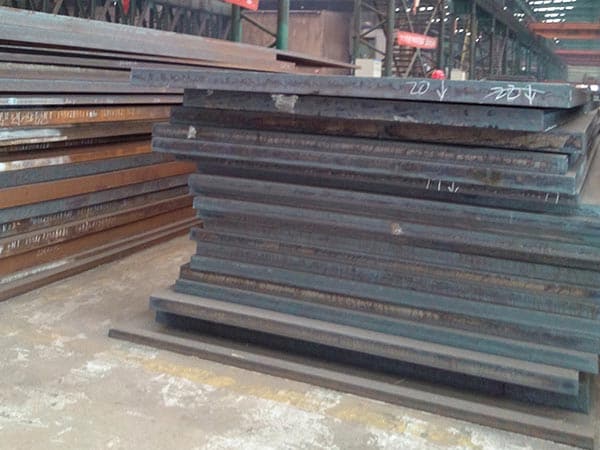
Understanding the Essence of EN 10149-2 S700MC Steel
In the modern landscape of material science, EN 10149-2 S700MC stands as a pinnacle of high-yield-strength cold-forming steel. This material is specifically engineered for structural components where weight reduction and high load-bearing capacity are non-negotiable. The 'S' denotes structural steel, '700' represents the minimum yield strength of 700 MPa, and 'MC' indicates that the steel is thermomechanically rolled (M) and suitable for cold forming (C). Unlike traditional hot-rolled steels, S700MC undergoes a sophisticated Thermomechanical Controlled Processing (TMCP), which refines the grain structure to an extraordinary degree, providing a unique balance of strength, ductility, and weldability.
The Role of Thermomechanical Rolling (TMCP)
The production of S700MC is not merely about heating and pressing. The thermomechanical rolling process involves precise temperature control during the rolling stages, often finishing at temperatures where recrystallization is suppressed. This results in a fine-grained ferrite-pearlite or even bainitic microstructure. This grain refinement is the primary reason why S700MC can achieve such high strength without excessive alloying elements, which in turn keeps the carbon equivalent low and improves weldability. This process ensures that the material maintains its toughness even at lower temperatures, a critical factor for automotive safety components.
Chemical Composition and Micro-Alloying Strategy
The chemical blueprint of S700MC is designed to maximize strength while minimizing weight. By utilizing micro-alloying elements like Niobium (Nb), Vanadium (V), and Titanium (Ti), manufacturers can achieve precipitation hardening. These elements form fine carbides and nitrides that pin grain boundaries during processing.
| Element | Maximum Content (%) |
|---|---|
| Carbon (C) | 0.12 |
| Manganese (Mn) | 2.10 |
| Silicon (Si) | 0.60 |
| Phosphorus (P) | 0.025 |
| Sulfur (S) | 0.015 |
| Aluminium (Al) | 0.015 (min) |
| Nb + V + Ti | 0.22 |
The low carbon content (max 0.12%) is particularly significant. It ensures that the steel does not become brittle during welding, making it an ideal candidate for complex automotive assemblies. The controlled levels of Phosphorus and Sulfur further enhance the internal purity of the steel, reducing the risk of lamellar tearing.
Mechanical Properties: Strength Meets Ductility
The primary appeal of S700MC is its mechanical performance. While it offers a yield strength that is nearly double that of conventional S355 steel, it retains enough elongation to allow for complex bending and forming operations. This duality is what makes it a 'super-material' in the automotive and heavy transport sectors.
| Property | Value (Thickness ≤ 16mm) |
|---|---|
| Minimum Yield Strength (ReH) | 700 MPa |
| Tensile Strength (Rm) | 750 - 950 MPa |
| Minimum Elongation (A80mm) | 10% - 12% (depending on thickness) |
| Bending Radius (180°) | 2.0t (for t ≤ 3mm) to 2.5t |
These properties allow engineers to design thinner sections that can carry the same loads as thicker, heavier mild steel parts. In the context of automotive lightweighting, this translates directly to better fuel efficiency and higher payload capacities for commercial vehicles.
Processing Performance: Bending and Cutting
Fabricating with S700MC requires an understanding of its high-strength nature. Because the material has a high yield-to-tensile ratio, the 'springback' effect during cold bending is more pronounced than with lower-grade steels. Operators must compensate for this by over-bending or using precision CNC press brakes.
- Cold Forming: S700MC is specifically designed for cold forming. It can be bent to tight radii without cracking, provided the grain direction is considered. Bending perpendicular to the rolling direction typically yields the best results.
- Laser and Plasma Cutting: Due to its low impurity levels and consistent microstructure, S700MC responds exceptionally well to laser cutting. The edges remain clean with minimal heat-affected zones, facilitating immediate welding without extensive grinding.
- Machining: While harder than S355, S700MC is still manageable with high-quality carbide tools. Proper cooling is essential to prevent work hardening during drilling or milling.
Welding Characteristics of S700MC
Welding S700MC is highly efficient due to its low carbon equivalent (CEV). It can be welded using all standard methods, including MAG (Metal Active Gas), TIG, and laser welding. However, because the strength of the material is derived from its thermomechanical processing, excessive heat input can lead to grain growth in the Heat Affected Zone (HAZ), which may locally reduce the yield strength.
To maintain the integrity of the S700MC structure, it is recommended to use low heat input welding techniques and high-strength fillers that match the base metal's properties. Preheating is generally not required for thicknesses under 20mm, which simplifies the production workflow and reduces energy costs in the factory.
Applications in the Automotive and Heavy Machinery Industries
The adoption of S700MC has revolutionized several heavy-duty industries. Its primary use case is in the automotive industry, particularly for truck chassis, frames, and cross-members. By switching from S355 to S700MC, manufacturers can reduce the weight of a truck frame by up to 30% without sacrificing structural integrity.
- Crane and Lifting Equipment: Telescopic booms for mobile cranes require extreme strength and low weight to maximize reach and lifting capacity. S700MC is the standard choice for these high-stress components.
- Agricultural Machinery: Parts for plows, trailers, and harvesters benefit from the abrasion resistance and high fatigue strength of S700MC.
- Container Handling: Reach stackers and chassis for shipping containers utilize S700MC to handle the dynamic loads of port operations.
- Safety Components: Side-impact beams and bumper reinforcements in passenger cars often utilize high-strength grades to protect occupants during collisions.
Environmental Impact and Sustainability
The shift toward S700MC is not just an engineering choice but an environmental one. Using less steel to achieve the same structural performance reduces the overall carbon footprint of the manufacturing process. Furthermore, lighter vehicles consume less fuel and emit fewer greenhouse gases throughout their operational lifespan. Since S700MC is fully recyclable, it fits perfectly into the circular economy model of the modern steel industry.
Comparison with Other Steel Grades
When comparing S700MC to other grades like S355J2 or Q690D, the differences are clear. S355 is a general-purpose structural steel with much lower strength, requiring thicker plates for the same load. Q690D is a quenched and tempered (Q&T) steel; while it offers similar strength, its processing is different, and it may not offer the same level of cold-forming flexibility as the thermomechanically rolled S700MC. The 'MC' grade provides a sweet spot of high strength, excellent formability, and cost-effectiveness that is hard to match.
Technical Considerations for Procurement
When sourcing EN 10149-2 S700MC, it is vital to verify the mill test certificates (MTC). Key parameters to check include the yield strength, elongation, and the results of the bend test. Buyers should also specify the surface finish requirements, as hot-rolled S700MC can be supplied in the 'as-rolled' condition or pickled and oiled (S700MC+P) for applications requiring a cleaner surface for painting or coating.
Storage of S700MC should be done in a dry environment to prevent surface oxidation, especially if the material is pickled. Given its high strength, handling should be performed with appropriate equipment to avoid surface nicks or scratches that could act as stress concentrators in high-fatigue applications.
Leave a message