
en 10149-2 equivalent indian standard price is threatened by economic slowdown
A comprehensive guide to EN 10149-2 equivalent Indian standards like IS 2062 and IS 5986, exploring mechanical properties, industrial applications, and the impact of economic slowdown on steel pricing.
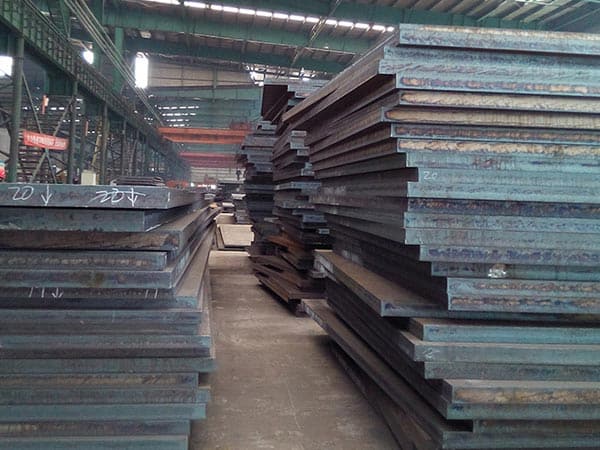
Understanding EN 10149-2: The Benchmark for High Yield Strength Steels
The EN 10149-2 standard specifies the technical delivery conditions for flat products made of high yield strength steels for cold forming. These steels are thermomechanically rolled, a process that combines controlled rolling and accelerated cooling to achieve a fine-grained microstructure. This metallurgical precision allows for a unique combination of high strength, excellent ductility, and superior weldability. Common grades include S315MC, S355MC, S420MC, S460MC, S500MC, S550MC, S600MC, and S700MC. The 'MC' suffix denotes thermomechanically rolled steel suitable for cold forming.
In the global supply chain, engineers often seek equivalents to these European grades within local frameworks, particularly the Indian Standards (IS). As India emerges as a manufacturing hub, the demand for high-strength low-alloy (HSLA) steels has surged, making the comparison between EN 10149-2 and Indian standards critical for cost-optimization and material procurement.
Mapping EN 10149-2 to Indian Equivalents: IS 2062 and IS 5986
Identifying the exact equivalent in the Indian context requires looking at two primary standards: IS 2062 (Steel for General Structural Purposes) and IS 5986 (Hot Rolled Steel Flat Products for Structural Forming and Drawing Purposes). While IS 2062 is the most common structural steel standard in India, IS 5986 is often more technically aligned with the cold-forming requirements of EN 10149-2.
- S355MC Equivalent: The most frequent comparison is S355MC. Under IS 2062, the closest match is E350 (Grade BR/BO). However, for applications requiring specific cold-forming properties, IS 5986 Grade 355 is a more precise functional equivalent.
- S420MC Equivalent: This corresponds closely with IS 2062 E410 or IS 5986 Grade 410/420.
- S700MC Equivalent: High-end grades like S700MC are mapped to IS 2062 E650 or E700, which are increasingly used in heavy-duty chassis and crane booms.
| EN 10149-2 Grade | Yield Strength (min MPa) | Indian Standard (IS) Equivalent | Chemical Composition Focus |
|---|---|---|---|
| S315MC | 315 | IS 5986 Grade 315 / IS 2062 E300 | Low Carbon, Mn, Nb/Ti micro-alloying |
| S355MC | 355 | IS 5986 Grade 355 / IS 2062 E350 | Fine grain structure, low S and P |
| S420MC | 420 | IS 5986 Grade 420 / IS 2062 E410 | Enhanced strength-to-weight ratio |
| S500MC | 500 | IS 2062 E450 / IS 5986 Grade 490 | High ductility despite high yield |
| S700MC | 700 | IS 2062 E700 (Special High Strength) | Advanced thermomechanical processing |
Mechanical Properties and Metallurgical Superiority
The performance of EN 10149-2 steels and their Indian counterparts is defined by their ability to withstand high stress while remaining light. The yield strength is the primary differentiator, but the elongation and bendability are what define their utility in manufacturing. For instance, S355MC typically offers a minimum elongation of 19-23% depending on thickness, ensuring that during cold pressing or bending, the material does not develop micro-cracks.
The chemical composition is characterized by extremely low carbon content (often below 0.12%) to ensure excellent weldability. The strength is derived from micro-alloying elements such as Niobium (Nb), Vanadium (V), and Titanium (Ti). These elements refine the grain size during the rolling process. Indian manufacturers like JSW, TATA Steel, and SAIL have upgraded their hot strip mills to produce these grades, ensuring that IS 5986 and IS 2062 variants meet the stringent grain size requirements of the European benchmarks.
Economic Slowdown and Its Impact on Steel Pricing
The pricing of high-strength steels like EN 10149-2 equivalents is currently navigating a complex economic landscape. Several factors are exerting downward pressure on prices while simultaneously threatening supply stability.
1. Reduced Infrastructure Spending: During economic slowdowns, government-funded infrastructure projects often face delays. Since structural steels like E350 and S355MC are the backbone of bridges, industrial warehouses, and power plants, a dip in demand leads to inventory buildup and subsequent price corrections.
2. Automotive Sector Volatility: The automotive industry is a primary consumer of S355MC and S420MC for chassis and structural components. A slowdown in consumer spending reduces vehicle production, directly impacting the order books of steel mills specializing in HSLA grades.
3. Raw Material Fluctuations: The cost of iron ore and coking coal remains volatile. While an economic slowdown might lower demand, supply-side constraints or geopolitical tensions can keep input costs high, squeezing the margins for steel producers and creating a "price floor" that prevents significant cost savings for end-users.
4. Global Trade Dynamics: Excess capacity in major producing nations often leads to an influx of cheaper imports into the Indian market. While this might lower the price of EN 10149-2 equivalents in the short term, it often triggers anti-dumping duties and trade barriers, leading to sudden price spikes.
Industrial Applications and Sector-Specific Utility
The versatility of EN 10149-2 and its Indian equivalents allows for their use across diverse sectors. Their high strength-to-weight ratio is particularly valuable in applications where reducing the dead weight of a structure translates to energy efficiency or increased payload capacity.
- Transportation: Truck chassis, trailers, and heavy-duty vehicles utilize S420MC and S500MC to reduce weight without compromising safety.
- Renewable Energy: Solar mounting structures and wind turbine components require the atmospheric corrosion resistance and structural integrity provided by IS 2062 E350.
- Material Handling: Crane booms, forklifts, and agricultural machinery rely on the cold-forming capabilities of these steels to create complex shapes that handle high dynamic loads.
- Construction: High-rise buildings and pre-engineered buildings (PEB) use these grades to optimize steel consumption, reducing the overall carbon footprint of the project.
Environmental Adaptability and Sustainability
In the modern industrial context, the environmental impact of material choice is as important as its mechanical properties. High-strength steels contribute significantly to sustainability. By using a grade like S700MC instead of a standard S235 structural steel, engineers can reduce the amount of steel required for a project by up to 30-40%. This reduction in material volume leads to lower transportation emissions, less welding consumables, and a more efficient lifecycle.
Furthermore, these steels are fully recyclable. The thermomechanical process used to create EN 10149-2 grades does not involve heavy alloying that complicates the recycling process, ensuring that the steel can be repurposed at the end of its service life without significant loss of quality.
Critical Considerations for Procurement
When sourcing EN 10149-2 equivalent Indian standards during an economic slowdown, buyers must look beyond the base price. Quality certification is paramount. Ensure that the material comes with a Mill Test Certificate (MTC) that specifies the chemical composition, yield strength, tensile strength, and elongation. For cold-forming applications, the bend test results are crucial.
Another factor is the surface finish. Hot-rolled thermomechanically processed steels should have a clean surface with minimal scale, as this affects the performance of subsequent coatings or paints. During periods of economic uncertainty, choosing a reliable supplier who can guarantee consistent metallurgical properties is often more cost-effective than opting for the lowest-priced spot market offer, which may carry risks of material fatigue or inconsistency.
The Future Outlook for HSLA Steels
The trajectory for high-strength steels remains positive despite temporary economic headwinds. The push for "Green Steel" and more efficient engineering designs ensures that grades like S355MC and its Indian equivalents will remain in high demand. As the Indian economy pivots towards more advanced manufacturing and self-reliance (Atmanirbhar Bharat), the alignment between international standards like EN 10149-2 and Indian standards will continue to tighten, facilitating smoother global trade and engineering collaboration.
The current price threats posed by economic slowdowns are likely to be cyclical. For strategic planners, this period offers an opportunity to lock in supply contracts and integrate higher-grade steels into designs, preparing for the inevitable rebound in industrial activity. The shift toward higher yield strengths is not merely a trend but a fundamental evolution in how we build and move things in a resource-constrained world.
Leave a message