
What is the hardness of S315MC high yield strength alloy quality steel?
Explore the hardness, mechanical properties, and processing characteristics of S315MC high yield strength steel. Learn why this EN 10149-2 grade is essential for automotive and structural engineering.
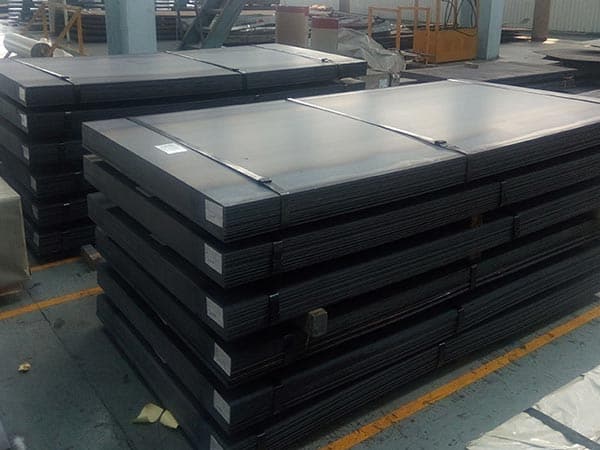
Understanding the Hardness Profile of S315MC Steel
When engineers and procurement specialists ask "What is the hardness of S315MC?", they are often looking for more than just a Brinell or Vickers number. S315MC is a thermomechanically rolled steel for cold forming, governed by the EN 10149-2 standard. Unlike tool steels or high-carbon alloys, S315MC is not primarily defined by its hardness, but rather by its yield strength and ductility. However, hardness remains a critical proxy for wear resistance and machinability.
Typically, S315MC exhibits a Brinell hardness (HBW) ranging between 110 and 150 HBW. In terms of Vickers hardness (HV), this translates roughly to 115–160 HV. It is important to note that the EN 10149-2 standard does not mandate a specific hardness value; instead, it focuses on the minimum yield strength of 315 MPa. The relatively low hardness compared to quenched steels is a deliberate design choice, ensuring the material retains the extreme formability required for complex automotive and structural geometries.
This hardness level strikes a balance. It is hard enough to provide structural integrity and resist surface deformation under moderate loads, yet soft enough to allow for tight-radius cold bending without the risk of micro-cracking. For manufacturers, this means reduced tool wear during punching and shearing operations compared to higher-grade steels like S500MC or S700MC.
Mechanical Properties and Material Specification
To fully grasp the performance of S315MC, one must look at the interplay between hardness, tensile strength, and elongation. The "MC" designation indicates that the material is thermomechanically rolled (M) and intended for cold forming (C). This specialized rolling process refines the grain structure, providing high strength without the need for heavy alloying elements.
| Property | Value (Metric) | Notes |
|---|---|---|
| Yield Strength (ReH) | min. 315 MPa | Measured at room temperature |
| Tensile Strength (Rm) | 390 - 510 MPa | Critical for load-bearing capacity |
| Elongation (A80mm) | min. 20% - 24% | Varies based on thickness (<3mm to >3mm) |
| Typical Hardness | 120 - 150 HBW | Approximate value for reference |
The yield strength of 315 MPa is the defining characteristic. This allows for significant weight reduction in structural designs. By replacing standard S235JR structural steel with S315MC, engineers can reduce wall thickness while maintaining the same load capacity, directly contributing to fuel efficiency in transport applications and material cost savings in construction.
Chemical Composition and Micro-Alloying Influence
The hardness and strength of S315MC are achieved through a precise chemical balance rather than high carbon content. High carbon levels would impair weldability and ductility. Instead, S315MC utilizes micro-alloying elements such as Niobium (Nb), Vanadium (V), and Titanium (Ti).
- Carbon (C): Kept below 0.12% to ensure excellent weldability and prevent brittle zones.
- Manganese (Mn): Up to 1.30%, enhancing strength and toughness through solid solution strengthening.
- Silicon (Si): Limited to 0.50% to maintain surface quality during galvanizing or painting.
- Micro-alloys (Nb, V, Ti): These elements form fine precipitates that pin grain boundaries during the rolling process, resulting in a fine-grained ferrite-pearlite microstructure.
This fine-grained structure is the secret behind S315MC's unique profile. It provides a higher "toughness-to-hardness" ratio than conventional hot-rolled steels. The low carbon equivalent (CEV) ensures that the steel does not harden excessively in the heat-affected zone (HAZ) during welding, which is vital for maintaining the structural integrity of welded chassis and frames.
Cold Forming and Processing Performance
S315MC is engineered specifically for cold forming. Its hardness profile allows it to be bent, pressed, and folded into intricate shapes. When processing S315MC, the minimum bending radius is a crucial parameter for fabricators. Because of its controlled sulfur content and inclusion shape control, it exhibits isotropic properties, meaning it performs consistently whether bent parallel or transverse to the rolling direction.
During the pressing process, the material exhibits predictable work-hardening. While the initial hardness is around 130 HBW, the deformed areas of a component—such as the corners of a U-channel—will see a localized increase in hardness and strength. This phenomenon, known as strain hardening, can be leveraged to increase the stiffness of the final part. However, designers must account for springback, which is slightly higher in S315MC than in softer mild steels due to its higher yield-to-tensile ratio.
Cutting S315MC is highly efficient. Whether using laser, plasma, or traditional shearing, the material's uniform microstructure prevents the formation of burrs and ensures a clean edge. For laser cutting, the low silicon and aluminum content helps in achieving a stable melt pool and high-quality cut edges, which are essential for subsequent welding steps.
Environmental Adaptability and Fatigue Resistance
In real-world applications, S315MC often faces harsh environments. While it is not a dedicated "weathering steel" like Corten, its fine-grained structure provides better resistance to atmospheric corrosion than coarser structural steels. However, for long-term durability, S315MC components are typically coated, galvanized, or painted.
One of the standout features of S315MC is its fatigue resistance. In the automotive industry, parts like truck chassis and cross-members are subjected to cyclic loading. The micro-alloyed structure retards crack initiation and propagation. Even at lower temperatures, S315MC maintains its impact toughness, making it suitable for vehicles operating in cold climates where standard steels might become brittle.
Furthermore, the material's surface quality is strictly controlled during the thermomechanical rolling process. This results in a tight mill scale that is easily removed by pickling, providing an ideal substrate for high-performance coatings. This surface integrity is critical because surface defects often act as stress concentrators that lead to premature fatigue failure.
Expanding Applications Across Industries
The versatility of S315MC extends far beyond simple brackets. Its combination of moderate hardness and high yield strength makes it a staple in several high-demand sectors:
- Automotive Industry: Used for longitudinal beams, chassis components, and cold-pressed structural parts where weight saving is a priority.
- Heavy Machinery: Ideal for the manufacturing of cranes, excavators, and agricultural equipment frames that require a balance of strength and weldability.
- Storage Systems: High-density racking and shelving systems utilize S315MC to achieve high load capacities with thinner profiles.
- Transportation: Railway wagon components and container frames benefit from the material's ability to withstand dynamic loads.
- Tube Manufacturing: S315MC is frequently used to produce high-strength welded tubes for structural applications.
In the context of the global shift toward sustainability, S315MC plays a pivotal role. By enabling "lightweighting," it helps reduce the carbon footprint of vehicles and infrastructure. Using less steel to achieve the same structural performance reduces energy consumption during both the manufacturing and transport phases of a product's lifecycle.
Technical Comparison: S315MC vs. Alternatives
Choosing the right grade often involves comparing S315MC with other common standards. For instance, compared to S235JR, S315MC offers significantly higher strength and better cold-forming properties, though it requires more precise control during welding. Compared to S355MC, S315MC is more ductile and easier to form into very tight radii, making it the preferred choice when the design complexity is high but the load requirements do not necessitate the 355 MPa yield strength.
When evaluating hardness specifically, S315MC is remarkably consistent. Unlike commodity hot-rolled coils that may have significant hardness fluctuations across the width of the strip, S315MC's thermomechanical processing ensures a uniform hardness profile. This consistency is vital for automated production lines where variations in material hardness can lead to inconsistent part dimensions or tool breakage.
For those looking to optimize their manufacturing process, S315MC represents a "sweet spot." It provides the technical advantages of high-strength low-alloy (HSLA) steels without the extreme processing challenges associated with ultra-high-strength grades. Its hardness is a reflection of its refined internal logic: tough, formable, and reliably strong.
Leave a message