
What is S355MC hot-rolled steel used for
Comprehensive guide to S355MC hot-rolled steel. Learn about its chemical composition, mechanical properties, weldability, and diverse industrial applications.
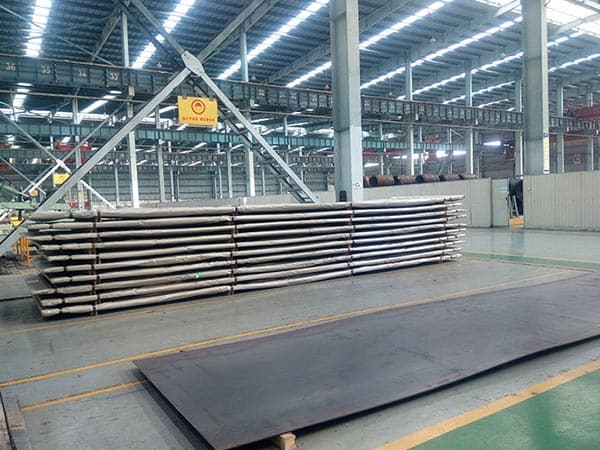
Defining S355MC: The High-Performance Thermomechanically Rolled Steel
S355MC is a high-yield strength, hot-rolled steel specifically designed for cold forming processes. Governed by the European standard EN 10149-2, this grade represents a sophisticated class of steels that undergo thermomechanical rolling. Unlike traditional structural steels, S355MC utilizes a precise cooling process and micro-alloying techniques to achieve a refined grain structure. This results in a material that offers an exceptional balance of high strength, low weight, and superior formability. Manufacturers often turn to S355MC when they need to reduce the weight of components without sacrificing structural integrity, a critical requirement in modern engineering and transportation sectors.
The Chemical Architecture of S355MC
The performance of S355MC is rooted in its chemical composition. Unlike standard carbon steels, it relies on micro-alloying elements such as Niobium (Nb), Vanadium (V), and Titanium (Ti). These elements, even in small quantities, facilitate grain refinement during the rolling process. This fine-grain structure is the primary reason for the steel's high yield strength and excellent toughness. The low carbon content (typically below 0.12%) ensures that the material remains highly weldable and ductile, preventing the brittleness often associated with high-strength materials.
| Element | Maximum Percentage (%) |
|---|---|
| Carbon (C) | 0.12 |
| Manganese (Mn) | 1.50 |
| Silicon (Si) | 0.50 |
| Phosphorus (P) | 0.025 |
| Sulfur (S) | 0.020 |
| Aluminium (Al) | 0.015 (min) |
This lean chemical profile is not just about strength; it also enhances the surface quality of the steel. Lower levels of impurities like sulfur and phosphorus reduce the risk of internal defects and surface cracks during intense cold forming operations such as deep drawing or tight-radius bending.
Mechanical Properties and Yield Strength Advantage
The "355" in S355MC denotes a minimum yield strength of 355 MPa for thicknesses less than 16mm. This is significantly higher than standard S235 grades, allowing engineers to use thinner plates to support the same loads. This weight-saving potential is a cornerstone of its popularity. Beyond yield strength, the tensile strength typically ranges between 430 and 550 MPa, providing a robust safety margin against structural failure.
- Yield Strength (ReH): Min 355 MPa
- Tensile Strength (Rm): 430 - 550 MPa
- Elongation (A80mm): Min 19% to 23% depending on thickness
- Impact Strength: Often tested at -20°C or -40°C to ensure performance in cold climates
The high elongation values are particularly noteworthy. They indicate that despite its strength, S355MC can undergo significant deformation before fracturing. This property is vital for energy absorption in automotive crash components and for complex bending in manufacturing.
Superior Cold Forming and Bending Capabilities
One of the primary reasons S355MC is specified is its cold forming capability. Conventional high-strength steels can be difficult to bend, often cracking at the outer radius. S355MC is engineered to overcome this. It can be bent to very tight radii without losing its structural integrity. For thicknesses up to 3mm, the minimum internal bending radius can be as low as 0.25 times the thickness, provided the bend is transverse to the rolling direction.
This formability allows for the creation of complex shapes that would otherwise require multiple welded parts. By using a single bent component, manufacturers reduce production time, minimize welding costs, and eliminate potential points of failure at weld seams. It is also highly compatible with modern automated folding and pressing equipment, showing consistent springback characteristics that simplify precision engineering.
Weldability and Processing Efficiency
Processing S355MC is highly efficient due to its low Carbon Equivalent (CEV). Weldability is excellent across all standard methods, including MIG/MAG, TIG, and submerged arc welding. Because the carbon content is so low, there is a significantly reduced risk of cold cracking in the heat-affected zone (HAZ). This often eliminates the need for pre-heating, even when welding thicker sections, which represents a major cost saving in high-volume production environments.
Furthermore, S355MC is an ideal candidate for laser and plasma cutting. Its clean chemical composition and consistent thickness tolerances result in high-quality cut edges with minimal dross. This precision is essential for industries that rely on automated assembly where tight tolerances are mandatory. The material also takes well to galvanizing and painting, provided the surface is properly prepared, ensuring long-term corrosion resistance in outdoor environments.
Key Industry Applications
The versatility of S355MC has led to its adoption across a wide spectrum of heavy-duty industries. Its primary use case is in the automotive and transportation sector. Truck chassis, longitudinal beams, and cross-members are frequently made from S355MC. The ability to reduce the weight of a truck frame directly translates to higher payload capacity and improved fuel efficiency, which are critical competitive factors in the logistics industry.
In the lifting and mobile equipment industry, S355MC is used for crane booms, forklift masts, and aerial work platforms. These applications require a material that can withstand high stress while remaining light enough to be mobile. The toughness of S355MC ensures that these machines can operate safely even under dynamic loading conditions and in low-temperature environments.
The agricultural machinery sector also relies heavily on this grade. Plows, trailers, and harvester frames are subjected to harsh abrasive environments and high mechanical stress. S355MC provides the necessary durability to withstand these conditions while allowing for the complex curved designs often seen in modern farm equipment. Other applications include:
- Cold-pressed structural profiles and channels
- Storage racking systems and industrial shelving
- Steel tubes and pipes for structural use
- Railway wagon components and freight car frames
- Energy sector components like wind turbine internal brackets
S355MC vs. s355jr: Understanding the Difference
It is common to confuse S355MC with S355JR, as both share a similar yield strength. However, they are intended for different purposes. S355JR is a standard structural steel (EN 10025-2) typically used for hot-rolled sections like I-beams and heavy plates where cold forming is not a priority. S355MC (EN 10149-2) is a thermomechanically rolled steel designed specifically for cold forming. S355MC generally has better surface quality, tighter thickness tolerances, and superior weldability compared to S355JR. If your project involves bending, flanging, or complex pressing, S355MC is the technically superior choice.
Environmental Adaptability and Sustainability
In an era where sustainability is paramount, S355MC contributes significantly to Green Engineering. By enabling "lightweighting," it reduces the total amount of steel required for a project. Less steel means less energy consumed during production and lower CO2 emissions during the transport of the finished product. Additionally, S355MC is 100% recyclable. At the end of a vehicle's or machine's life cycle, the steel can be recovered and re-melted to produce new high-strength grades without loss of quality, supporting a circular economy.
The fine-grain structure also provides a natural resistance to atmospheric corrosion compared to coarser-grained steels, although it still requires protective coatings for long-term outdoor exposure. Its performance in varying temperatures makes it suitable for global applications, from the heat of industrial plants to the sub-zero temperatures of northern construction sites.
Leave a message