
What are the uses of S700MC automobile structure steel coil
Discover the extensive uses and technical advantages of S700MC automobile structure steel coil. Learn how its high strength, formability, and weldability drive innovation in heavy transport, lifting, and construction industries.
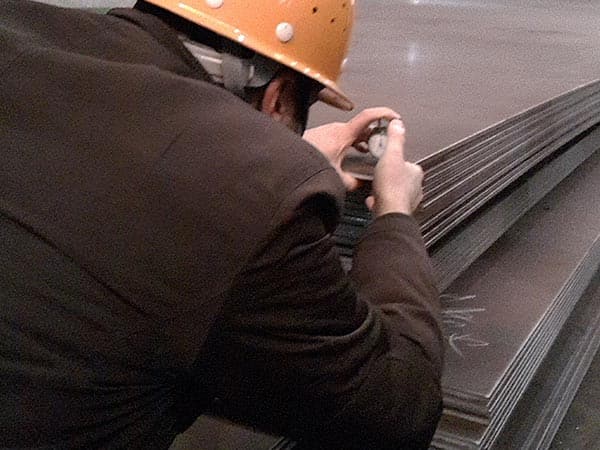
Understanding the Engineering Excellence of S700MC Steel
S700MC is a high-strength, thermomechanically rolled steel designed specifically for cold forming applications. Governed by the EN 10149-2 standard, this material represents the pinnacle of High Strength Low Alloy (HSLA) technology. The designation "S" stands for structural steel, "700" refers to its minimum yield strength of 700 MPa, and "MC" indicates its thermomechanically rolled condition, which ensures a fine-grained microstructure and exceptional toughness even at sub-zero temperatures. This steel is engineered to bridge the gap between traditional structural steels and ultra-high-strength materials, offering a unique combination of extreme load-bearing capacity and excellent processability.
The core advantage of S700MC lies in its weight-to-strength ratio. By utilizing this grade, engineers can significantly reduce the thickness of structural components without compromising safety or structural integrity. This capability is the cornerstone of modern lightweighting strategies, particularly in sectors where reducing dead weight directly translates into increased payload, lower fuel consumption, and reduced carbon emissions.
Superior Mechanical Properties and Material Composition
The performance of S700MC is rooted in its precise chemical composition and the thermomechanical control process (TMCP). Unlike traditional quenched and tempered steels, S700MC achieves its strength through grain refinement and micro-alloying. The addition of elements such as Niobium (Nb), Vanadium (V), and Titanium (Ti) allows for the formation of fine precipitates that pin grain boundaries during the rolling process.
| Mechanical Property | Value Range (Typical) |
|---|---|
| Yield Strength (ReH) | Min 700 MPa |
| Tensile Strength (Rm) | 750 - 950 MPa |
| Elongation (A5) | Min 12% (Thickness < 3mm: Min 10%) |
| Impact Energy (Charpy-V) | Min 40J at -20°C (Optional) |
The low carbon content (typically below 0.12%) ensures that S700MC remains highly weldable and resistant to cold cracking. The balance of manganese and silicon provides solid solution strengthening while maintaining the steel's ability to be cold-formed into complex geometries. This makes it an ideal candidate for parts that require both high strength and intricate shaping.
Primary Uses in the Commercial Vehicle Industry
The automotive sector, particularly heavy-duty commercial vehicles, is the largest consumer of S700MC steel coils. The push for more efficient logistics has led manufacturers to seek materials that can withstand the rigors of heavy hauling while minimizing the weight of the vehicle itself.
- Chassis Frames and Longitudinal Beams: S700MC is the preferred material for truck chassis. Its high yield strength allows for thinner cross-sections in the main rails, which can reduce the weight of a truck frame by up to 30% compared to using S355 steel. This weight saving allows for higher cargo capacity.
- Cross Members and Reinforcements: Components that join the main chassis rails must endure high torsional stress. S700MC provides the necessary stiffness and fatigue resistance to ensure the vehicle remains stable under heavy loads and uneven road conditions.
- Trailer and Semi-Trailer Structures: In the trailer industry, every kilogram saved in the structure is an extra kilogram of payload. S700MC is used in the construction of side rails, floor supports, and rear underrun protection devices.
- Axle Components: The high fatigue strength of S700MC makes it suitable for axle housings and suspension brackets, where the material must withstand millions of cycles of dynamic loading.
Applications in Lifting and Material Handling Equipment
Beyond the road, S700MC plays a critical role in the design of lifting equipment. Mobile cranes, truck-mounted cranes, and telehandlers require materials that can handle immense tensile forces while remaining light enough to be transported easily.
Crane Booms and Jibs: The telescopic sections of modern cranes are often fabricated from S700MC or even higher grades. The high yield strength allows for longer reaches and higher lifting capacities. Because S700MC has excellent weldability, the complex box-section welds required for crane booms maintain their integrity under extreme pressure.
Outriggers and Stabilizers: The legs that stabilize heavy machinery during operation are subject to massive localized loads. S700MC ensures these components do not deform or fail, providing a safe base for operations in construction and utility work.
Impact on Agricultural and Construction Machinery
The agricultural sector has seen a shift toward larger, more powerful machinery. Tractors, harvesters, and specialized trailers now incorporate S700MC to manage the increased stresses associated with modern farming techniques. In construction, the material is used in the frames of earthmoving equipment, such as excavators and dump trucks, where it offers resistance to impact and abrasion while maintaining a manageable overall weight.
- Spreader and Sprayer Booms: Wide agricultural sprayers require lightweight booms to prevent soil compaction. S700MC allows for wide spans that are both rigid and light.
- Container Handling Equipment: Reach stackers and straddle carriers used in ports utilize S700MC in their lifting frames to manage the dynamic loads of moving heavy shipping containers.
Processing Advantages: Bending, Welding, and Cutting
One of the reasons S700MC is so widely used is its "user-friendly" nature in the workshop. High strength often comes at the cost of workability, but S700MC is specifically designed to be processed with standard industrial equipment.
Cold Forming and Bending: Despite its 700 MPa yield strength, S700MC exhibits remarkable cold-forming properties. It can be bent to tight radii (typically 1.5 to 2 times the thickness) without cracking, provided the bending direction and tool parameters are correctly managed. This allows manufacturers to create complex, one-piece components that would otherwise require multiple parts and welds.
Advanced Welding Compatibility: S700MC can be welded using all conventional methods, including MAG, TIG, and laser welding. Because of its low carbon equivalent (CEV), the risk of hardening in the heat-affected zone (HAZ) is minimized. This ensures that the welded joints remain tough and ductile, which is critical for structural safety.
Precision Cutting: The fine-grained structure and clean chemistry of S700MC make it excellent for laser, plasma, and waterjet cutting. It produces clean edges with minimal dross, reducing the need for secondary finishing operations and speeding up the production cycle.
Economic and Environmental Benefits of S700MC
The adoption of S700MC is not just a technical choice; it is a strategic economic decision. While the cost per ton of S700MC may be higher than standard carbon steel, the total cost of the finished product is often lower. By using thinner gauges, manufacturers reduce the total weight of steel purchased. Furthermore, thinner materials require less welding filler metal and shorter welding times, leading to significant labor and energy savings.
From an environmental perspective, S700MC is a key enabler of the circular economy. Lighter vehicles consume less fuel and emit less CO2 during their operational life. Additionally, the high recyclability of HSLA steel ensures that at the end of the vehicle's life cycle, the material can be recovered and repurposed without loss of quality.
Comparative Analysis: S700MC vs. Conventional Steels
When comparing S700MC to traditional S355 structural steel, the differences are stark. S355 is a reliable workhorse, but it lacks the strength required for modern high-performance applications. To achieve the same load-bearing capacity as a 5mm thick S700MC plate, an engineer would need approximately 8-10mm of S355. This doubling of thickness not only doubles the weight but also increases the complexity of assembly and the cost of transport.
| Feature | s355jr / J2 | S700MC |
|---|---|---|
| Yield Strength | 355 MPa | 700 MPa |
| Weight Reduction Potential | Baseline | 30% - 50% |
| Cold Formability | Good | Excellent (Optimized) |
| Welding Complexity | Low | Low (Low CEV) |
S700MC automobile structure steel coil is a transformative material that enables the creation of stronger, lighter, and more efficient structures. Its widespread use in truck chassis, crane booms, and heavy machinery is a testament to its reliability and superior performance characteristics. As industries continue to prioritize efficiency and sustainability, the role of S700MC as a fundamental building block of modern engineering will only continue to grow.
Leave a message