
S960MC high yield strength steel coil density
Explore the technical specifications of S960MC high yield strength steel coil, focusing on its density of 7.85g/cm³, mechanical properties, chemical composition, and advanced industrial applications for weight reduction and structural integrity.
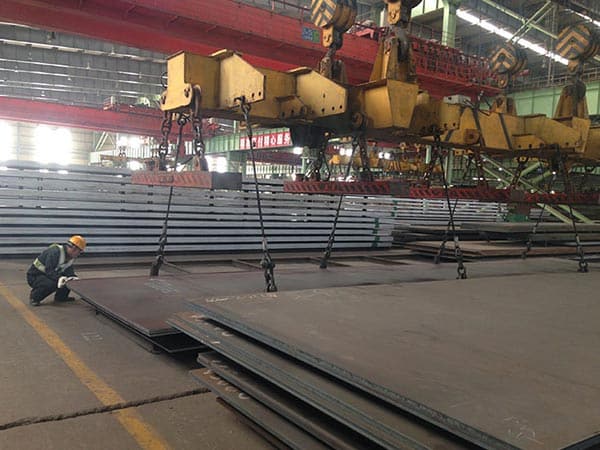
S960MC High Yield Strength Steel Coil Density and Physical Foundation
In the realm of advanced structural engineering, the density of materials serves as the fundamental constant for calculating load-bearing capacity and overall structural weight. S960MC high yield strength steel coil density is approximately 7.85 g/cm³ (or 7850 kg/m³). This value is consistent with most carbon steels, yet the 'strength-to-weight ratio' of S960MC is what sets it apart from conventional grades. By utilizing a material with a minimum yield strength of 960 MPa, engineers can significantly reduce the thickness of components without compromising safety. This reduction in material volume directly leads to lighter structures, which is critical for mobile machinery and transportation sectors where fuel efficiency and payload capacity are paramount.
Understanding the density is only the first step. When calculating the weight of S960MC steel coils or plates, the formula Weight (kg) = Thickness (mm) × Width (m) × Length (m) × 7.85 is applied. Because S960MC allows for thinner gauges to replace thicker S355 or S700 grades, the actual mass of a finished part can be reduced by 30% to 60%. This physical advantage makes S960MC a cornerstone of modern lightweighting strategies, particularly in the manufacturing of telescopic booms, crane components, and high-load chassis.
Metallurgical Excellence: The Thermomechanical Rolling Process
S960MC is produced through a sophisticated Thermomechanically Controlled Process (TMCP), as defined by the EN 10149-2 standard. The 'MC' designation signifies that the steel is thermomechanically rolled for cold forming. Unlike traditional quenching and tempering (Q+T) methods, TMCP utilizes precise temperature control during the rolling stages to achieve an ultra-fine grain structure. This grain refinement is the primary mechanism behind its high yield strength and excellent low-temperature toughness.
The micro-alloying strategy involves the careful addition of elements such as Niobium (Nb), Vanadium (V), and Titanium (Ti). These elements form stable carbides and nitrides that pin grain boundaries during the rolling process, preventing grain growth. The result is a steel that possesses extreme strength while maintaining the ductility required for complex cold-forming operations. This metallurgical balance ensures that despite its high hardness, the material does not become brittle, maintaining its integrity even in harsh operating environments.
Comprehensive Mechanical Properties of S960MC
The mechanical performance of S960MC is engineered to withstand extreme static and dynamic loads. Beyond the headline yield strength, its tensile strength and elongation characteristics provide a safety buffer for structural transitions. Below is a detailed breakdown of the mechanical requirements for S960MC:
| Property | Value (Metric) | Notes |
|---|---|---|
| Minimum Yield Strength (ReH) | 960 MPa | Measured longitudinal to rolling direction |
| Tensile Strength (Rm) | 980 - 1250 MPa | Ensures high ultimate load capacity |
| Minimum Elongation (A80mm) | 7% | For thicknesses < 3mm |
| Minimum Elongation (A5) | 9% | For thicknesses ≥ 3mm |
| Density | 7.85 g/cm³ | Standard for carbon steel calculation |
The high tensile strength range (980-1250 MPa) ensures that the material can absorb significant energy before failure. For designers, this means S960MC can be used in energy-absorbing structures or components subject to high-frequency vibrations. Furthermore, the elongation values, while lower than mild steel, are remarkably high for a material of this strength level, allowing for tight bending radii during fabrication.
Chemical Composition and Weldability Characteristics
One of the most critical aspects of S960MC is its low carbon equivalent (CEV). Traditional high-strength steels often require extensive pre-heating before welding to prevent cold cracking. However, the chemical design of S960MC prioritizes weldability. By keeping the carbon content low (typically ≤ 0.20%) and relying on micro-alloying for strength, the steel exhibits excellent compatibility with standard welding processes such as MAG, MIG, and laser beam welding.
- Carbon (C): Max 0.20% - Maintains ductility and weldability.
- Manganese (Mn): Max 2.20% - Enhances strength and hardenability.
- Silicon (Si): Max 0.60% - Acts as a deoxidizer.
- Micro-alloys (Nb, V, Ti): Total max 0.22% - Responsible for grain refinement.
- Phosphorus & Sulfur: Kept to extremely low levels to ensure internal cleanliness and prevent lamellar tearing.
When welding S960MC, it is essential to manage the heat input. Excessive heat can lead to grain coarsening in the Heat Affected Zone (HAZ), which may locally reduce the yield strength. Using low-heat input techniques and high-quality filler metals ensures that the welded joint maintains a strength level close to that of the parent material. The low CEV value typically eliminates the need for pre-heating in thinner sections, reducing fabrication time and energy costs.
Advanced Fabrication: Cold Forming and Bending
Despite its formidable strength, S960MC is specifically designed for cold forming. Manufacturers can achieve complex shapes through press braking and roll forming. The minimum recommended bending radius is generally 3.0 to 4.0 times the material thickness (t), depending on the orientation relative to the rolling direction. For example, bending transverse to the rolling direction allows for tighter radii than longitudinal bending.
The precision of the S960MC coil's thickness and surface quality is vital for automated fabrication. Its clean surface, often achieved through pickling and oiling (S960MC+P), ensures minimal wear on tooling and consistent results in laser cutting. Laser cutting S960MC is highly efficient due to its consistent chemical composition, resulting in narrow kerfs and smooth edges that often require no secondary finishing.
Expanding Industrial Applications for S960MC
The unique combination of a 7.85 g/cm³ density and 960 MPa yield strength has revolutionized several heavy industries. In the mobile crane industry, S960MC is used to manufacture telescopic booms. The weight reduction allows for longer reach and higher lifting capacities without increasing the vehicle's total weight, staying within road transport regulations.
In the transportation and logistics sector, S960MC is the material of choice for high-performance trailers and truck chassis. By reducing the tare weight of the vehicle, operators can increase the payload, leading to fewer trips and a smaller carbon footprint. This is a direct application of using high-strength steel to optimize the density-to-performance ratio.
The mining and earthmoving equipment industry utilizes S960MC for wear-resistant and structural components that must endure extreme stress. While it is not a dedicated 'wear plate' like Hardox, its high hardness and strength provide significant resistance to deformation and impact in structural frames of dump trucks and loaders.
Environmental Adaptation and Fatigue Life
S960MC demonstrates excellent environmental adaptability, particularly in low-temperature environments. Many high-strength steels become brittle at sub-zero temperatures, but the fine-grain structure of S960MC ensures high impact energy absorption even at -20°C or -40°C (depending on specific sub-grades like S960QL, though MC grades also offer robust toughness). This makes it suitable for equipment operating in arctic conditions or high-altitude environments.
Fatigue life is another critical factor. Components made from S960MC often undergo millions of stress cycles. The high yield point ensures that the material remains within the elastic deformation zone under higher loads compared to conventional steel. This extends the service life of the machinery and reduces the frequency of maintenance intervals. By choosing S960MC, manufacturers are not just buying steel; they are investing in the long-term durability and efficiency of their final products.
Strategic Implementation in Modern Engineering
Transitioning to S960MC requires a holistic approach to design. Engineers must account for the higher springback during bending and the specific welding parameters required to preserve the TMCP properties. However, the benefits far outweigh the technical requirements. The ability to use less steel to achieve more strength is the ultimate goal of sustainable engineering. As global standards push for lower emissions and higher efficiency, the role of S960MC high yield strength steel will only grow, providing the physical and mechanical foundation for the next generation of industrial infrastructure.
Leave a message